
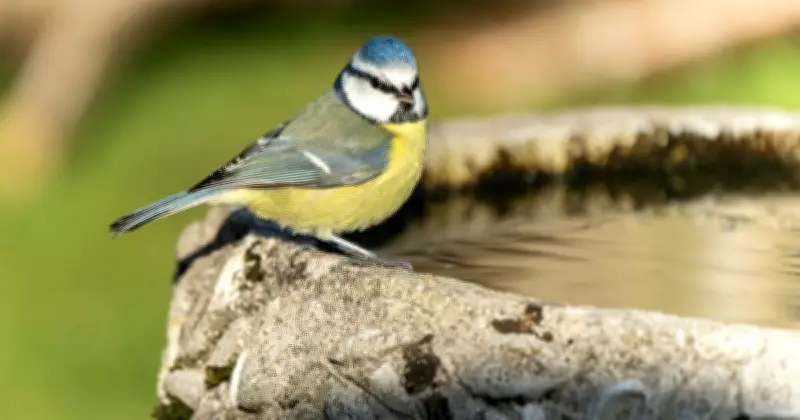
If you have a birdbath in your garden that fails to attract birds, the problem may be the water depth. For smaller species like bluetits and goldfinches, a depth of 2cm or less is essential for safe wading.
Most stone birdbaths are too deep. While larger birds such as pigeons and blackbirds can manage 5cm, smaller birds need shallower water. The RSPB explains: “Providing the perfect bird bath can be one of the best things you can do for wildlife in the garden, and one of the most rewarding, too. You can install a bird bath at any time of year, but summer is a particularly critical time when water can be scarce for birds.”
Ideal Birdbath Depth
The RSPB guidance adds: “What birds really want from a bird bath is a wide, safe and shallow puddle with a rock or two for perching on. That way, they won’t get out of their depth, there’s plenty of space to flap about, and every chance to do it in the company of others, which is always safer.”
A graduated depth is best—shallow at the edges and deeper in the centre, but never more than 5cm at the centre to avoid hazards.
How to Adjust Depth
If your birdbath is too deep, drop in a flat stone or two pebbles at the edge, about 2cm thick. This gives small birds like bluetits, goldfinches, and robins a perch, while the centre remains for larger birds. Choose granite or slate stones, as they do not break down or leach into the water.
Alternatively, place pea gravel at the bottom to create varying depths. Ensure stones are thoroughly cleaned and are level and sturdy so they do not move when birds land on them.
Pro Tip for Attracting Birds
All About Birds shares: “To make your birdbath even more attractive, provide some dripping water. Many birds find the sight and sound of moving water irresistible. You can use a commercial dripper or sprayer, or make your own by recycling an old bucket or plastic container. Punch a tiny hole in the bottom, fill it with water, and hang it above the birdbath so the water drips into the bath.”




