
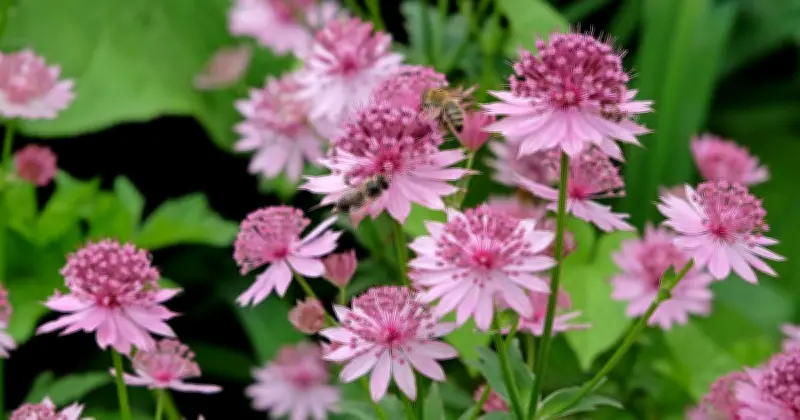
Surrey gardener Ryan Dowsell has highlighted Astrantia Major, also known as Great masterwort, as an easy-to-manage perennial that will bloom all summer long. In a TikTok video, Dowsell described the plant as "beautiful" and perfect for beginner gardeners due to its hardiness and low maintenance requirements.
According to Dowsell, Astrantia Major thrives in both sun and part-shade, making it suitable for the front of borders. "It flowers repeatedly, all summer long," he stated, noting that the plant boasts a "gorgeous pink blush" that works well as a cut flower in vases.
Pollinator-Friendly and Non-Toxic
Dowsell emphasized that Astrantia Major is loved by pollinators and is not toxic to humans or pets. In response to a viewer's question about cat-friendly plants, he said, "Astrantia is not toxic for humans or pets. There are so many cat-friendly plants that it's easier to say what might be toxic - plants to avoid include foxgloves, lupins, lilies, daphne."
Propagation and Care Tips
Once established, Astrantias are easy to divide, making them excellent for creating a repeating flower across the garden. Dowsell advised potting bare roots until they show good leaf growth before planting in the ground, especially during a heatwave. He also noted that the plants can thrive even in small soil patches, such as cracks between stone pathways.
The Royal Horticultural Society (RHS) supports these tips, stating on its website: "Astrantias are happy in most ordinary garden soils, but do best in fertile soil that drains easily. Astrantias won't grow well in excessively dry or wet soils, and won't flower in deep shade. In hot, dry weather in full sun they can crisp up, so keep them well watered."
Deadheading for Continuous Blooms
The RHS recommends deadheading Astrantias to keep them flowering. Leaving old flowerheads to form seeds delays the production of new blooms. Dowsell echoed this, noting that cutting back spent flowers encourages more blooms from May to October.
Dowsell's video sparked interest among gardeners, with one sharing that their Astrantia even flowers between stone pathways on a small patch of soil. Dowsell confirmed, "That sounds lovely! Once they settle into the ground (or into a crack!) they really do perform reliably year after year."




