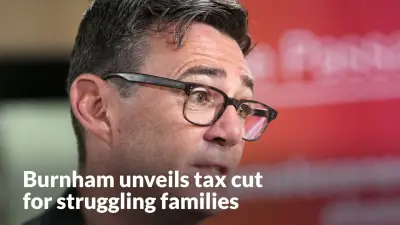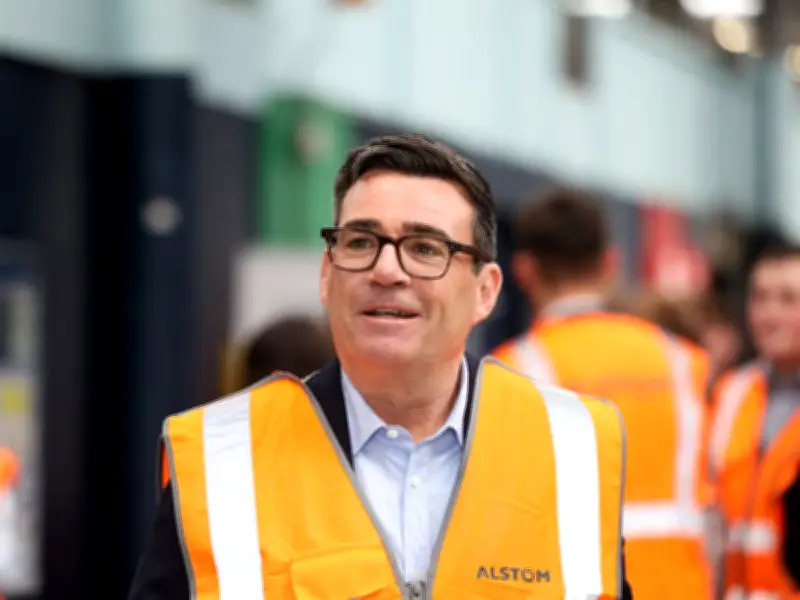
Prime Minister Andy Burnham has urged employers to stop using Zoom interviews and AI-driven CV filtering, arguing that these methods have not made recruitment fairer and can hinder young jobseekers. He called for a return to traditional hiring practices.
Criticism of video and AI recruitment
Mr Burnham told former political adviser Jimmy McLoughlin’s podcast Jimmy's Jobs of the Future that he dislikes the culture of interviewing via Zoom or Microsoft Teams. “How does a young person shine in that situation? How do you get over some of your personality, your passion,” he said, adding that it works against those with that side to their character and favours those giving formulaic answers.
Video platforms became widespread during the Covid pandemic and remain common for early-round interviews. Meanwhile, businesses increasingly use AI to sift through CVs. LinkedIn data shows 89% of UK recruiters plan to use more AI in hiring this year.
Over one million 16- to 25-year-olds are not in work or education (NEETs), and job vacancies are at a five-year low, according to the Office for National Statistics.
Personal experiences with youth employment
Mr Burnham said his own children’s experiences made him more aware of the difficulties young people face. “I do have my head in the world of some of our 20-somethings and I think it’s quite harsh and quite unfair at times,” he said. “I do worry about that and I've seen that in relation to my kids and their situation.”
He recently unveiled changes to public procurement rules so that companies offering young people 45-day work placements are prioritised for taxpayer contracts. He also urged senior leaders to offer shadowing opportunities, recalling how as mayor of Greater Manchester he invited young people to shadow him. “I said to them, Look, I don't want you opening the post in the corner. Come and stand right on my shoulder all day and watch what I'm doing, and talk to me about it, and then you can put that on your CV.”
Imposter syndrome and early career struggles
Mr Burnham suggested young people, particularly from working-class backgrounds, often feel less confident. “They do, I think, feel that imposter syndrome and they think, well I can’t be here, but the truth is they can be there once they are in the room and they can see how it works.”
He said he experienced imposter syndrome while studying English at Cambridge University and “finally managed to get over that and got through my degree”. After graduating, he worked as an unpaid reporter at the now-defunct Middleton Guardian and reportedly failed to get a job at the Manchester Evening News. He then took a job at Baltic Publishing in London, writing for titles including Tank World, Container Management and Passenger World Management.
“So it kind of really stuck with me that to get on in life I had to leave where I’d grown up and the injustice of that kind of rankled. So I’ve never forgotten that experience,” he said. When asked if he was “drifting” in those early years, he replied: “Yeah. My early 20s in London… I didn’t feel like I was hitting the mark from a career point of view.”
His first political break came as a parliamentary researcher for the late MP Tessa Jowell. He later became a special adviser to Culture Secretary Chris Smith before being elected MP for Leigh in 2001.
Support for creative and technical education
Mr Burnham also championed more creative subjects and criticised Michael Gove, education secretary from 2010 to 2014, for overly focusing on academic subjects. “I make a very big critique of the Gove era, because sport was dismantled in schools, and the sort of creative subjects were pushed right out of the curriculum,” he said. He argued that technical jobs are “more future proof”. When asked what technical job he would do today, he said something in communication.