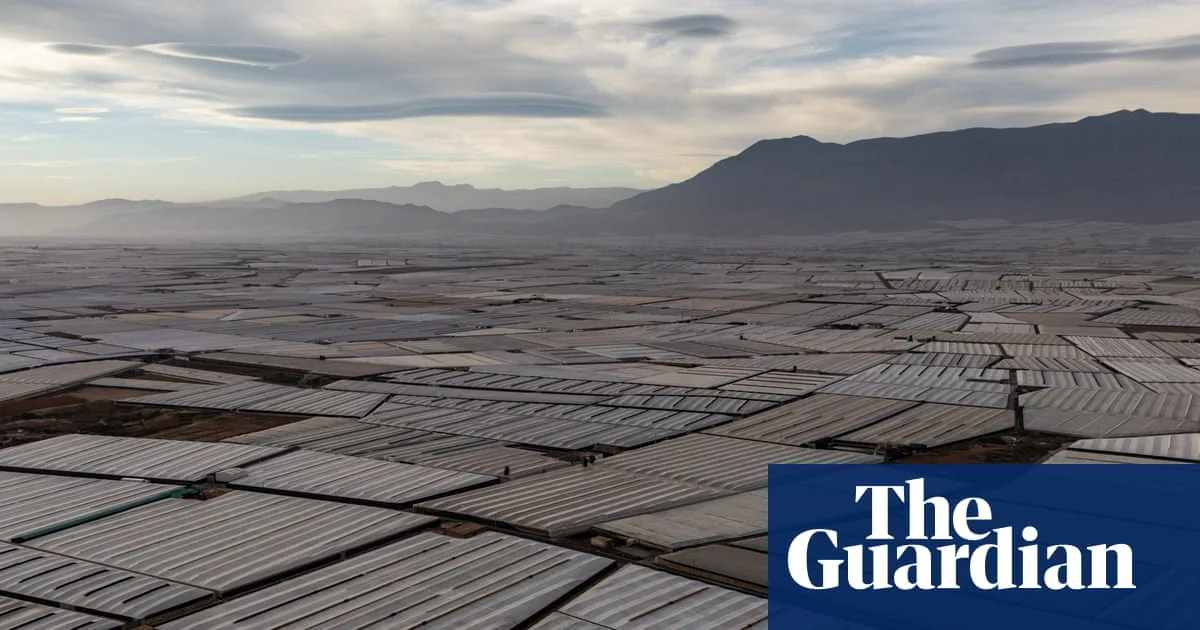
Andalusia in southern Spain is home to the world's largest concentration of greenhouses, a vast expanse of plastic covering more than 30,000 hectares that is visible from space. Known as the 'sea of plastic', this area west of Almería produces 3.5 million tonnes of vegetables annually, including tomatoes, cucumbers, peppers, and courgettes, generating over €3 billion in turnover and feeding an estimated half a billion people.
The region's transformation began in 1963 when farmers in the arid Campo de Dalías peninsula started using rudimentary plastic greenhouses to protect crops from the wind. They discovered that greenhouses could diffuse light, retain heat, and preserve humidity, enabling year-round cultivation. Combined with drip irrigation, natural pest control, and genetic research, this innovation turned the area into a hub of intensive agriculture, complete with nurseries, research centres, and distribution cooperatives.
Today, the sea of plastic is a laboratory of innovation, according to Guadalupe López Díaz, project director of the Fundación Tecnova experimental centre. She describes a sustainable technological revolution focused on producing healthy food with less water and energy while adapting to climate change. The region's desalination plant, one of Europe's largest, processes over 120,000 cubic metres of seawater daily, supporting efficient irrigation.

At the Escuela Agraria de Vícar, 480 students learn advanced techniques for a future where agriculture will be powered by AI, IoT, and sensors, with agrivoltaic systems and resilient crop varieties. Director Francisco Valverde emphasises that the goal is to ensure sustainability and food security while maintaining Almería's global benchmark status.
However, the intensive farming has drawbacks, including environmental concerns such as water use and plastic waste. Despite these challenges, the sea of plastic remains a testament to human ingenuity, producing food for Europe year-round and serving as a model for high-tech, sustainable agriculture.