
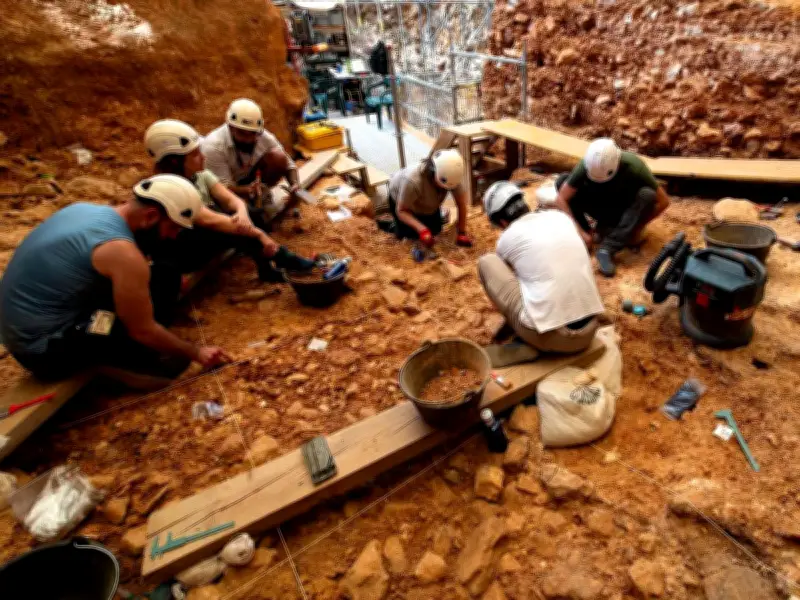
Researchers have uncovered new evidence that a distant human ancestor, Homo antecessor, engaged in cannibalism, consuming both adults and children around 850,000 years ago. The findings come from the Gran Dolina cave at the Archaeological Site of Atapuerca in Burgos, northern Spain.
New Discoveries at Gran Dolina
The Catalan Institute of Human Paleoecology and Social Evolution (IPHES) recovered two dozen bones and teeth during a recent excavation. The remains include fragments of the skull, spine, arms, legs, and three teeth. The institute stated that the bones suggest this particular group of Homo antecessor, which lived between 770,000 and 1.2 million years ago, actively cannibalised each other.
Several bone fragments displayed distinct cut marks from stone tools, indicating flesh was scraped off. Previous finds at the site, including a child's neck bone discovered in 2025, also had such marks. The new discovery on adult remains confirms cannibalism was carried out on both older and younger group members.
Insights into Social Structure
The cluster of bones suggests that between 13 to 15 people inhabited the cave, a larger number than previously believed. Among the significant new finds is the first ulna (forearm bone) ever discovered at the site, along with fragments of a tibia, femur, and humerus. Many bones were fragmented but will help archaeologists understand the ancient community.
Palmira Saladie, an archaeologist and lead coordinator at IPHES, said the new discoveries represent a turning point. "Until now, we had mainly infant and juvenile remains, which conditioned the interpretation of the set. The appearance of more adult individuals, some of which also present cut marks, allows us to demonstrate that cannibalism did not exclusively affect the youngest." She added that the finds offer "a much more representative population to understand the biology, demography and behavior of Homo antecessor."
Broader Context
Previous remains from the site, including a child aged two to four years old who had been decapitated, were described as "processed like any other prey" by Saladie. Many other bones showed cut marks and fractures believed to be for accessing marrow.
IPHES archaeologist Andreu Olle noted: "The increase in the number of individuals, and especially the addition of more adults, allows us to begin understanding this population from a much more complete perspective than ever before."
In addition to human remains, the excavation uncovered stone tools made from flint, quartz, and sandstone, as well as animal bones from hyenas, deer, beavers, horses, and rhinos.




