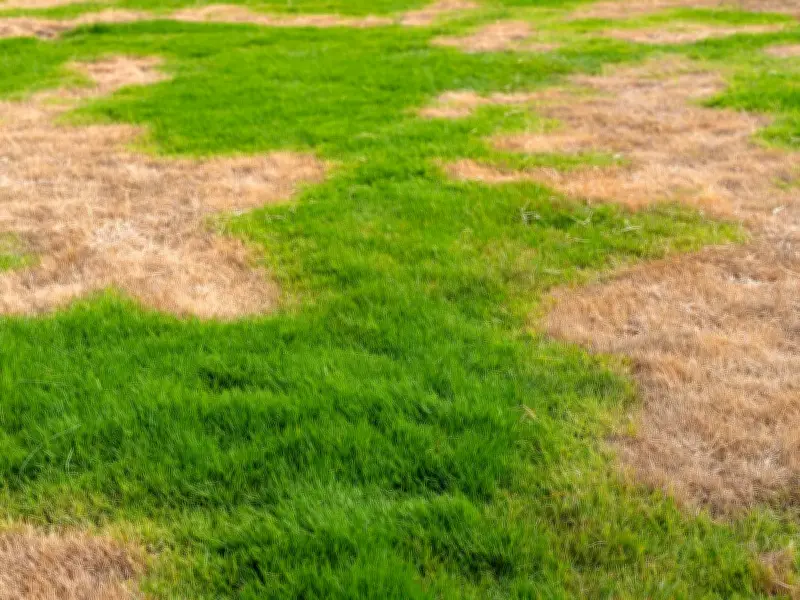
Autumn is approaching, and while grass growth will soon slow down, gardeners are advised not to put away the mower just yet. September often brings plenty of rainfall, which is ideal for encouraging grass growth after the scorching summer months have left many lawns looking parched, sparse, and uneven.
A few simple tasks now can promote stronger, more robust growth and help lawns withstand the autumn and winter ahead. In a 2014 video for Waitrose & Partners, gardening expert Alan Titchmarsh offered advice on how gardeners can “perk” up their lawns.
Why grass turns brown
Titchmarsh said: “The lawn is the centrepiece of the garden. If it looks good, then everything else looks good.” Grass turns brown when its roots no longer take up essential nutrients from the soil, or when it suffers from drought and heat. Fortunately, this is often part of the grass's natural lifecycle, so it is rarely a cause for concern.

For damaged lawn edges, Titchmarsh suggested using a half-moon iron or a spade to cut around the affected area, remove a square of turf, and turn it around. He advised filling the gap with soil and then scattering a handful of grass seed over the surface.
Repairing bare patches
After reseeding, watering thoroughly encourages growth, though birds like pigeons are fond of grass seed. Protecting the lawn can ensure efforts are not wasted.
Bare patches may also develop, especially in areas that are frequently walked on or lack adequate sunlight. Titchmarsh explained that while one can prick the ground with a fork and reseed, it may take a while to grow. A quicker method is to replace the patch with turf.
He advised taking a piece of turf larger than the area to be covered, laying it over the bare patch, and cutting a shape in the middle that is larger than the patch underneath. After cutting through the turf and the grass below, lift away the remaining sections beneath the bare patch and position the fresh turf over it.
To ensure a perfect match, Titchmarsh recommended taking a piece from elsewhere in the lawn if it can be spared. He added: “If you're making another border, that's great for patching because it's exactly the same turf.” The job should take only a few minutes and should be finished with thorough watering.