
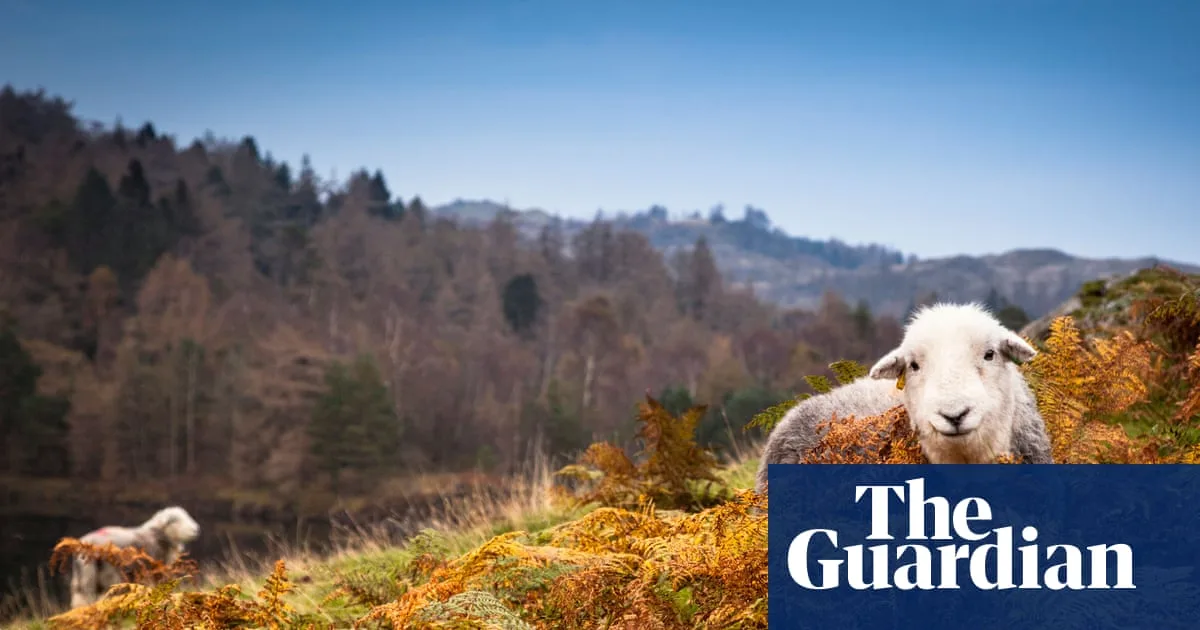
A diary entry from 21 September 1925 describes the remarkable homing instinct of Herdwick sheep in Cumberland. At the summit of a mountain defile, a flock of sheep with fleeces shining like a billowy cloud came into view. It was a great gathering of Herdwicks, ewes and lambs being brought down by shepherds and their dogs to the dale for sorting.
The lambs, now called hoggs, are separated: tup hoggs (males) go to dalesmen for up to three years, while gimmer hoggs (females) winter on rough grasslands near the sea. The ewes dislike this separation and protest with bleats for days before leaving the farmstead pastures.
In spring, when the hoggs—now known as “twinters”—are brought back to their native heath, they seek the fells where they were suckled. This homing instinct is compared to that of salmon returning to their birth river. Remarkably, a twinter often rejoins its mother, even if she has a new lamb, and occasionally a three-year-old “thrunter” is found with the ewe that gave birth to it.




