
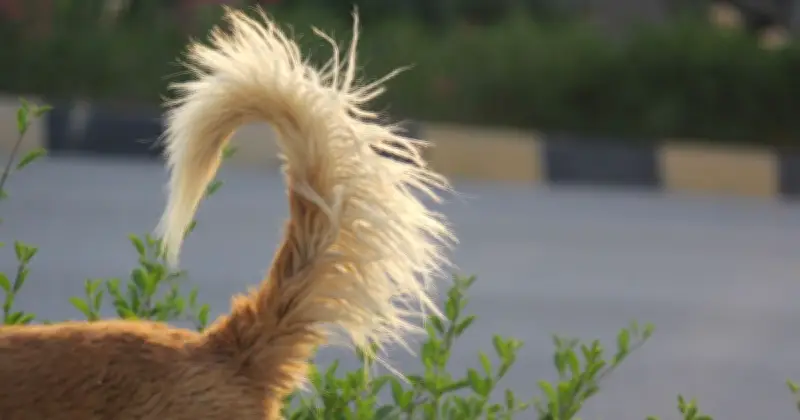
A Reddit discussion has sparked debate among dog owners about whether tail wagging is voluntary or involuntary, revealing that the behaviour serves multiple purposes beyond simple excitement.
Tail Wagging: Involuntary or Voluntary?
One Reddit user asked, “Do dogs voluntarily wag their tails or is it a reflex? My dog is constantly wagging her tail and it just seems that’s a lot to keep track of.” The question prompted a range of responses from fellow pet owners.
One commenter compared tail wagging to smiling: “You can do it voluntarily but it also happens when you’re happy. Dogs involuntarily wag their tail when they’re excited (both happy, excited, and nervous, excited), but sometimes they also do it as an appeasement behaviour to say, ‘I’m not a threat.’”
Another user likened it to breathing: “Your body does it naturally, especially under certain circumstances, but they can also do it voluntarily.” A third observed that their dog wags exuberantly at every person or dog, which seems reflexive, but also wags intentionally during play bows to invite interaction.
Blue Cross Insights on Canine Communication
Animal welfare charity Blue Cross supports the theory that tail wagging is instinctive. “Tail wagging develops differently in different breeds, but it usually begins around three to four weeks into life,” they explain. “The wag of a tail is instinctive in dogs; it’s used as part of their varied communication with one another and with humans.”
Blue Cross adds that while instinctive, tail shape and movement vary by breed. “For example, most golden retrievers have large expressive tails that tend to swish from side to side when walking, whereas whippets and greyhounds tend to hold their tails far lower than the average breed. The spitz breeds, like huskies and malamutes, have tails that curl backwards; sometimes the tip of the tail will even touch the dog’s back.”
Despite these differences, most dogs understand each other and communicate well if socialised appropriately.
Conclusion: Tails as a Tool for Expression
Ultimately, dogs use their tails as a form of expression, communicating with both fellow canines and humans. The next time your dog wags, consider the context—it might be more than just joy.




