
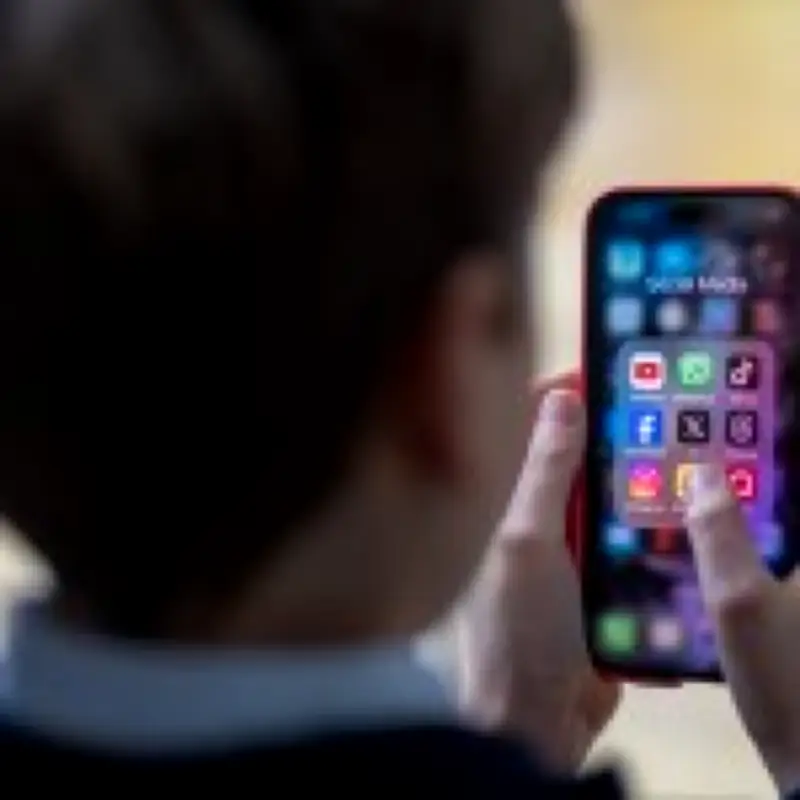
The United Kingdom is being urged to reconsider its planned social media ban for under-16s after an expert revealed that Australia's similar scheme lost its effectiveness within two weeks. Australia implemented a world-first ban in December last year, blocking children and young teenagers from accessing ten major social media platforms. The move was championed by Prime Minister Anthony Albanese as a way to protect childhood and give parents peace of mind.
UK Follows Australia's Lead
In March, the UK government launched a consultation on a similar ban, and on Monday, Prime Minister Sir Keir Starmer announced that a ban would be introduced as soon as next spring, alongside other measures to enhance online safety for children. However, Professor Kathy Modecki from the University of Western Australia, who is leading a large-scale study on the Australian ban's impact, stated that the original scheme has long since lost its effectiveness.
Expert Insights on the Ban's Failure
Professor Modecki told Metro: 'I hear from young people that the first two weeks was a bit of a puzzle – what’s going to happen, what’s this going to look like? And then after two weeks, it was sort of like it never occurred.' She explained that children quickly found ways to bypass age verification measures, describing it as a game that soon became routine. Methods include using cat filters or drawing crude moustaches on their faces to fool facial recognition systems.
The UK government has stated it will ask Ofcom to investigate highly effective age assurance (HEAA) systems to avoid similar pitfalls. Online Safety Minister Kanishka Narayan said: 'If you get new technology to check ages better, we will include those.' Until then, companies can use facial recognition, official ID checks, and account history analysis to verify ages.
Calls for Regulation Over Ban
Professor Modecki, who has researched children's phone use for 15 years, described the challenge of staying ahead of technology as 'whack-a-mole'. She questions the effectiveness of an outright ban compared to forcing social media companies to remove inappropriate content. She said: 'I’m hoping that the conversation is going to turn from looking at kids and their parents as mediators of this risk. The companies themselves, who are serving up the risks, somehow are allowed to say, “We’ve done what we can. Oh, and we’re also going to be the ones to determine it’s safe.” There’s no other area of our life where we would allow that.'
Ian Russell, whose 14-year-old daughter Molly died after viewing harmful images online, has also advocated for tighter regulations rather than a full ban. Professor Modecki warns that a ban could cut off vulnerable young people from vital social support, identity confirmation, and health information, especially those with fewer resources at home.
Government's Stance
Minister Narayan defended the government's approach, stating that the 'overall sum of the downside was radically outweighing the opportunities' of social media. He acknowledged the benefits but emphasized that young people and their families lack control over the risks. The Department for Science, Innovation and Technology was contacted for comment.




