
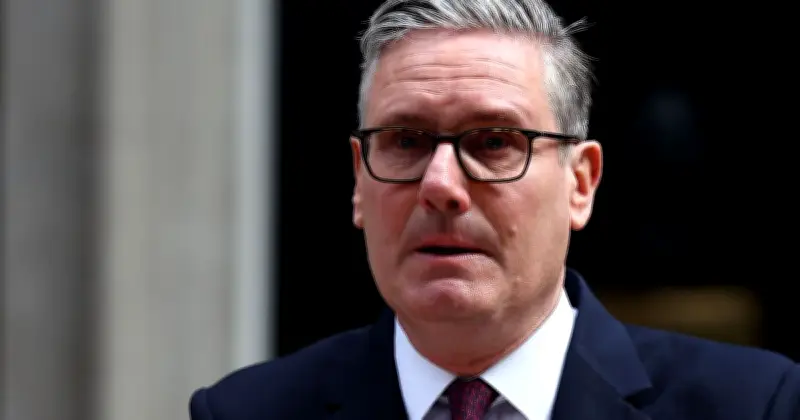
Prime Minister Keir Starmer's resignation speech was thrown into chaos on Monday as Rejoiner activists played loud music in an attempt to drown out his announcement. The incident, which occurred at a formal event, has been widely condemned as disrespectful and disgraceful.
Chaotic Scenes at Starmer's Resignation
As Starmer began his address, activists from the Rejoiner movement—a group advocating for the UK to rejoin the European Union—blared music from speakers, creating a cacophony that disrupted the proceedings. Security personnel intervened to remove the activists, but the damage was done, with the speech being cut short and delayed.
Witnesses described the scene as chaotic, with the activists shouting slogans and waving EU flags. The incident has sparked a fierce backlash from political figures across the spectrum, who labeled the activists' behavior as shameful and counterproductive.
Political Reactions
Senior politicians from both Labour and the Conservative Party condemned the disruption. A government spokesperson stated, "This was a disgraceful act of disrespect towards the Prime Minister and the democratic process. Such behavior has no place in our society."
According to a source close to Starmer, the Prime Minister was visibly frustrated but remained composed, continuing his speech after the disruption was quelled. The incident has reignited debates about the tactics of activist groups and the need for enhanced security at political events.
Impact on Starmer's Legacy
Starmer's resignation speech was intended to reflect on his tenure and outline his vision for the future. Instead, the disruption dominated headlines, overshadowing his message. Political analysts suggest that the incident may further polarize public opinion on the EU debate, with Rejoiner activists facing criticism for undermining their own cause.
The Metropolitan Police have confirmed that they are investigating the incident and that charges may be brought against the activists involved. The Rejoiner group has not yet issued an official statement, but some members have defended the action as a form of protest against what they see as a failure to address Brexit's consequences.




