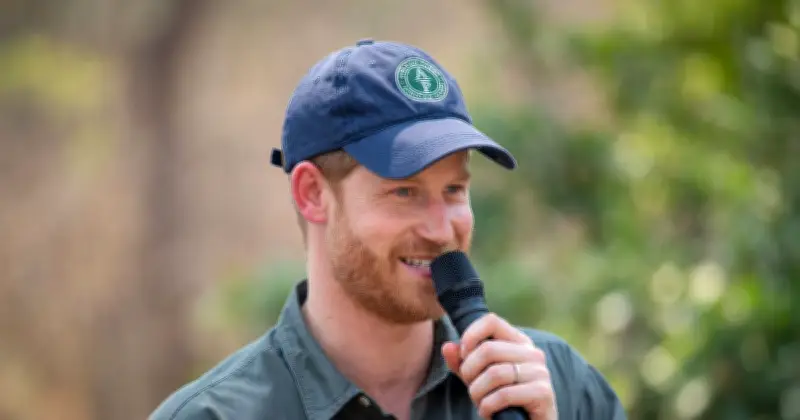
Prince Harry is parting ways with African Parks, the conservation charity he has been involved with for 10 years. The Duke of Sussex, who is moving to the UK in a matter of days, will no longer be on the board of directors of the charity, which works to conserve Africa’s wildlife and remaining wild areas.
The duke, 41, first became involved with the charity in 2016 when he visited Malawi and supported one of the largest elephant translocations in history. He then served as President of the charity for six years before becoming a member of the board of directors.
Board refresh and continued support
It is believed he will still support the charity from afar despite no longer being directly involved as of September 30. The departure comes as the charity has had a refresh of its board.

In a statement, Vas Narasimhan, the Chairperson of the African Parks Board, said: “We extend our thanks to all the members of the Board who generously volunteer their time in support of our conservation mission - and particularly to The Duke of Sussex, for a decade of committed service to African Parks.”
Past controversy and human rights findings
The charity, a non-profit conservation organisation that takes on responsibility for the long-term management of protected areas in partnership with governments and local communities, is believed to carry out work that Harry feels strongly about. However, while the charity has good aims at its heart to conserve Africa’s wildlife and parks, it has been involved in controversy.
Last year, the charity issued a statement admitting that some of its rangers carried out human rights abuses against the Baka community in Odzala-Kokoua National Park, Republic of Congo. An investigation began in 2023 following allegations, with law firm Omnia Strategy LLP hired to conduct an independent investigation.
The investigation found that some human rights abuses had occurred, with Omnia giving the charity advice after it found that there were “several failures” of its systems and processes. The charity welcomed the recommendations and vowed to make changes. It also said that staff members involved in incidents would have action taken against them.
Charity’s response and reforms
In their statement last year, African Parks said: “Specifically, in Odzala, we will take action against staff members implicated in previously unknown incidents or those that had not been adequately dealt with, where sufficient evidence is available.
“African Parks will define a bespoke framework that will guide provision of remedy in case of human rights breaches. To better understand the risks associated with management of the park, we will run a second human rights impact assessment as a follow up to the study done in 2021.
“At an institutional level, we have established an Independent Panel of eminent African judges and human rights specialists who will be responsible for handling all cases of serious grievances. This panel will also provide oversight of the overall grievance and redress mechanism and advise the Board on human rights matters.
“We are committed to ensuring a full understanding of human rights risks across all parks, having already conducted assessments in six areas we manage, with plans to complete the remaining areas by next year. We are embedding safeguards across all our operations, through improved policies and procedures including updating our Code of Conduct and Human Rights Statement of Principles.”