
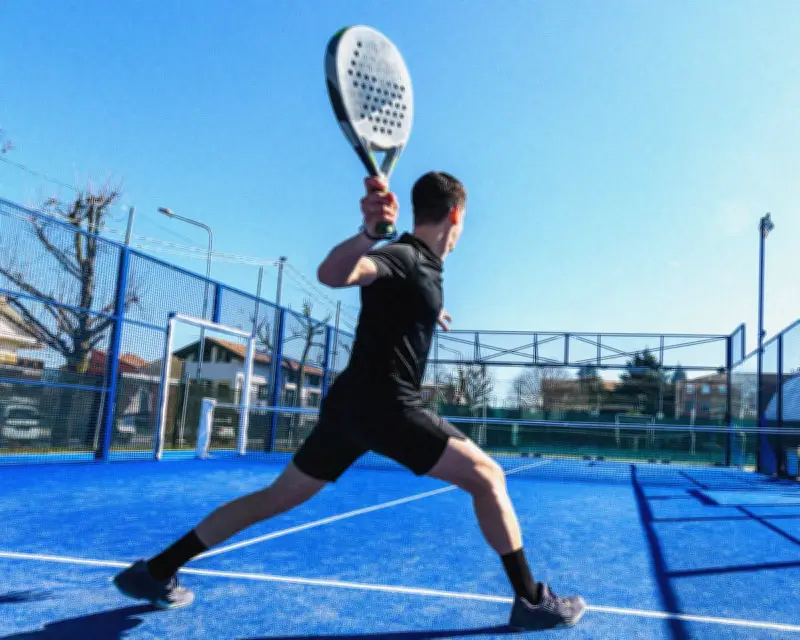
Campaigners are fighting back against the rapid spread of pay-to-play padel courts across London, which they say are displacing free community spaces and fueling gentrification. The latest casualty is Barking Skate Park, London's only full-size indoor skatepark, which closed on Sunday to make way for padel courts, leaving regulars like Aiwa Saito and her children without a safe indoor space to skate.
Community Spaces Under Threat
Saito, whose 11-year-old daughter Toko is on Skateboard GB's talent pathway, expressed concern about the loss of facilities. "Outdoor skate parks aren't safe for children, particularly teenage girls," she said. "Parents already tell their girls: 'You have to be really careful when you go skateboarding, which park you go to. It's not safe.' And to take that away, with no alternative, is unacceptable."
The closure has also impacted the wider community. Eleanor Dunlop, who led the campaign to save the venue, noted, "It's important to the local community. Parents come here to socialise, they bring their kids to be active. Barking and Dagenham is one of the most deprived parts of the country, and people really need this space to be accessible. I've seen panic in people's faces when I told them that it could close, because they're saying: 'Where am I going to take my kids?'"
Council Defends Decision
Barking and Dagenham Council said it owns the freehold but the skatepark is run independently by charity GLL, which has the right to decide what sports to offer. The council stated that "GLL has advised that the skatepark has been operating at a financial loss for a number of years and that it intends to replace it with indoor padel courts." They also noted that equipment from the skatepark has been distributed to other skateparks in the area.
The cost of padel is a major point of contention. With an average court price of £51 an hour in London, according to the racket sports app Playtomic, many residents feel excluded. "It's so expensive, it just feels exclusive," Dunlop said. This has attracted investors and private equity firms, leading to a 2,500% increase in UK padel courts since 2019, from 68 to over 1,800, per LTA figures.
Pattern of Gentrification
Similar disputes have arisen across London. In Bethnal Green, a £24-an-hour padel court was installed in a free multi-use area, prompting campaigner Lillie Almond to say, "The padel court has obviously changed who's now using this space, and how. This all results in the removal of culturally rich, diverse, long-standing communities – who are replaced with padel players."
In Camden, a proposal to replace a children's sandpit and play area with padel courts was rejected after protests. Councillor Hamza Chowdhury asked, "If the goal was to get more people active, why not invest in a free, all-weather basketball or football court? Growing sport should never come at the cost of shrinking free public space."
Oli Mould, professor at Royal Holloway, University of London, sees a broader pattern. "Gentrification is about the restriction of land. What's happening is people taking land away and putting a physical barrier around it – so it can be given to people who will pay. Any time that happens, that is gentrification."
Ongoing Fight
Despite the closure, Dunlop and fellow campaigners continue to fight the development, backed by local MP Nesil Caliskan and Skateboard GB, with an online petition gaining over 4,500 signatures. "Not listening to people who occupy a space, and then going in and changing it, is gentrification," she said. "I can't comment on padel as a sport, whether I like it or not. I just don't believe that it should displace the people who are already there. Having community spaces is so important – and they're being taken away."
A Tower Hamlets Council spokesperson defended the Bethnal Green trial, saying it "supports our work to increase access to a wider range of sports and improve the health and wellbeing of our residents." GLL and Camden Council were approached for comment.




