
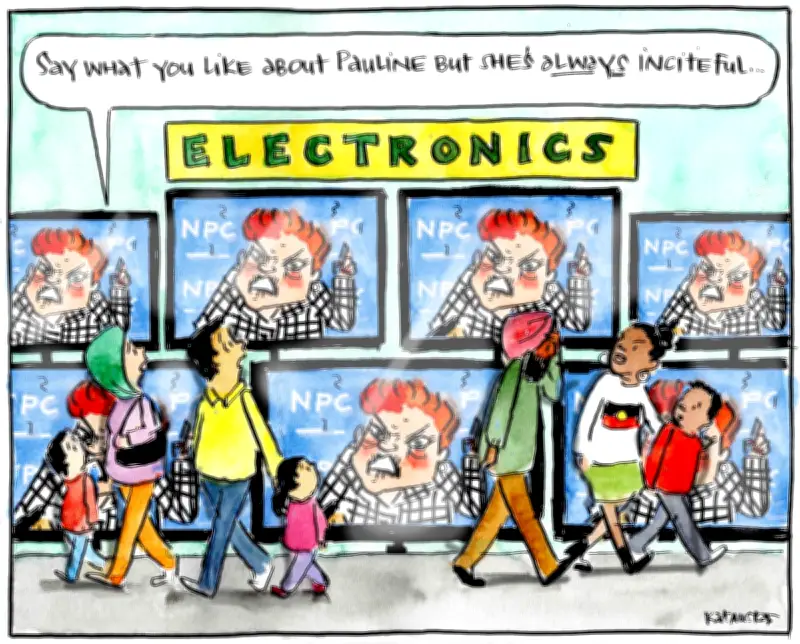
Pauline Hanson, the leader of One Nation, delivered a controversial speech at the National Press Club, reigniting the debate over multiculturalism in Australia. Her remarks, which criticized current immigration policies and called for a reassessment of multicultural values, drew sharp reactions from political leaders and community groups.
Hanson's Key Arguments
In her address, Hanson argued that multiculturalism has led to social fragmentation and that Australia should prioritize national unity over diversity. She claimed that immigration levels are too high and that the country risks losing its cultural identity. Hanson also criticized what she termed 'political correctness,' stating that it stifles honest discussion about immigration and integration.
Reactions from Political Figures
Prime Minister Anthony Albanese condemned Hanson's speech, reaffirming his government's commitment to multiculturalism. 'Australia is a successful multicultural society, and we will not let divisive rhetoric undermine our values,' he said. Opposition Leader Peter Dutton offered a more nuanced response, acknowledging concerns about immigration while distancing himself from Hanson's more extreme views.
- Greens leader Adam Bandt accused Hanson of stoking fear and division.
- Independent senator Jacqui Lambie expressed support for some of Hanson's points on immigration control.
- Community leaders called for a calm and respectful dialogue on the issues raised.
Public Reaction and Media Coverage
The speech dominated news cycles, with outlets highlighting both Hanson's controversial statements and the broader implications for Australian society. Social media saw a flurry of reactions, with hashtags like #MulticulturalAustralia and #HansonPressClub trending. Supporters praised Hanson for speaking 'truths,' while critics accused her of promoting xenophobia.
This event underscores the ongoing tension in Australia between embracing diversity and addressing concerns about immigration and national identity. As the nation continues to grapple with these issues, Hanson's speech serves as a catalyst for further debate.




