
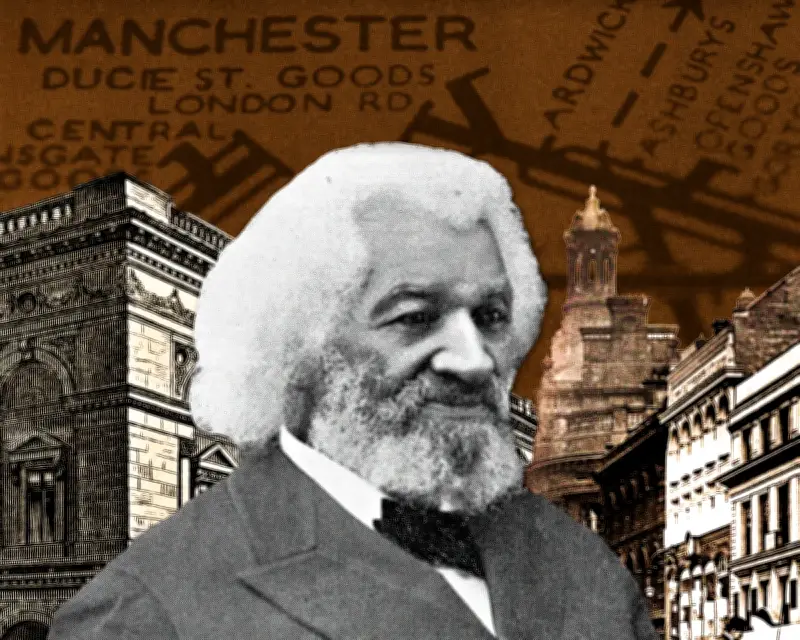
The Manchester Literary and Philosophical Society (Lit and Phil), in collaboration with Carisma and Creative Manchester, has inaugurated an annual lecture series to celebrate the legacy of Frederick Douglass, the renowned abolitionist, orator, and statesman who spent transformative years in Britain during the 1840s.
Douglass's Impact on Britain
Frederick Douglass arrived in the UK in 1845 at age 27, having escaped enslavement in the United States. His 19-month tour across Britain and Ireland included numerous speeches in Manchester, where he revitalized the anti-slavery cause. According to historian David Olusoga, who delivered the inaugural lecture, "He became a sensation. He revitalised the anti-slavery cause here in Britain in a way that no other speaker could. No American, including presidents, was photographed more than Douglass."
Manchester's Cotton Connection
Manchester was at the heart of the global cotton trade, which relied heavily on enslaved labor in the 19th century. Despite this connection, no blue plaque marks Douglass's presence in the city. The building where he stayed in St Ann's Square is now a Holland & Barrett store. The inaugural Frederick Douglass lecture, titled "Frederick Douglass: A Global Life," took place in June 2024.
Freedom and Activism
While in Britain, Douglass raised funds to establish his abolitionist newspaper, the North Star, and officially became a free man. In August 1846, Quaker sisters-in-law Anna and Ellen Richardson raised £150 to purchase his freedom from Thomas Auld. This transaction drew criticism from some abolitionists, but Douglass defended it in a letter from Manchester on 22 December 1846, stating, "I am legally the property of Thomas Auld, and if I go to the United States, Thomas Auld, aided by the American government can seize, bind and fetter, and drag me from my family... it was not to compensate the slave-holder, but to release me from his power."
Legacy and Continued Relevance
Dr. Dhun Daji, a trustee of Lit and Phil, explained that the lecture series was initiated "by our society feeling the life and times of Frederick Douglass needed to be better known – he left a template for a kind of activism that is still needed today." Douglass's time in Britain, free from the fear of re-enslavement and in an unsegregated society, allowed him to evolve intellectually. He also championed women's suffrage and Irish liberty alongside the anti-slavery cause.
Return to Britain in 1859
When Douglass returned to Britain in 1859, racial attitudes had hardened, and he faced pro-slavery propaganda and scientific racism. Nevertheless, the abolitionist spirit persisted, as demonstrated by Lancashire cotton workers who boycotted cotton produced by enslaved people during the American Civil War. By 1865, slavery was officially abolished in the US.
Douglass's Farewell Speech
In his "Farewell to the British people" speech in London in March 1847, Douglass reflected on his transformation: "I go back to the United States not as I landed here – I came a slave; I go back a free man. I came here a thing – I go back a human being."




