
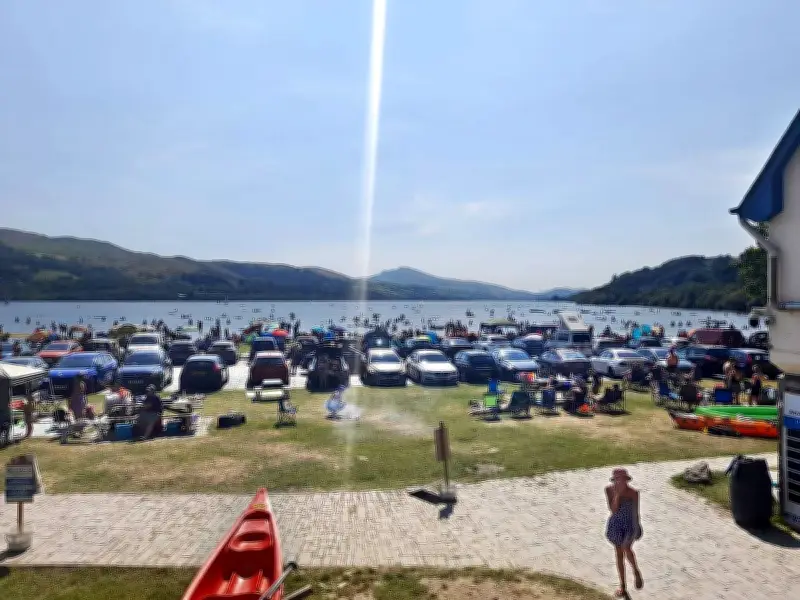
Eight motorcyclists from Devon have become among the first to be caught out by new ANPR parking cameras at Llyn Tegid, a popular lake in Eryri. Each is facing two £60 penalties after stopping twice to buy ice cream, leaving them with a combined bill of £960.
The cameras went live on July 13 in a bid to tackle overnight camping at the Bala lake. After two ice-cream stops, the group belatedly discovered that new parking charges had been introduced. Their frustration, however, is nothing compared with the outrage felt by locals who believe they are being shut out from their own lake.
£5 up to four hours
A petition has been submitted to Eryri National Park Authority (ENPA) calling for free access to the lake's car parks. The dispute follows chaotic scenes on local roads during recent summers as Bala struggles with over-tourism. In response, capacity was increased at Llyn Tegid's two car parks, charges were raised and solar-powered ANPR (automatic number plate recognition) cameras were fitted.
Parking now costs £5 for up to four hours with a daily charge of £8. Different rates apply for watersports users, while Blue Badge holders receive double the standard time allocation. Motorcyclists are now charged £1 to park in a space they claim was previously free.
Biker: "We would of course have paid"
A regular visitor from Torquay, who was among the group, said on a local message board: "I've been visiting Llyn Tegid for many years from my home in Devon."
"This year I brought seven friends with me on motorcycles to introduce them to this beautiful area. We stopped here twice to buy an ice-cream from the lovely lady in the ice cream van – this is something I've been doing for getting on for 10 years."
"In that time I have never been aware of a parking fee for motorcycles in the bay just as you enter. Now we have been home for a week we have started to receive the fines. As we visited twice, we are all expecting £120 each in fines ....for apparently missing £2 in parking fees!."
"None of us remembers seeing any new signage in that motorcycle area. We would of course have paid the measly £1 charge if we had been made aware of it. Sadly, it has put a bitter taste in our mouths after visiting your beautiful countryside."
Fines before cameras went live?
Other drivers have also claimed to have been slapped with £60 penalties after visiting on July 12, the day before ANPR cameras were switched on. They are challenging the fines but remain doubtful about their prospects with a private operator now running the car parks.
Overnight parking restrictions at nine other Eryri car parks were suspended in June after a public outcry. However, the restrictions remained in place at the two Bala facilities which now operate as part of a "pilot scheme". Both car parks are shut from 12am-2am each day to tackle overnight parking.
'Nobody's socialising by the lake at 3am'
In opposition to these arrangements, Bala locals have started a petition and begun writing letters demanding better access. Frustrated by waterside rubbish, disturbance and unauthorised camping, many had pushed for stricter controls – but the resulting measures have now backfired on them.
They must also fork out higher parking fees and, possibly, hefty penalties. As a compromise – described as a "local benefit" – they receive one hour's free off-peak parking. However, residents argue the available times are a kick in the teeth. In a change.org petition, they highlighted that the hour's complimentary parking only runs between 2am and 8am, or 5.30pm and midnight.
"Nobody's socialising by the lake at 3am," they raged. "Calling that a benefit isn't generous, it's insulting."
In correspondence to ENPA, petitioner Elin Pritchard added: "That's not a meaningful concession for anyone trying to visit after work, at the weekend, or with children, it's a token window designed to let you say one exists."
Petition and response
The petition contends Llyn Tegid and its two car parks have "belonged to this community for generations". Calling for free round-the-clock access, it added: "This lake is where this community meets, not a place we should have to pay to stand in."
Elin expressed additional worries: "We are constantly told, by government, by health bodies, by the outdoor sector itself, that people, and especially children, need more time outdoors, not less. A charge like this does not encourage that. It quietly discourages it, and it does so most for the people who already have the least room in their budget to absorb it."
Also sparking local concern is the enforcement approach. Elin said: "This scheme is being managed on the authority's behalf by Initial Parking, a private company. Whatever the safeguards, the practical effect for residents is that access to a public lake is now gated by a private firm whose income depends on charges and penalty notices being issued."
"That is a significant change to how this land is used, and it deserved real consultation with residents and community councils before it began, not after."
The petition had attracted 534 signatures within six days – more than a quarter of the town's population. One supporter said it was "awful that people are being pushed away from beautiful natural spaces".
In response to Elin's letter, Bethan Wyn Hughes, ENPA's director of corporate services, said the pilot would run until the end of the October half-term. Thereafter, the ANPR system would remain operational – but changes could be introduced.
She added: "The purpose of the pilot is to gather evidence of the effectiveness of ANPR of dealing with both overnight camping and general non-payment of parking fees."
"The findings from the pilot, including operational ANPR data, resident feedback, community council views and other relevant information, will be evaluated as part of the overall review, and will help inform any future decisions. It would be premature at this stage to speculate on what conclusions may be reached or what changes, if any, may result from that process."
ENPA said the pilot scheme was launched to help it manage its car parks more efficiently and to ensure proper parking charges are collected. The new arrangements are also expected to "improve the visitor experience" and contribute towards ongoing maintenance of the sites.




