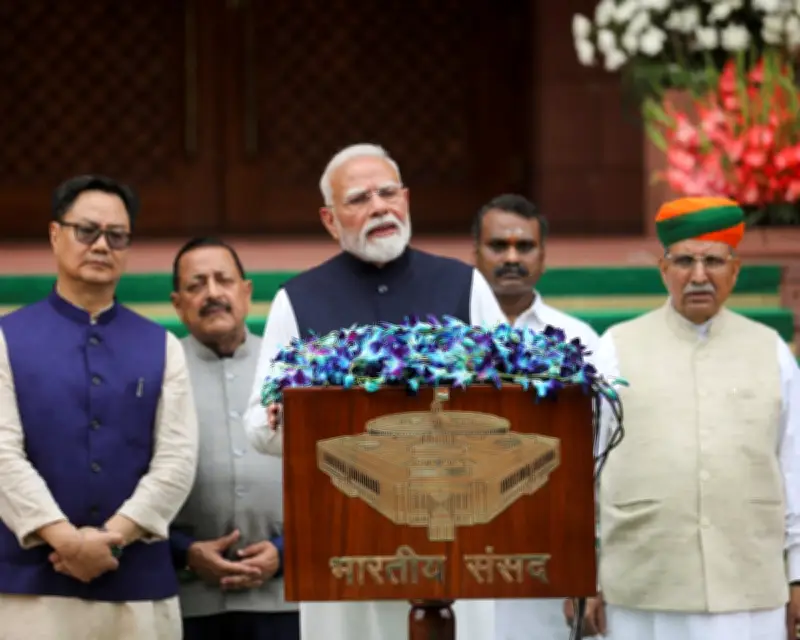
The Cockroach protests that have swept through India this summer have forced the resignation of education minister Dharmendra Pradhan and humiliated Prime Minister Narendra Modi, undermining the indomitable power of his Bharatiya Janata party (BJP) that has ruled India for the past 12 years.
Origins of the protests
The movement began as a sardonic joke on 16 May when Indian student Abhijeet Dipke posted on X: “What if all cockroaches come together?” It was a response to India’s chief justice, who had called unemployed young Indians “cockroaches”. Thousands responded online, and Dipke flew to Delhi on 6 June to protest at Jantar Mantar, the famous protest ground.
The Cockroach Janta party (CJP) – a play on the BJP’s name – created a website listing demands including reform of India’s education system. India has a young, better-educated population, but universities are crumbling and the economy fails to provide jobs for many graduates. Millions spend years preparing for gruelling public exams, often funded by parents going into debt.
Exam leaks and anger
Exam papers are routinely leaked and sold to the highest bidder. After a medical entrance exam leak in May, at least 12 students took their own lives, some leaving notes saying they could not bear resitting the test. The leaks symbolize institutional corruption, inflaming anger towards a failing political system.
Hunger strike and police action
Engineer and education reformer Sonam Wangchuk joined the protest on 28 June and declared an indefinite hunger strike until Pradhan resigned. He was forcibly removed by Delhi police on 18 July and taken to hospital. Footage of his hospital stay went viral, and the Cockroach party called for a march on parliament. On Monday, tens of thousands filled Delhi’s streets. The mood was jubilant but turned violent as police fired teargas and used batons.
Despite the violence, many protesters remained. Writer Rahul Bhatia said: “People were just revelling in the opportunity to speak their mind. It was delightful. It made people think: things are possible.”
Resignation and implications
Pradhan’s resignation is a major victory. He is a Modi loyalist and former organiser for the RSS, the Hindu supremacist group affiliated with the BJP. The resignation creates a crack in the BJP’s armour. Modi has bent to popular will for one of the first times, and ministers may now question the security of their positions.
India has taken a sharp turn towards autocracy under the BJP. Main media channels are controlled by or favourable to the government and gave minimal coverage to the protests, so young people shared information and anti-government memes on social media. The party lost control of the narrative after Modi posted two reels to his Instagram followers that seemed contrived. He was “crucified online for those videos.”
The real test of the BJP’s power will come at election time. The party has attempted to capture India’s electoral machinery, pushing for reforms that would tilt power further in Modi’s favour. In West Bengal, the BJP revised the electoral roll and excluded more than 9.1 million voters, securing a decisive victory earlier this year. “It seems like the BJP has much less support than people actually think,” Bhatia said.