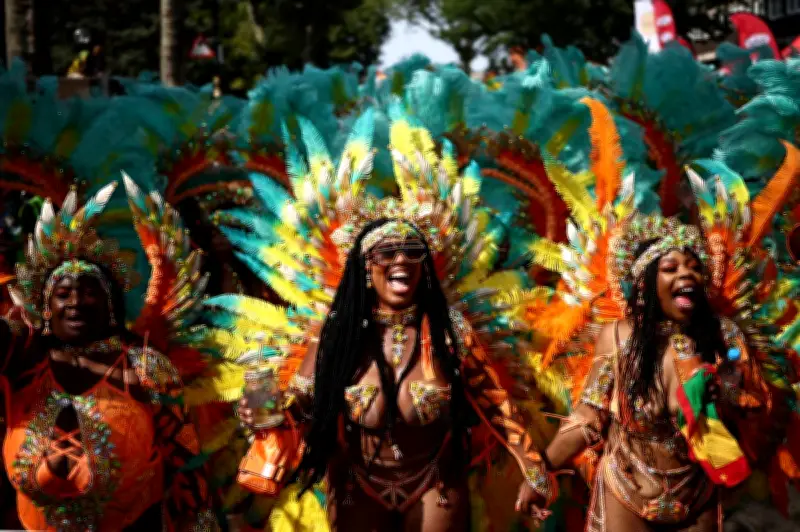
Notting Hill Carnival mas bands say their future is under threat from economic pressures and tighter regulations, and are calling for more funding to preserve the Caribbean heritage event. Operating a mas band is a serious business, with leaders balancing expenses across costumes, marketing, security, music, catering, and transport.
Mas comes from the word masquerade, and the bands of people playing music and dancing during the parade are known as mas bands. Early mas was linked to African traditions, and the costumes were based on parodies of the French planter class, such as satirical spoofs like Dame Lorraine. The groups will return to the streets of Notting Hill this bank holiday weekend, as Carnival attracts up to two million people. A steel band competition takes place on Saturday, before the children's and adult's day parades on Sunday and Monday.
Financial strain on bands
Colin Julien, co-founder of Caribbean Sessions mas band, is at the helm of a huge operation. Mas bands must deliver an experience to their members that includes meals, live DJs and security on Carnival day. "It has to be to a high standard so that people return, people can tell their friends and family that they had a great time with us - they got fed, watered, and they felt secure," Mr Julien explains.

Vinny Vincenzo Ranks, one of the owners at Karnival Mania, feeds more than 900 masqueraders every year. Even from their mas camp - the location where costumes are built and distributed - there is rum punch flowing on tap for customers collecting their outfits. Yet the economics of carnival can be brutal for mas camp leaders. Bands must fund their own private security teams for the parade and rely on costume sales to offset operational costs.
"Nobody runs a mas band for profit," Mr Julien says. He recalls a year when costume sales were dangerously low, putting their band at risk. Some owners have even been left bankrupt or are struggling to pay their mortgages even months after the music stops, Mr Ranks says. "There's a lot of bands that need help. We really need some help in this carnival community with some funding," Mr Ranks says.
Funding and sponsorship challenges
Mr and Mrs Julien, and Mr Ranks, are among the fortunate mas bands that receive some funding towards operational costs from Notting Hill Carnival Ltd. Some also manage to secure corporate sponsorships to help juggle costs. "We are forever grateful Notting Hill Carnival provided us with funding and we utilised that funding straight away into four departments - volunteering, food, security and transport," Mr Julien said, adding that they were also able to secure sponsorship from a drilling company after more than 100 attempts.
Not every mas band is so lucky. Several bands have been forced to close their doors for good, while others are hanging on by a thread. Duka Mas Dominik announced on Instagram it had withdrawn from the festival "driven by unsustainable financial and operational pressures," adding that the decision was a "painful" one. The group cited "escalating costs, absence of key funding streams, costume orders below anticipated levels, and an increasingly onerous regulatory landscape" as reasons that forced the move. Arawak is another band that was forced to withdraw from this year's carnival, explaining it was "due to the restrictions placed on bands this year."
Though details remain vague, regulations placed on bands are important to follow, and every band must complete a rigorous application process to be allowed to perform at Carnival. For example, no more than a third of the band can wear t-shirts, with the majority required to be in full costume. Though the rule is meant to maintain high standards, it also puts bands under pressure to sell costumes.

Passing on traditions
While many mas groups outsource manufacturing to China or other countries, Pauline Jay, co-founder of Funatik Mas, constructs everything by hand in the capital. Having played mas since the 1990s, she uses the camp to pass down the craft to the next generation. For Ms Jay and her husband Martin, the mas camp provides a secure environment for young people - in many ways a substitute for the youth clubs of the past. "There were all different ages in the mas camp, from babies all the way up to 70 year olds," Ms Jay says. "I know our youth are a bit misguided at the moment. But our band is one of the bands that would like to embrace that generation and help them. It will give them some sort of belonging," she adds.
In the Julien household, traditions are already being passed to the couple's six-year-old twins Christian and Gabriel, who are learning to shape wire and foam, dance to soca tunes, and run a large-scale mas band operation. "It's important to pass on the knowledge in a palatable way," Mr Julien says. When he grew up, attending mas camp was a "non-negotiable," but he wants his children to be "invested" in the future of Carnival out of passion.
Matthew Phillip, CEO at Notting Hill Carnival Ltd, says that efforts are being made to support younger designers and help smaller bands to showcase their work. He added that this year, the carnival will see more live bands performing on the route to help spotlight UK soca and calypso artists. "A lot of funding in recent years has been focused on safety and security," he explained, but plans are in place to ensure more funding is given to the artists at the heart of the event. Notting Hill Carnival Ltd is also looking to help bands secure more funding and that more resources continue to be available.
Yvette Reinfor of Notting Hill Walks has pushed for carnival arts to be taken seriously and has warned that reducing the cultural aspect of the festivities puts the carnival at risk. "Without cultural relevance, it becomes nothing more than a street party," says Ms Reinfor. "And a street party is easily ticketed, displaced, or dismissed. Bring the culture back, and it commands respect." Mas bands, steel bands, and sound systems all need resources if Carnival is to survive. As Mr Julien says, "We cannot be the future if we don't have the financial support to stand on."