
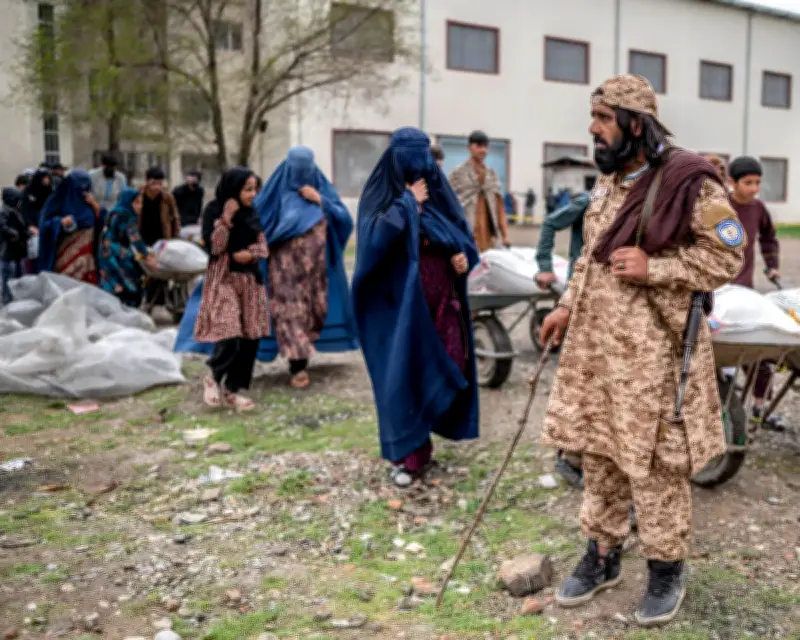
Five years since the Taliban returned to power, life for Afghan women has become increasingly oppressive, with systemic assaults on their rights prompting international calls for gender apartheid to be recognized as a crime against humanity. Journalist Nelufar Hedayat, in a personal reflection, describes the profound changes and the emotional toll on her family and friends still in Afghanistan.
Personal Stories of Loss and Separation
Hedayat recounts the harrowing experience of trying to evacuate a close friend, a headteacher and feminist, after the fall of Kabul in August 2021. Despite months of effort, she was unable to secure her friend's escape, and their last conversation ended with the friend contemplating suicide. "I've tried everything I can think of and pushed everyone I know, but I can't get you on a flight out," Hedayat told her. The friend responded that she would never work or be self-sufficient again, asking if ending her life was better than carrying on.
Since then, their lives have diverged so much that they cannot have a proper conversation. Hedayat notes, "We both hesitate to share stories about our lives for fear it will upset the other. We have been rendered speechless."
Systemic Oppression and Regional Conflicts
Under the Taliban's de facto rule, life changed immediately for her family and friends. A friend who was 14 at the time of the western withdrawal said, "During the previous government, my mother forced me to go to school, attend taekwondo classes, and visit the library. My father agrees with the Taliban's rules. He believes I should get money from my future husband instead. For me, this feels like being sold."
The situation is compounded by regional conflicts. In February 2026, Pakistan declared "open war" with Afghanistan, unleashing airstrikes that killed hundreds and displaced many thousands. A cousin described the terror: "Pakistani drones were launching rocket attacks, and we could only see the flames and hear the explosions in despair."
A Call to Keep Stories Alive
Hedayat highlights that 6 million refugees have been forced back to Afghanistan by Iran and Pakistan, the EU has held closed-door talks with the Taliban in Brussels, and half the population faces severe food insecurity. She emphasizes that the Taliban are not an inevitability, having been in power for only 10 years in their entire history.
She urges Afghan people to keep their stories alive to rebuild an identity of their own making for when the Taliban are no more. For her, that will mean calling her friend to learn about her life, having for the first time in five years the impossible conversation.




