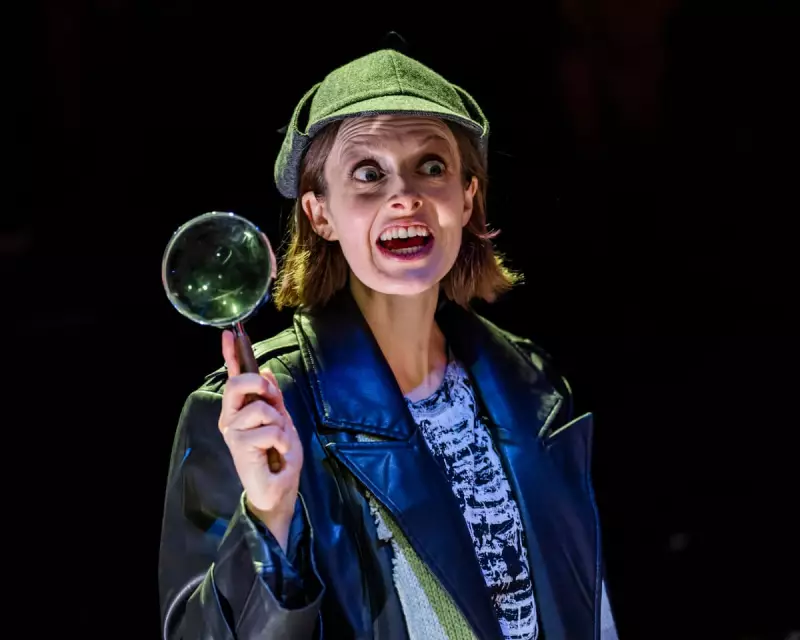
A new theatrical take on the world's most famous detective has arrived in London, but its central mystery is why its promising premise fails to fully engage. Kate Hamill's "Ms Holmes and Ms Watson – Apt 2B" is running at the Arcola theatre in London until 20 December, offering a gender-switched riff on Arthur Conan Doyle's classic stories that, according to critics, struggles to find its comedic or dramatic footing.
A Modern Flat Share on Baker Street
The play transports the iconic duo to a post-pandemic London. Simona Brown plays Joan Watson, an American on a sort of gap year who emphatically states she is "not" a doctor. Answering a flatshare advert, she meets the eccentric Sherlock Holmes, portrayed by Lucy Farrett, who is quick to clarify she is not to be called 'Shirley'. Despite Watson's immediate suspicions and reluctance, the pair embark on a series of detective adventures together, navigating a world where the title's use of "Ms" hints at covert lesbianism in a bygone era.
Promise Undermined by Execution
Directed by Sean Turner, whose credits include The Play That Goes Wrong, the production leans into satire and parody. However, it is criticised for generating the vibe of an improv sketch with ropey comic timing and overfamiliar jokes. The capable supporting cast, Tendai Humphrey Sitima and Alice Lucy, play a panoply of characters adeptly, but the material lets them down.

The core issue identified is that Hamill's clever central idea—the gender switch—remains frustratingly opaque. The play adheres so faithfully to Doyle's case-of-the-week structure that it fails to probe beneath the surface of its own concept. The potential for exploring a dynamic akin to Gertrude Stein and Alice B. Toklas is noted but left undeveloped. While Holmes might be a lesbian and Watson may swing both ways, any frisson is lost in what becomes a series of "relentlessly plotty larks".
Character and Comedy Critiques
On stage, the dynamic feels elementary in the wrong way. Farrett's Holmes is a high-pitched character, often delivering clichés, whose drug-taking and insistence on turning everything into a game of logical deduction quickly rubs the more grounded Watson the wrong way. The comedy is deemed "jejune", relying on types and even lazy ethnic jokes, rather than sharp wit or insightful commentary.
The verdict from the stalls is that the play is caught in an awkward middle ground: neither funny enough to succeed as pure comedy nor serious enough to offer compelling drama. The result is a production with flashes of promise that ultimately leaves audiences wishing for less capering and more substantive storytelling.
For those curious about this modern twist on a Victorian classic, "Ms Holmes and Ms Watson – Apt 2B" continues its run at the Arcola theatre in Dalston until 20 December.