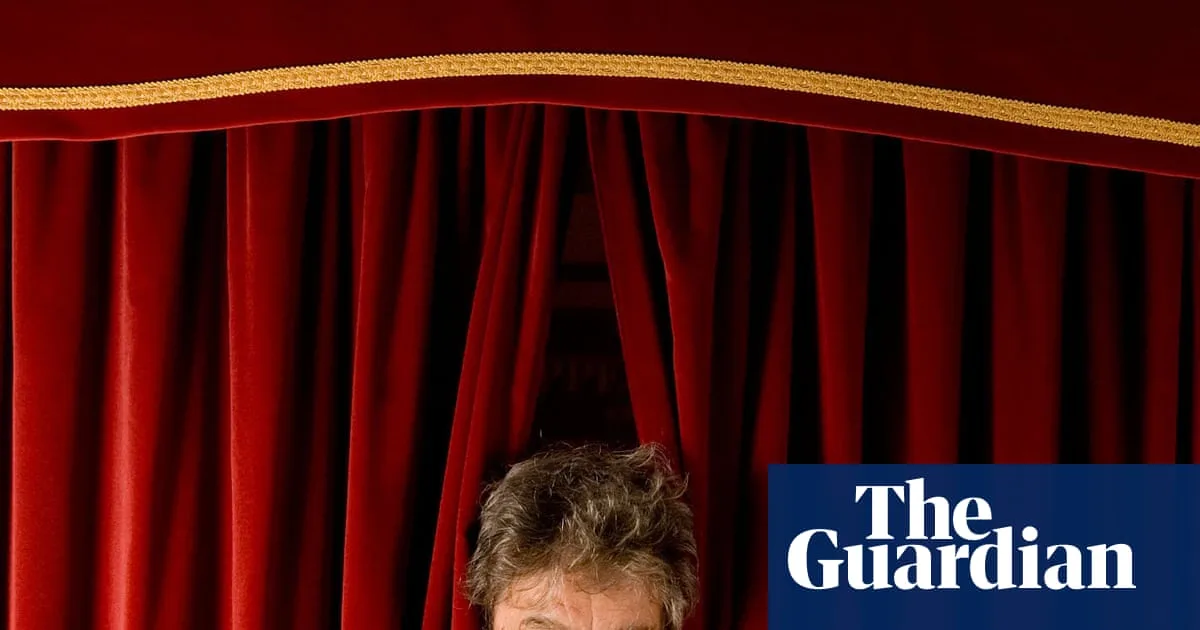
In a deeply personal and moving tribute, acclaimed director Patrick Marber has shared intimate memories of his two-decade friendship and professional collaboration with the late theatrical titan, Sir Tom Stoppard. Marber, who directed celebrated revivals of Stoppard's Travesties and the world premiere of his final play, Leopoldstadt, paints a portrait of a man of immense warmth, towering intellect, and a core of steel forged by a painful past.
From Schoolboy Fan to Trusted Collaborator
Marber's fascination with Stoppard began as a 15-year-old schoolboy in 1979, watching older pupils perform Travesties. He recalls being "spellbound" by its glamour, even if he found it utterly incomprehensible. This early admiration blossomed into a mentorship after Marber's own play, Dealer's Choice, opened at the National Theatre in the mid-1990s. Stoppard, then on the NT board, praised the work, and soon after, approached the young playwright at an event. "He gave me a hug and told me I was a proper young playwright," Marber remembers, describing the encounter as a pivotal moment of validation.
Their relationship evolved over twenty years of correspondence, lunches, and mutual support. Stoppard offered shrewd advice, such as suggesting Marber condemn a character to life rather than death, and became a constant, encouraging presence. This dynamic shifted fundamentally in 2015 when Stoppard called to discuss a revival of Travesties at the Menier Chocolate Factory. After a tentative inquiry about another director, Marber boldly put his own hat in the ring and was offered the job two weeks later.
Smoky Rehearsals and the Iron Within
Working together professionally revealed new, more complex layers of Stoppard's character. Marber soon resumed smoking to keep pace with Stoppard's dawn-to-bedtime habit during their long, collaborative meetings. Rehearsals for Travesties were intense. Despite his famed charm and generosity, Stoppard could be fiercely protective of his work in the rehearsal room. "We'd be working a scene... and out of nowhere he'd shout: 'I hate this, I hate it!'" Marber recounts. These startling outbursts were never discussed, but Marber came to love this "passion for the work and his tough love for getting it right."
This toughness, Marber explains, stemmed from Stoppard's history. Born Tomáš Sträussler in Czechoslovakia in 1937, he was a fatherless Jewish refugee who faced antisemitism after arriving in England aged eight. His stepfather, Major Stoppard, never saw his plays and later asked him to drop the famous surname. "There was rage and pain and iron in Tom," Marber writes, noting this depth fuelled his later masterpiece, Leopoldstadt. The play's key line, for Stoppard, was an accusatory: "No one is born eight years old... You live as if without history, as if you throw no shadow behind you." The play was his profound examination of that shadow.
A Final Chair, a Final Cigarette, and a Lasting Legacy
The success of Travesties, which transferred to the West End and Broadway, was marked by a characteristically generous gesture from Stoppard. He delivered to Marber's flat an antique corner chair that had belonged to the play's original director, Peter Wood—the chair Stoppard had always sat in for notes. It was a symbolic passing of the baton.
Their final collaboration, Leopoldstadt, began rehearsals in late 2019, navigating pandemic closures before triumphing in London and New York, earning Stoppard a record-breaking fifth Tony Award in 2023. As Stoppard's health declined in his final years, the rituals remained. About a year before his death, during a visit to his London flat, a frail Stoppard who had given up smoking asked Marber for a cigarette. They smoked four each, back to back, with Stoppard chuckling like a guilty schoolboy. Marber helped him to bed, shared a hug and an "I love you," in what would be their last private moment.
Marber concludes by reflecting on the immense privilege of guiding two of Stoppard's monumental plays. He sees Travesties and Leopoldstadt as works that "travel beautifully through time," capturing the tumult of the 20th century from a single room. Ultimately, he notes, "No one escapes their childhood. Not even a genius can do that." His tribute immortalises not just the witty, charming knight of theatre, but the whole, complicated man—the refugee, the artist, the friend—who lived and wrote with unparalleled brilliance.