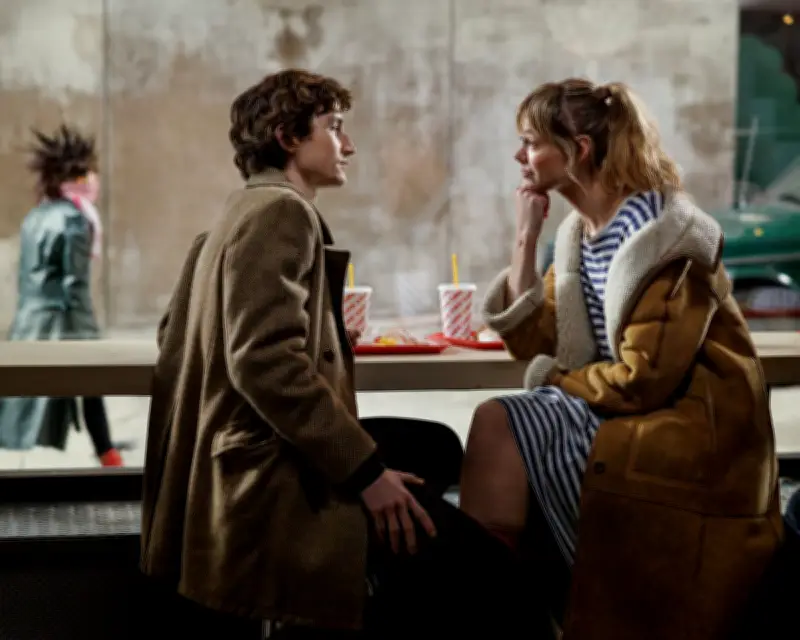
The new Faithless TV reboot, adapted from Ingmar Bergman's scripts by Sara Johnsen and directed by Tomas Alfredson, is a six-episode series that revisits the 2000 film directed by Liv Ullmann. It premiered on Sky Atlantic and is available on Now. The story is set in 1977 Stockholm, where actor Marianne (Frida Gustavsson) and her pianist husband Markus (August Wittgenstein) are visited by Markus's oldest friend David (Gustav Lindh), a wannabe film auteur recently divorced and back from London. A second timeline in the present shows lauded director David (Jesper Christensen) and veteran performer Marianne (Lena Endre, who played the younger Marianne in the Ullman film) reflecting on the damage caused by their affair.
Baffling Camera Work and Character Choices
Alfredson frequently uses shots of characters in reflection, presumably as a homage to Bergman, but these often feel forced rather than revealing. The camera pans from David to Marianne, lingering on her reflected in a mirror at an angle only the audience can see, leaving viewers puzzled. The female lead, Marianne, is hard to understand: she chides David for his script's naive depiction of female desire yet proves complacent about her own emotional infidelity. Their dynamic seems to hinge on a teacher/pupil kink, despite both having children over 10 years old. The chemistry between Gustavsson and Lindh is tepid, making them come off as awful people rather than ordinary individuals cursed by an irresistible attraction.
Retro Allure and Consequences
Despite its flaws, Faithless slips down easily, luring viewers into the urban chic of the late 20th century, where everyone is an artist, intense conversations happen over cheap red wine, and sex is a universal preoccupation. The point of the series is that David and Marianne's lust has terrible consequences for those around them, especially their children, and for the lovers themselves. Viewers wait to see if the comeuppance will be as brutal as in the film. However, for that to land, the attraction needs to feel cursed and undeniable, which the actors fail to convey.
A Male Fantasy?
Despite being written by a woman, Marianne comes off like a male fantasy of another man's wife, who finds bad writing and blunt wooing irresistible. The series ditches the film's framing device of an unreliable narrator, treating Marianne as a three-dimensional woman with plausible agency, but the early episodes lose her in Bohemian wish-fulfilment. The interactions between David and Marianne drip with sauce from the start: during their first dinner, David weeps about his failed marriage then eyeballs Marianne about her "delicious" blackcurrants. The next day, with Markus away, they discuss "the difference between eroticism and pornography" as she drives him around Stockholm.
Conclusion
Faithless is frequently bewitching in its retro pretensions, but its baffling choices in camera work and character development may leave audiences puzzled. As one critic noted, "if you know why the camera pointedly pans from David to Marianne, do write in – preferably on thick, cream-coloured notepaper in handwriting that suggests alluring creative anguish." The series airs on Sky Atlantic and is available on Now.