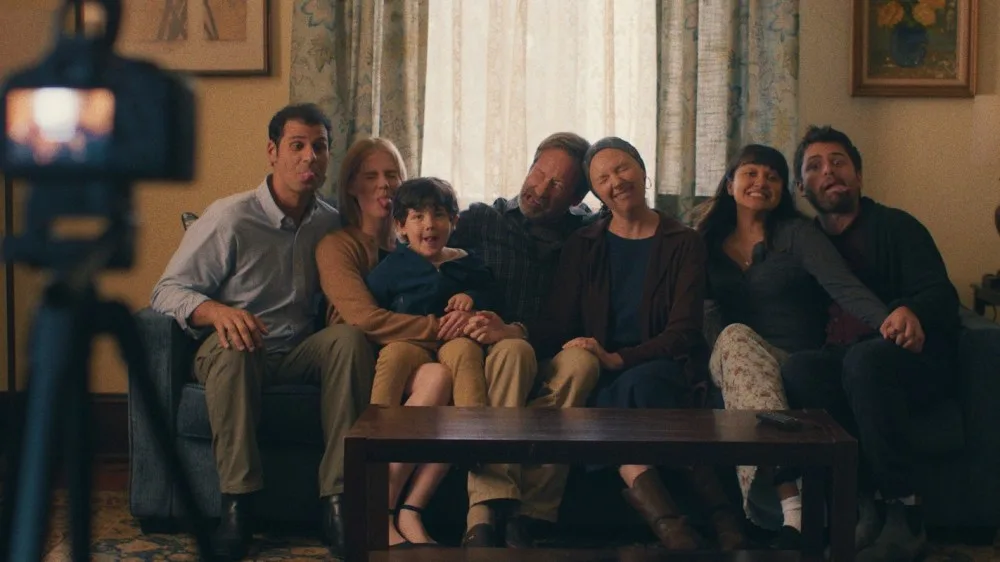
See You When I See You Review: Duplass Returns to Sundance with Poignant Grief Drama
Jay Duplass makes his long-awaited return to the Sundance Film Festival after a sixteen-year hiatus with See You When I See You, a heartfelt comedy-drama that navigates the turbulent waters of family grief. The film features an impressive ensemble cast including David Duchovny, Hope Davis, Lucy Boynton, and former Sundance favourite Cooper Raiff, who takes on the lead role of Adam.
A Personal Story of Loss and Healing
Adapted from comedian Adam Cayton-Holland's memoir Tragedy Plus Time, the 102-minute film presents a deeply personal exploration of trauma following a devastating family loss. The narrative follows Adam, played by Cooper Raiff, as he grapples with the suicide of his younger sister Leah, portrayed with haunting vulnerability by Kaitlyn Dever. The film opens with Adam discovering his sister's body in her Denver home, a moment that sets the tone for the complex emotional journey ahead.
Balancing Comedy and Tragedy
Duplass attempts a delicate tonal balancing act throughout the film, weaving together moments of profound grief with unexpectedly breezy comedy. This approach proves challenging at times, particularly in the immediate aftermath scenes where the Whistler family engages in borderline jaunty banter about funeral arrangements. An upbeat score by Jordan Seigel occasionally adds to this tonal confusion, creating an unusual contrast with the sombre subject matter.
Each family member copes with their loss in distinct ways:
- Mother Paige (Hope Davis) throws herself into conservation work
- Father Robert (David Duchovny), a civil rights attorney, compulsively shares the tragedy with everyone he meets
- Older sister Emily (Lucy Boynton) hyper-fixates on funeral logistics as a coping mechanism
Focus on Adam's Journey
Despite intriguing subplots for each family member, the film ultimately centres on Adam's personal struggle. We witness his gradual spiral through listless work performance, a DUI incident, and awkward attempts to reconnect with a woman he previously ghosted. The film's title, initially puzzling, gradually reveals its significance as Adam's journey unfolds.
Duplass employs flashback sequences that transform into confrontations with Leah's memory, though these occasionally veer toward over-dramatic territory. Kaitlyn Dever manages to convey both vibrant energy and emotional unreachability in her limited screen time, while Cooper Raiff excels in the film's more comedic moments, particularly during talky exchanges that showcase his signature offbeat delivery.
Therapeutic Exploration
A significant portion of the film focuses on Adam's experience with eye movement desensitization and reprocessing (EMDR) therapy for PTSD, guided by Dr Anya (Poorna Jagannathan). Duplass approaches these clinical scenes with complete seriousness, depicting the process of reliving traumatic memories through handheld pulsators. The repeated return to Leah's bathroom door becomes a powerful visual motif, though some viewers might find the emotional impact less overwhelming than intended.
Sundance Context and Legacy
The film's premiere at the 2026 Sundance Festival carries particular significance, marking what many are calling the "end of an era" as the festival prepares to leave Park City without founder Robert Redford. Duplass himself represents this legacy, having first attended in 2003 with his brother Mark and their "$3 film," eventually becoming synonymous with the mumblecore movement through projects like The Puffy Chair and Cyrus.
See You When I See You represents both a homecoming for Duplass and a sincere attempt to explore the complex terrain of sibling grief. While the film occasionally stumbles in its tonal balancing act, it offers moments of genuine poignancy and represents an ambitious attempt to bring therapeutic processes to cinematic life. The film is currently screening at Sundance 2026 while seeking wider distribution.