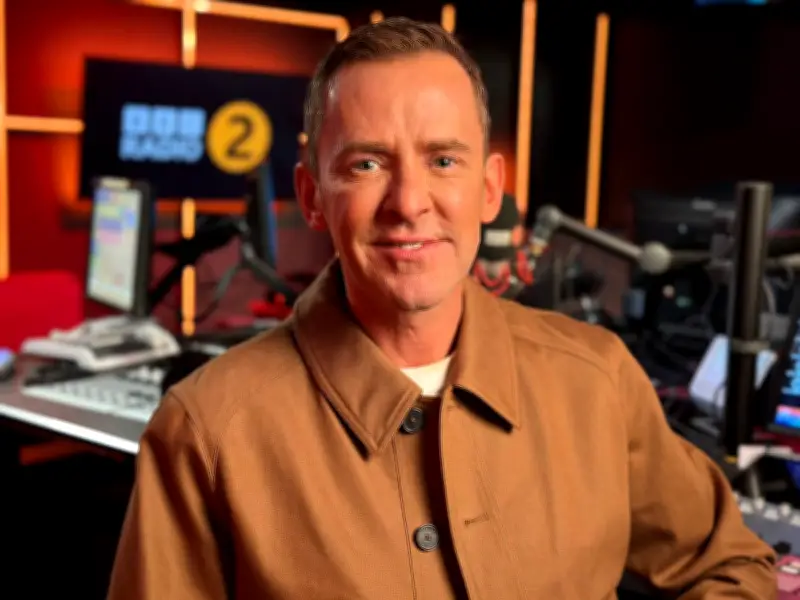
Scott Mills doubled his BBC salary to between £745,000 and £749,999 in the 2025/26 financial year before being sacked in March over personal conduct allegations, the BBC's annual report has revealed.
Scott Mills' Salary Surge and Dismissal
Mills took over the Radio 2 breakfast show in January 2025, which saw his pay jump from £355,000-£359,999 to £745,000-£749,999. However, the Mirror first reported his dismissal after the BBC learned that the alleged victim in a 2017 police investigation had been under 16. Mills' pay packet did not last long; he was axed over his personal conduct involving a historic relationship.
Top Earners and Pay Changes
Radio 1's Greg James saw his pay rise by at least £10,000 to £440,000-£444,999. Stephen Nolan, hosting multiple shows in Northern Ireland, rose £20,000 to £425,000-£429,999, making him the third highest earner. Political presenter Laura Kuenssberg became the highest-paid woman, receiving a £10,000 rise to £405,000-£409,999, the same band as Vernon Kay, who got a £15,000 increase. Alan Shearer's pay dropped by £50,000 to £390,000-£394,999, placing him fifth. Other notable earners include Naga Munchetty (£360,000-£364,999) and Fiona Bruce (£345,000-£349,999). Gary Lineker, who left the BBC in May 2025, earned £325,000-£329,999 in his final months, down from his previous £1.35 million per year.

Trust and Editorial Challenges
The report acknowledged the need to strengthen trust after scandals involving Huw Edwards, Scott Mills, Gregg Wallace, and Tim Westwood. BBC News faced criticism over systemic bias, misleading editing, and misquoting of political figures including Donald Trump and Nigel Farage. The report stated: “While the BBC remains most used for news in the UK, trust in news providers including the BBC is under pressure. Perceptions for impartiality and accuracy have decreased, reflecting the impact of high-profile editorial issues during 2025/26.” To address this, the BBC appointed Rhodri Talfan-Davies as Deputy Director-General to oversee trust and editorial strategy.
Funding and Future Challenges
The BBC said its biggest challenge is replacing the licence fee. Currently, 94% of UK adults use the BBC monthly, but fewer than 80% of households (23.3 million) pay the licence fee. BBC Chair Samir Shah said: “This report sets out in detail the considerable pressures now faced by the BBC – not least the question of future funding. When 94% of adults use the BBC per month yet fewer than 80% of households contribute, it tells you the current funding model cannot maintain the BBC’s public service mission.” New Director-General Matt Brittin added: “This is a moment of real jeopardy, not just for the BBC but for public service broadcasting and the UK as a whole. I believe the case for BBC has never been stronger: public service, economic impact, UK sovereignty and values.”
Staff Reductions and Cost Savings
Staff headcount has reduced by 10% since 2020, equating to 2,200 posts. The BBC has made £1.5 billion in savings during the current charter period ending December 31, 2027. Deputy Director General Rhodri Talfan-Davies noted progress on talent pay: “Top talent pay above the £500,000 mark has fallen by over 50% in the last seven years. On air presenter costs have come down about £20 million.”