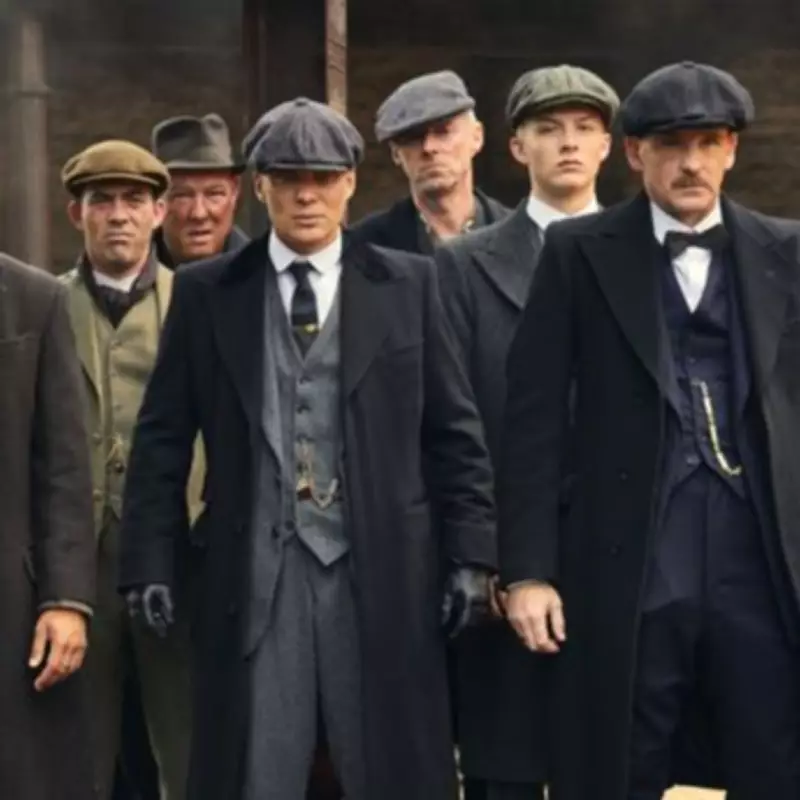
Peaky Blinders Film Reveals the True Story Behind the Hit Series
Peaky Blinders fans are in for a cinematic treat as the feature-length film, Peaky Blinders: The Immortal Man, releases this week, wrapping up Tommy Shelby's story. However, amidst the excitement, many viewers are only just uncovering the gritty true story that inspired the Cillian Murphy-led drama.
The Real Peaky Blinders: A Historical Perspective
While the BBC series, which began airing in 2013, is a work of fiction, it draws inspiration from a real street gang that operated in Birmingham. Contrary to the show's 1919 setting, the actual Peaky Blinders were most active in the 1880s, with the first printed reference appearing in the Birmingham Mail in March 1890.
According to historical accounts, the real gang's activities were far less glamorous than depicted on screen. Sky History notes that although notorious for robberies and violence, they did not engage in the dramatic, large-scale operations portrayed in the series. Historian Dr Amy Boyington emphasises that "the truth is far less glamorous" than the television adaptation.

Origins of the Gang's Name and Style
The name "Peaky Blinders" has intriguing roots. Dr Boyington explains that "peaky" referred to the flat caps with peaks worn by gang members, while "blinder" was a Birmingham colloquial term for someone who looked dapper or smart. The gang was famous for their sharp attire, including tailored suits, caps, silk scarves, and starched collars, which made them easily identifiable to police and rivals.
Despite their stylish appearance, the real Peaky Blinders were not to be trifled with. Dr Boyington highlights that members like George Williams committed serious crimes, including killing a police officer, underscoring the violent reality behind the fictionalised version.
Historical Figures and Fictional Twists
The series also features other real-life elements, such as the Birmingham Boys gang and their leader, Billy Kimber. Unlike the fictional Peaky Blinders, Kimber was a genuine historical figure, one of the UK's most powerful organised crime bosses in the early 1910s. However, the show took creative liberties with his character, giving him a Cockney accent instead of his actual Aston, Birmingham roots, and altering his death for dramatic effect—in reality, he lived until 1945, dying at age 63 in a nursing home.
By the time of Kimber's death, the Birmingham Boys' influence had waned, with power shifting to the Sabini gang in the 1930s, another group fictionalised in the series.
Film Release and Future of the Franchise
Peaky Blinders: The Immortal Man releases in cinemas on March 6, with a Netflix debut scheduled for March 20. While the film concludes Tommy Shelby's arc, it leaves the door open for potential sequels focusing on a new generation of the Shelby family, ensuring the franchise's legacy continues beyond the big screen.
As fans bid farewell to Cillian Murphy's iconic character, this revelation of the true story adds a layer of historical depth to the beloved series, blending fact with fiction in a compelling narrative that has captivated audiences worldwide.