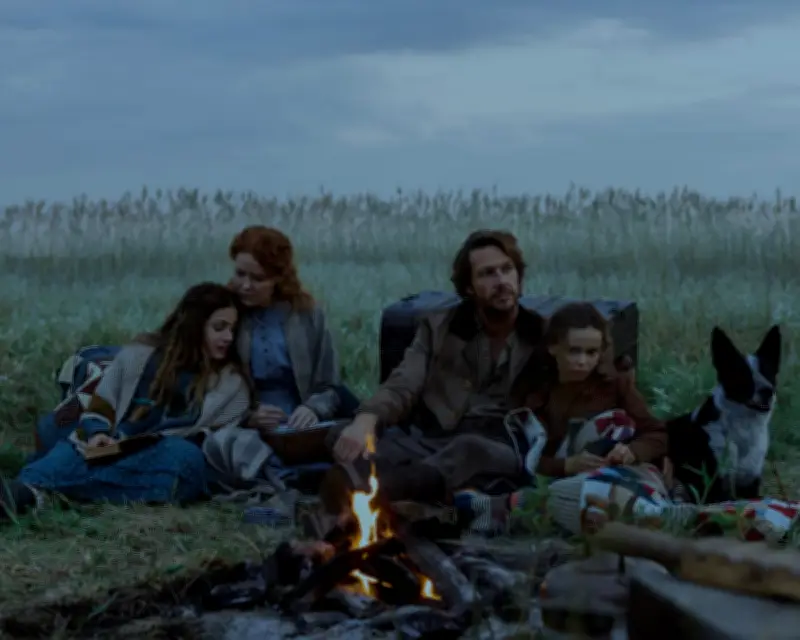
Netflix's reboot of Little House on the Prairie, premiering on 9 July, arrives amid a convergence of cultural trends including the tradwife movement, cottagecore aesthetics, and an anti-woke backlash. The series, starring Luke Bracey as Charles Ingalls and Crosby Fitzgerald as Caroline Ingalls, aims to explore the complexities of frontier life while drawing more faithfully from Laura Ingalls Wilder's novels.
Enduring Appeal Across Generations
The Little House books have sold over 73 million copies, and the original 1970s TV series reached 13 billion streaming minutes in 2024 alone, making it the year's most streamed legacy show. Bracey attributes this to the story's basic nature: 'This is a family trying to get along in the world.' Fitzgerald echoes that 'people grew up with it with their parents and their parents, and there’s a sense of familiarity that is cozy and heartwarming.'
Cultural and Political Context
The original series saw a resurgence during the Covid-19 pandemic, when families faced uncertainty similar to the Ingalls family in 1870s Minnesota. One writer described the first book as 'a manual for self-sufficient isolation.' The reboot also taps into rising interest in homesteading and off-grid living, popular among Christian conservatives and environmentalists. The cottagecore aesthetic, with its focus on gardening and handcrafts, and the tradwife trend, emphasizing domesticity, may have primed audiences for the show.

Conservative Backlash and Woke Debate
When the reboot was announced, commentator Megyn Kelly warned on X: 'Netflix, if you wokeify Little House on the Prairie I will make it my singular mission to absolutely ruin your project.' Melissa Gilbert, who played Laura in the original series, responded that the show tackled racism, addiction, nativism, antisemitism, misogyny, rape, and spousal abuse. Bracey urged Kelly to watch before judging: 'She hasn’t seen the show … watch the show.'
A More Faithful Adaptation
Showrunner Rebecca Sonnenshine (The Housemaid, The Boys) pulls more faithfully from the novels, focusing on the Ingalls family's time on an Osage reservation in Kansas. Osage consultant Julie O’Keefe ensured accuracy in costumes, storylines, and set decoration. The cast is more diverse than the original, but the portrayal remains somewhat sanitized, with characters too beautiful and cheery for the brutal frontier reality.
Historical and Political Roots
The books themselves were shaped by Rose Wilder Lane, Laura's daughter, a libertarian pioneer who heavily rewrote the manuscripts after the 1929 market crash. She emphasized individual resilience and rejected government assistance, appealing to anger over Franklin D Roosevelt's New Deal. Lane later helped fund the Freedom School in Colorado, which counted the Koch brothers as alumni. The original TV series, while starring Republican Michael Landon, often promoted collectivism and tackled dark issues like rape and arson, distinguishing itself from the books' libertarian values.