The Case for Hamnet as Best Picture Winner
In the final moments of Hamnet, Agnes, Shakespeare's wife portrayed by Jessie Buckley, watches her husband's play Hamlet with confusion, asking her brother, "What are they talking about?" This reaction mirrors many viewers' initial hesitation toward a film about the death of Shakespeare's child, especially for those who struggled with the Bard's works in school. Yet, despite these reservations, Hamnet emerges as a strong contender for the coveted Best Picture award at this year's Academy Awards.
An Emotionally Traumatic Yet Extraordinary Film
Based on Maggie O'Farrell's Women's Prize-winning novel, Hamnet falls into the category of emotionally devastating films that one might not wish to revisit, akin to Marley and Me. However, its impact is profound, stirring a sense of vitality and connection to the boundless possibilities of creativity. In an era dominated by algorithmic distractions and global crises, this film offers a noble and deeply felt exploration of motherhood that transcends the typical confines of domestic storytelling.
Director Chloé Zhao, an Oscar winner for Nomadland in 2020, co-wrote the screenplay with O'Farrell, achieving something remarkable. They have taken Shakespeare, a towering figure in English culture, and used his story to challenge long-standing narratives about what subjects merit "great" art, who creates it, and the personal costs involved.

Jessie Buckley's Standout Performance
For British audiences, Hamnet represents a significant hope on the global stage, with Jessie Buckley as a frontrunner for the Best Actress award. Despite being Irish, Buckley and co-star Paul Mescal have garnered widespread acclaim. Buckley has dominated the awards season, and it would be a grave injustice if she did not win, even considering her character's harsh treatment of cats. Her career has been marked by bold choices, from the eerie horror film Men to the emotionally intense adaptation of Elena Ferrante's The Lost Daughter, and a punk-inspired Sally Bowles in the West End.
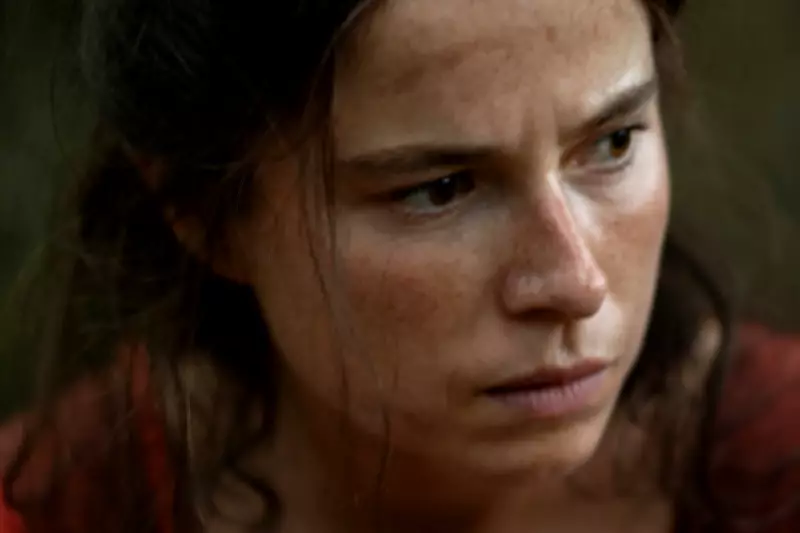
Buckley's portrayal of Agnes makes her appear far more insightful than her husband, Shakespeare himself. With a dirt-streaked face and penetrating eyes, Agnes is deeply connected to the world and remarkably resilient. She gives birth in a forest without an epidural and shows frustration when her mother-in-law objects during a flood. Agnes remains undazzled and decisive until tragedy strikes, and her realization of loss is heart-wrenching to witness.
Challenging Cultural Stereotypes
The film delves into the historical interchangeability of "Hamnet" and "Hamlet," with Shakespeare writing Hamlet five years after his son's death. O'Farrell's suggestion that Shakespeare drew inspiration from his family life subverts the cliché that only women use personal experiences in their art. It also critiques the notion of literary men with grand callings, rendering it somewhat absurd. When Shakespeare considers returning to London after Hamnet's death, Agnes confronts him, highlighting the disconnect between his artistic pursuits and familial responsibilities.
In Hamnet, the storyteller is not the celebrated bard but a forgotten woman from history, her face marked by dirt, who teaches her children to grow things and creates rituals to comfort them. Zhao has noted that the cast and crew felt the film in their bodies, with their lives changed by its creation, describing it as "fateful and inevitable." The film's mystical elements, such as sweeping shots of trees and roots, evoke the chilly air of Stratford-upon-Avon, adding to its ethereal quality.
A Humanizing Portrayal of Shakespeare
While some critics label Hamnet as grief porn or question its historical accuracy, it remains a profoundly human film that demystifies Shakespeare even as it interrogates his status as a national icon. The film posits that while Shakespeare wrote the plays, his wife undertook the mothering, prompting viewers to consider which role holds greater importance. The closing scene features a close-up of Jessie Buckley's face, altered by the weight of her experiences, subtly suggesting an answer.

Ultimately, Hamnet is more than just a film; it is a meditation on loss, creativity, and the often-overlooked contributions of women in history. Its emotional depth and narrative innovation make it a deserving candidate for the Best Picture Oscar, offering a quiet yet extraordinary cinematic experience that resonates long after the credits roll.