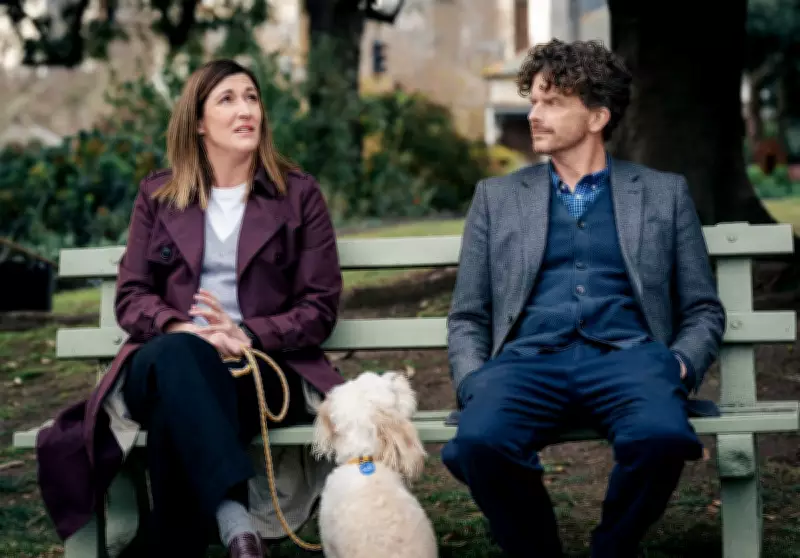
The ABC's new six-part television series, Dog Park, premiering this Sunday, presents itself as a charming comedy but quickly reveals itself to be a far more nuanced and emotionally resonant light-touch drama. Set against the backdrop of a Melbourne dog park, the show masterfully uses its canine-centric premise as a gateway to explore the intricate, often fractious dynamics of human relationships.
A Bait-and-Switch of Emotional Depth
Marketed primarily as a comedy, Dog Park executes what feels like a deliberate and effective bait-and-switch. It entices viewers with the promise of playful pooches and lighthearted park antics, only to deliver a thoughtfully sketched depiction of love, loneliness, and connection that many will find deeply relatable. The series, co-created by Amanda Higgs and Leon Ford, who also stars, is leisurely paced across its six episodes, allowing its characters and their stories room to breathe and develop authentically.
At the Heart: A Relationship in Limbo
The emotional core of the narrative resides in the uncertain marriage of the protagonist, Roland, played by Leon Ford, and his wife Emma, portrayed by Brooke Satchwell. Emma's impending departure from Melbourne for a job in New Mexico casts a long shadow, leaving the future of their relationship hanging in a delicate balance. The writing team, including Penelope Chai, Nick Coyle, and Chloe Wong, excels at capturing the small, explosive moments and quiet healings that define modern love, crafting a portrait that feels both specific and universal.

An Unlikely Community Forms
Roland, a somewhat grumpy career counsellor, is reluctantly drawn into the social orbit of the local dog park by the cheerful and persistent Samantha, played by Celia Pacquola. She takes it upon herself to walk his dog, Beattie, without permission, effectively press-ganging him into a community of friendly, almost overly enthusiastic dog owners. This group includes characters like Penny, Pamelia, Jonah, and Andrew, whose collective warmth and quirky rituals—from shared snacks to in-costume singalongs—create a welcoming, if slightly surreal, social fantasy.
Leon Ford's Finely Balanced Performance
The series' success is anchored by a finely balanced central performance from Leon Ford. He portrays Roland with a compelling authenticity, avoiding easy stereotypes. Roland is cranky and emotionally reserved, yet fundamentally decent—a man struggling, like many, to articulate his feelings. Ford navigates this complexity with subtlety, ensuring the character's irritability feels genuine rather than performative.
Resonant Small Moments
Dog Park derives much of its power from deceptively simple, small moments that resonate deeply. A scene where Roland admits to freezing up emotionally, or another where he downplays a thoughtful gesture to his daughter, Mia, are executed with a quiet precision that belies their difficulty. These moments accumulate to paint a rich picture of a man navigating personal turmoil.
Thoughtful Direction and Tone
Co-directors Matthew Saville and Nina Buxton pace and tone the series in a lovely, unprepossessing manner. They imbue the drama with an earthy, accessible quality, eschewing flashy techniques for a grounded realism that recalls the work of filmmakers like the late Paul Cox. The result is thoughtful, gently persuasive television that surprises with its emotional depth.
In the end, Dog Park delivers on its initial promise of canine charm but offers so much more. It is a series that cleverly uses its setting to explore universal human experiences, leaving viewers who came for the dogs staying—and caring deeply—for the humans. Dog Park starts on ABC TV and ABC iview on Sunday at 8.30pm.