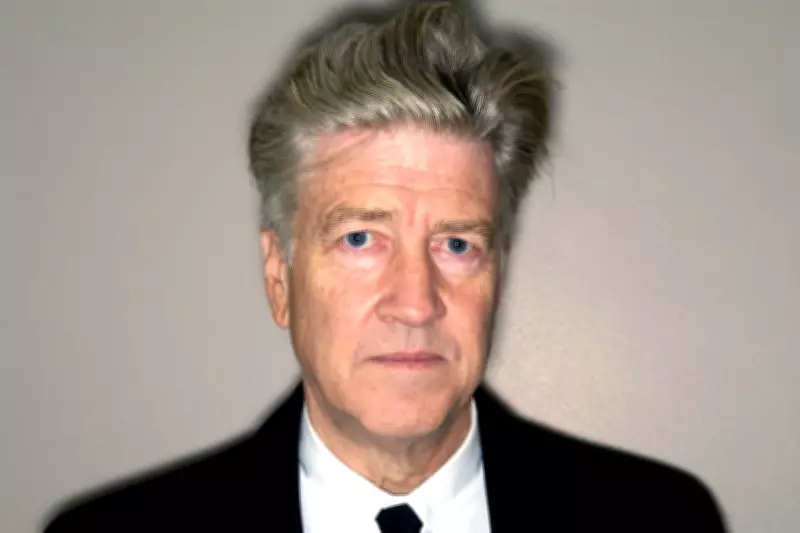
Remembering David Lynch: The Visionary Filmmaker Who Redefined Cinema
The world of cinema has lost one of its most distinctive voices with the passing of David Lynch at the age of 78. The singular American filmmaker, whose groundbreaking work spanned from the surreal horror of Eraserhead to the television revolution of Twin Peaks, leaves behind a creative legacy that fundamentally altered what audiences expect from visual storytelling.
A Legacy Beyond Words
Words feel particularly inadequate when attempting to capture the essence of David Lynch's contribution to art and cinema. The visionary director, who announced his emphysema diagnosis months before his death, operated in a realm that consistently defied conventional description. From his first feature-length film Eraserhead in 1977 through to later masterpieces like Blue Velvet (1986) and Mulholland Drive (2001), Lynch created works that existed beyond ordinary articulation.
The very term "Lynchian" entered our vocabulary partway through his career, yet remains challenging to define precisely. As the late David Foster Wallace observed in his seminal article on Lynch, the term might be academically described as "a particular kind of irony where the very macabre and the very mundane combine" but ultimately proves definable only through experience - we know it when we see it.

The Man Behind the Mystique
Lynch himself embodied the fascinating contrasts present in his work. While his films explored disturbing themes of violence, psychological trauma, and sexual depravity, the director conducted himself with an almost old-fashioned propriety. He refrained from swearing, used expressions like "golly" and "peachy", and for years was described in official press releases simply as "Eagle Scout, Missoula, Montana."
His eccentric offscreen behavior only added to his mystique:
- Attempting to lobby for Laura Dern's Oscar nomination by sitting with a live cow on Hollywood Boulevard
- Eating the exact same meal for months to better focus on his art
- Rescuing five large Woody Woodpecker dolls from a petrol station, naming them and keeping them as office companions
Isabella Rossellini, who starred in Blue Velvet and dated Lynch in the late 1980s, once wrote of him: "I suspect he lingers in other dimensions."
From Eraserhead to The Elephant Man
Lynch's career began with the self-produced Eraserhead, filmed over half a decade as his personal finances allowed. David Foster Wallace described it as "one of those sell-your-own-plasma-to-buy-the-film-stock masterpieces," and despite its esoteric symbolism involving a monstrous baby and surreal radiator sequences, the film sprang from Lynch's personal anxieties about fatherhood following the birth of his first child.
From this underground sensation, Lynch moved to his most lauded mainstream success with The Elephant Man (1980), which earned multiple Oscar nominations. Producer Mel Brooks, enchanted by Eraserhead's alien audacity, pushed for Lynch to direct, expecting to meet "a grotesque - a fat little German with fat stains running down his chin" but instead encountering a sharply dressed midwestern naif.
Exploring America's Dark Underbelly
While The Elephant Man and the poorly received Dune adaptation took Lynch away from American settings, he soon returned to explore his native country's complex symbolic landscape. Blue Velvet layered pleasant American suburbia atop an underworld of violence and depravity, while Twin Peaks examined the spiritual decay of the American small town.
Lynch once explained his approach: "I want to do movies that take place in America and that take people into worlds where they could never go. Give them a set of images and sounds they couldn't have any other way. Give them journeys into the very depths of their beings."

Unexpected Range and Collaboration
Despite his reputation for dark, surreal work, Lynch demonstrated remarkable range throughout his career. The Straight Story (1999) showed his aptitude for straightforward drama, telling the poignant tale of a regret-laden WWII veteran traveling across the Midwest on a lawnmower to reconnect with his estranged brother. Released by Disney and bereft of Lynch's typical dread and violence, the film proved no less brilliant for its accessibility.
Lynch surrounded himself with exceptional collaborators, including the late composer Angelo Badalamenti, who created the iconic music for Twin Peaks and several films. "I have an understanding of David and he has an understanding of me," Badalamenti once said. "I listen to him and I start hearing things almost immediately."
His stable of repeat actors included stars like Harry Dean Stanton, Laura Dern, and Kyle MacLachlan, who wrote following Lynch's death: "I owe my entire career, and life really, to his vision. What I saw in him was an enigmatic and intuitive man with a creative ocean bursting forth inside of him."
Transcendental Meditation and Later Work
For most of his life, Lynch practiced transcendental meditation, a non-religious method developed by Maharishi Mahesh Yogi. Many have suggested the pervasive dreamlike quality of his films has roots in this practice, though Lynch himself remained largely uninterested in intellectualizing his work outwardly.
Towards the end of his career, Lynch struggled to secure financing for his desired projects, though his creative output never slowed. Inland Empire (2006), shot on grimy video, stands as perhaps his most opaque work - a doom-laden, inscrutable film many regard as a masterpiece.
The 2016 revival of Twin Peaks for Showtime, with every episode directed by Lynch himself and a budget exceeding $41 million, felt like a miraculous return. Twin Peaks: The Return may well represent Lynch's magnum opus - by turns challenging, unexpected, frustrating, funny, bewildering, and viscerally unpleasant. It was everything art should be, and unlike anything else television had ever presented.
An Enduring Legacy
The Return would be Lynch's last major work, aside from his magnificent one-scene role as John Ford in Steven Spielberg's The Fabelmans (2022). Rumoured to be watching "bodycam videos" online in his final months - a characteristically Lynchian eccentricity - the filmmaker remained creatively engaged until the end.
His death leaves a profound fissure in cinema's heart. Few artists have demonstrated such fidelity to truth - not realism, but the dark, incomprehensible truths that hide within the American everyday. As Lynch himself once observed: "I don't think people accept the fact that life doesn't make sense. I think it makes people terribly uncomfortable."
While words may prove inadequate when discussing David Lynch's legacy, people will continue talking about his work for as long as cinema survives. His unique vision expanded what film and television could achieve, challenging audiences to confront uncomfortable truths through unforgettable imagery and sound. The cinematic landscape feels markedly different without his singular presence, but the journeys he created into the depths of human experience will continue to inspire and unsettle generations to come.