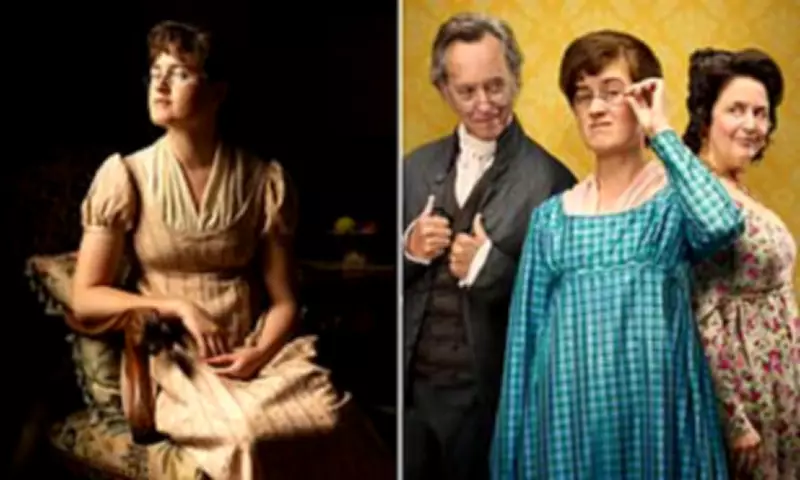
The BBC's latest television offering, The Other Bennet Sister, attempts the formidable task of reimagining Jane Austen's timeless masterpiece, Pride and Prejudice, from a fresh and unconventional angle. This ambitious ten-part series, which premiered on BBC One, shifts the narrative focus to the often-overlooked middle Bennet sister, Mary, portrayed with intensity by Ella Bruccoleri. Based on Janice Hadlow's novel—a work by a former BBC2 controller—the adaptation promises a clever spin on a beloved story, but it risks alienating devoted Austen enthusiasts with its starkly revisionist character portrayals.
A Radical Departure from Austen's Vision
Traditionally, ruining the essence of Pride and Prejudice is considered nearly impossible, given its enduring formula of romance, witty dialogue, and sisterly bonds. However, The Other Bennet Sister takes a bold and contentious approach by transforming some of English literature's most cherished figures into spiteful and deeply unlikeable personalities. Through Mary's eyes, the Bennet family dynamics are cast in a harsh new light, challenging viewers' long-held affections.
Mary Bennet: From Bookish to Bitter
In Austen's original novel, Mary is depicted as studious and intellectually ambitious, seeking fulfilment through education rather than marriage. This adaptation, however, reinterprets her character as seething with adolescent angst, using her bundles of books as a miserable compensation for perceived plainness. The series suggests that, in this version, Mary cannot achieve happiness without a husband, adhering to the societal pressures of the era but stripping her of the progressive aspirations fans might have hoped to explore.

Elizabeth Bennet: Smug and Arrogant
Fans of Austen's work and previous adaptations, such as those starring Keira Knightley or Jennifer Ehle, have long adored Elizabeth Bennet for her quick wit, emotional depth, and unwavering loyalty. In The Other Bennet Sister, Poppy Gilbert's portrayal of Lizzie presents a stark contrast: she appears far too pleased with herself, exuding smugness and even a touch of arrogance. Her irrepressible sense of humour, once endearing, now comes across as snide and shallow, undermining the character's iconic charm.
Mrs. Bennet: From Comic Relief to Tyrant
Perhaps the most drastic transformation is that of Mrs. Bennet, played by Ruth Jones. Traditionally a figure of fun—gauche and excitable to the point of embarrassment—she is reimagined here as a tyrant and a self-pitying bully, dripping with poison and snobbery. Her entrance in the series, barging into a room and shouldering Mary aside as if invisible, sets a tone of cruelty. At the Merriton Assembly ball, she swoops in to prevent Mary from dancing with a young optometrist, Mr. Sparrow (Aaron Gill), citing the family's shopkeeper status with implied racist undertones. This portrayal makes it difficult for audiences to retain any fondness for her, potentially tarnishing their emotional connection to the entire Bennet family.
Impact on the Bennet Family Dynamic
The series' decision to cast key characters in such a negative light has significant repercussions for the overall narrative. By making Mrs. Bennet a venomous figure and Elizabeth arrogant, The Other Bennet Sister risks alienating viewers who cherish the original's warmth and humour. Even Mr. Bennet, portrayed by Richard E. Grant, is viewed through a lens of pity rather than the usual affectionate exasperation, as he endures his wife's tyranny.
Ultimately, while the concept of exploring Pride and Prejudice from Mary's perspective is undeniably clever, this adaptation's execution may prove divisive. By prioritising dark reinterpretations over the story's classic charm, The Other Bennet Sister offers a provocative but potentially polarising take on Austen's celebrated novel, leaving fans to ponder whether innovation has come at the cost of beloved tradition.