Christopher Capron, the Emmy-winning BBC journalist and former editor of Panorama and Question Time, has died at the age of 90. His death notice confirmed he died peacefully at home, although no cause of death has been revealed.
Career at the BBC
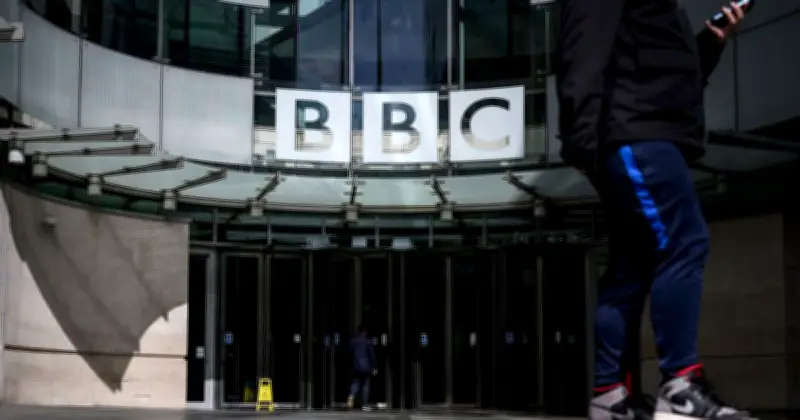
Capron began his BBC career after graduating from Cambridge in 1959, starting as a studio manager in BBC Radio. He worked on several programmes, including 24 Hours and Midweek, before rising to become a major figure in British television.
He edited the flagship news programme Panorama from 1977 to 1979. During his tenure, the show won the Golden Nymph award at the Monte Carlo television festival for a 1978 investigation into the German rocket company Otrag testing space technology in central Africa.
Award-Winning Investigations
Capron also won an Emmy for the 1979 investigative report Who Killed Georgi Markov? The programme examined the murder of the Bulgarian dissident on British soil, presenting evidence pointing to the involvement of the Bulgarian secret police and the Soviet KGB.
A BBC rule limiting each Panorama editor to two years at the helm saw him move on from the show in 1979. He remained in the news spectrum, first becoming deputy head and then head of current affairs.
Question Time and Later Work
He stayed in that role until 1985, then took a position as head of parliamentary broadcasting. In 1987, he formed his own production company, Capron Productions, run from an office near his London home in Wandsworth.
In 1994, it became the first independent company to be awarded the contract for the BBC's Question Time. He worked on 67 episodes of the show between 1994 and 1997, when it was hosted by David Dimbleby.
Other notable roles included working as a series producer on The Dimbleby Talk-In from 1973 until 1975, and on the Jonathan Dimbleby public affairs series This Week from 1989 until 1982.
Final Years
Although usually behind the scenes, Capron appeared on camera twice: in 1991 as an on-screen reporter on First Sight, and in 1995 on Right To Reply in his capacity as series editor of Question Time.
He closed the company in 1999 and moved to Southwick Hall, a stately home in Northamptonshire that his family had owned since 1841. He was hands-on with the property and could often be found manning the car park on open days.
Although he died on June 20 this year, his passing only came to light when a former colleague paid tribute in an obituary in The Guardian.