The BBC has announced a comprehensive review of its entire Middle East reporting output, following a damning internal admission of major errors in its portrayal of Israel during the war in Gaza.
Damning Dossier Forces BBC Response
The Corporation's decision comes after it pledged to investigate wide-ranging claims of bias detailed in a 13-page dossier published on Friday. The allegations were brought into sharp focus last month when a memo from independent adviser Michael Prescott was leaked. His memo claimed the BBC appeared to have 'a desire always to believe the worst about Israel' and that its BBC Arabic service in particular seemed to 'minimise Israeli suffering and paint Israel as the aggressor'. This was despite Hamas initiating the conflict with its terrorist attack on October 7.
In response, the broadcaster’s Director of Editorial Complaints and Reviews, Peter Johnston, produced a report detailing the BBC's official stance. He conceded a series of damaging mistakes made by the Corporation, including the incorrect claim that the International Court of Justice had found a 'plausible cause of genocide' in Gaza.

Specific Errors and Corrective Actions
Mr Johnston's report highlighted several specific failures:
- There were 'issues' surrounding the reporting of casualty figures and a 'wrong' question posed on Newsnight concerning 14,000 babies supposedly at risk of starving within 48 hours.
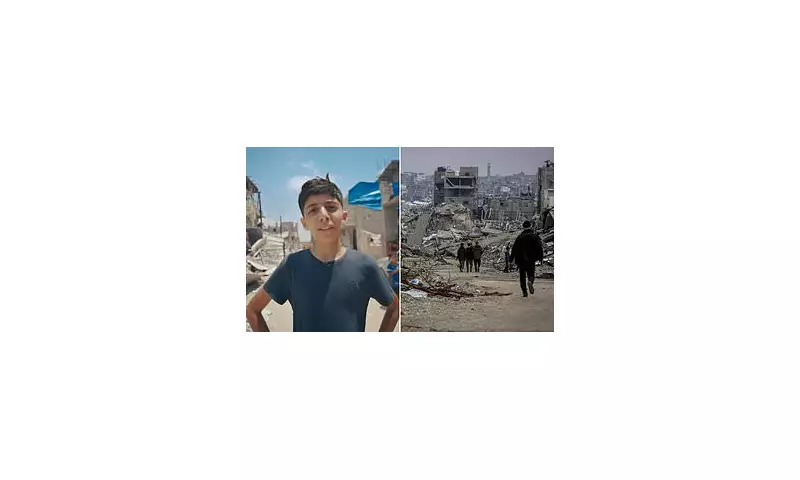
- In the documentary Gaza: How To Survive A Warzone, the BBC failed to disclose that the 13-year-old narrator, Abdullah, is the son of Hamas's deputy minister of agriculture.
- A television report wrongly suggested Israeli soldiers had buried hundreds of bodies in mass graves, when this was done by Hamas.
- An article on Gaza medics neglected to state that Hamas was accused of operating from their hospital.
Mr Johnston stated the BBC later corrected these errors and accepted it was wrong to use supposedly independent freelance journalists whose social media posts indicated they were pro-Hamas and anti-Semitic. He confirmed the Corporation’s Editorial Guidance and Standards Committee (EGSC) has already begun rolling out a new training programme for all BBC News Arabic editorial staff.
A Full Editorial Review Launched
Most significantly, Mr Johnston revealed that the EGSC and the BBC Board are now planning a 'full editorial review of coverage of the Middle East'. He described this as 'the most effective mechanism to fully evaluate our coverage of such a difficult story and to learn any lessons'.
This development represents a significant blow to the BBC’s Global Director of News, Jonathan Munro, who earlier this year dismissed suggestions of bias and praised the 'exceptional' journalism of BBC Arabic.
Wider Implications on Content Policy
Mr Johnston's appraisal also reviewed the BBC’s approach to other contentious subjects. On gender identity, he said the BBC News style guide has been updated to remind journalists that 'the concept of gender identity is contested by some'. They are now advised not to use the term 'assigned at birth' and to avoid phrases like 'trans child/children' and 'gender-affirming care'.
Regarding history, the BBC accepted its response to complaints from the academic group History Reclaimed was 'not acceptable or appropriate'. The group had accused the BBC of presenting a distorted version of Britain’s colonial past. Mr Johnston suggested the EGSC review the BBC’s history output, acknowledging the group made 'some sensible recommendations'.