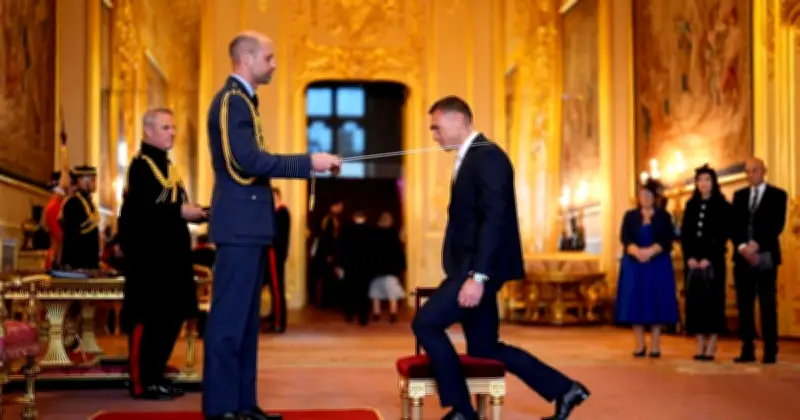
Prince William used a ceremonial sword to knight Sir Kevin Sinfield at Windsor Castle on Wednesday, continuing a tradition that dates back hundreds of years. The honour was granted in recognition of Sinfield's fundraising efforts for motor neurone disease.
What does a knighthood mean?
Being made a Knight or a Dame is one of the highest honours in the United Kingdom, usually granted to those who have made a significant contribution to their field, often on a national level. Historically, knighthoods were awarded solely for military merit, but today they also recognise significant contributions to national life.
Sir Kevin Sinfield has been praised after receiving the knighthood for raising money in memory of his former team-mate and late friend, Rob Burrow, who passed away in 2024. Sinfield has promised to continue fundraising for the MND community in his memory.
Where does the sword tradition come from?
The origins of knighthood are unclear but are thought to date back to Roman times. In medieval times, knights underwent strict training from boyhood to become brave and chivalric horsemen supporting the monarch in battle, according to the Royal Family website.
The King, or a member of the Royal Family acting on his behalf, confers knighthoods in Britain at a public investiture or privately. The ceremony involves the ceremonial dubbing of the knight by the King and the presentation of the insignia.
How the ceremony unfolds
During the knighting ceremony, the knight-elect kneels on their right knee in front of the King or member of the Royal Family on a special knighting-stool. The King or Prince William then dubs the knight by laying a bare sword blade on the knight's right shoulder, then the left, before awarding the insignia.
In the UK, tapping a person on the shoulders with a sword is known as the "accolade" or "dubbing". According to reports, the use of a sword dates back to medieval traditions, in which a monarch bestowed martial authority and demonstrated power over life and death. Over time, this evolved from a physical strike used to test a warrior's endurance into a refined ceremonial gesture honouring outstanding service.
Sinfield has raised more than £13 million in the six years he has been fundraising to support the motor neurone disease community. He recently completed the seventh ultramarathon challenge of his fundraising campaign, which saw the 46-year-old run seven marathons in a week.