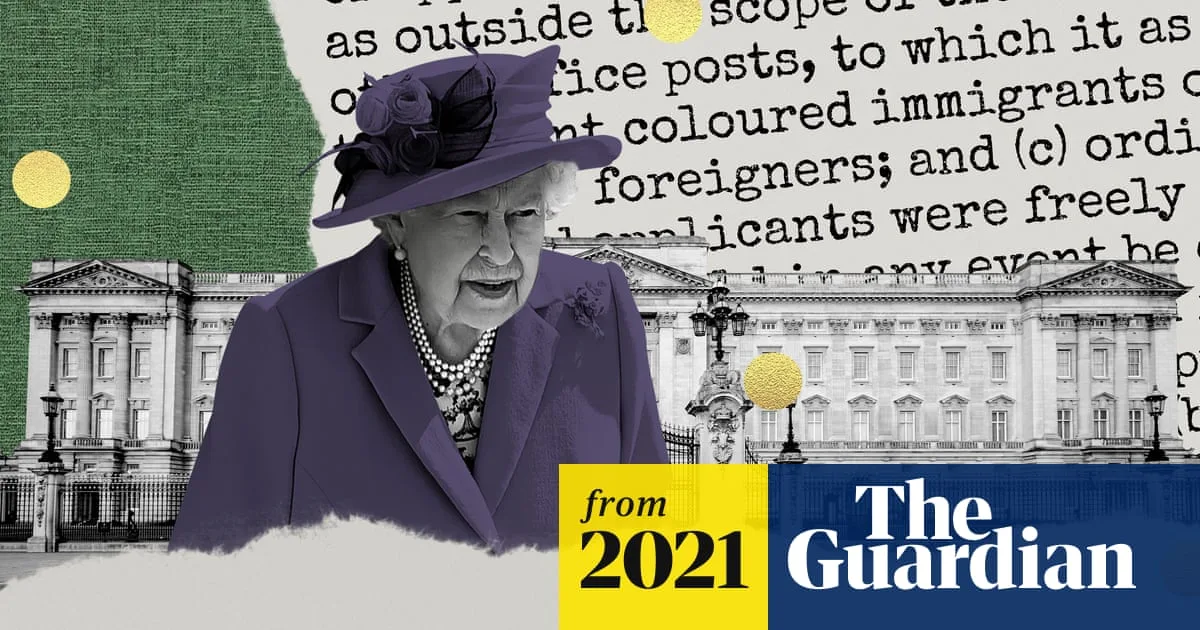
Newly discovered documents from the National Archives have revealed that Buckingham Palace banned “coloured immigrants or foreigners” from clerical roles in the royal household until at least the late 1960s. The papers, uncovered as part of the Guardian’s investigation into the royal family’s use of Queen’s consent, show that the Queen’s chief financial manager informed civil servants in 1968 that it was not the practice to appoint such individuals to clerical posts, though they could work as domestic servants.
The documents also shed light on how the Queen and her household have been exempt from race and sex discrimination laws for over four decades. This exemption, which remains in place today, prevents women and ethnic minorities working for the household from taking discrimination complaints to court. Buckingham Palace did not dispute the exemption but said it has a separate process for handling such complaints, though it did not provide details when asked.
The ban’s end date is unclear. The palace refused to answer questions about when it was revoked, stating that its records show ethnic minority employees in the 1990s, but it did not keep racial background records before that decade. The revelations are likely to reignite debates about the royal family’s historical and current relationship with race, particularly given the family’s links to the British Empire and past racist comments by some members.
The documents also reveal how the Queen’s consent procedure was used to secretly influence race relations legislation in the 1960s and 1970s. In 1968, Home Secretary James Callaghan and civil servants coordinated with royal advisers to ensure the race relations bill could not be enforced against the Queen. The exemption was later formalised when equality laws were implemented in the 1970s.