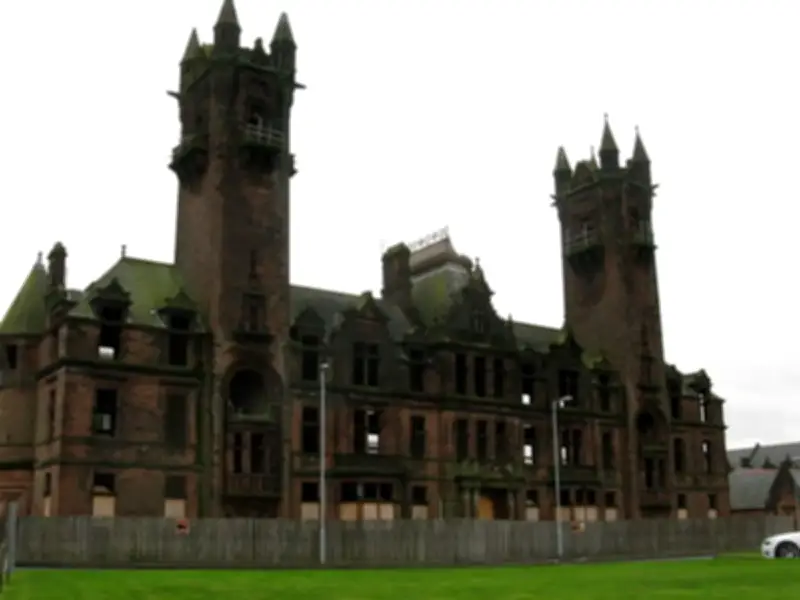
Gartloch Hospital, a former psychiatric hospital in Glasgow's east end, has been abandoned and exposed to the elements since its closure in 1996. The Category A listed building operated for 100 years before shutting down.
A century of history and hauntings
Opened as the Gartloch District Asylum in 1896, the building had a maximum capacity of 830 patients. It is known as one of the most haunted locations in Glasgow, with a long history of ghost stories and urban legends. According to Spooky Isles, former staff members have claimed to have experienced paranormal experiences while working there.
The City of Glasgow bought the Gartloch Estate in 1889 with plans to build a hospital, and the foundation stone was laid in 1892. The facility was designed by Robert Douglas Sandilands and John Thomson, the latter being the son of famed Scottish architect Alexander 'Greek' Thomson. The pair won a competition to design what was then known as the City of Glasgow District Asylum.
Redevelopment and renovation
Much of the site has been redeveloped, but the main administration block and core historic structures remain on Gartloch Road near the village of Gartcosh, close to The Glasgow Fort shopping centre. After closure, many surrounding buildings were converted into residential properties or demolished to make way for Gartloch Village. The Victorian-era towers still stand, though countless windows have caved in and the structure is beyond hope of restoration.
The grounds also housed a tuberculosis sanatorium, created to tackle what was once the leading cause of death across the western world. During the Second World War, patients were moved out to accommodate an emergency centre, with temporary huts erected as additional wards.
Pop culture and future plans
The building is recognisable to David Tennant fans from the 1993 BBC series Takin' Over the Asylum, which used Gartloch's exterior as the fictional St Jude's Asylum.
In 2019, a proposal to transform the main building into 12 flats received approval. Before developers arrived, urban explorers entered the abandoned building and shared footage online. Entering the building is not recommended and is currently not possible due to ongoing renovation works.