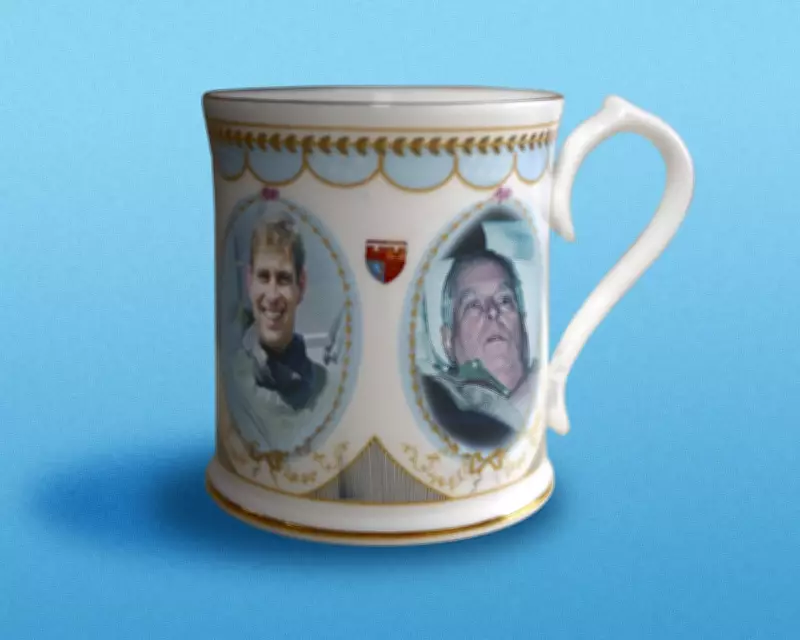
The recent photograph of Prince Andrew, captured in the back of an unmarked car outside Aylsham police station in Norfolk, presents a jarring image: his face appears corpse-like, with tight lips, a fixed stare, and eyes reddened by camera flash. This stark depiction marks a dramatic fall from his former persona as "Randy Andy," the handsome prince whose grinning visage once adorned commemorative china and tins, embodying national affection.
The Historical Weight of Royal Faces
For centuries, royal faces have served as powerful symbols of lineage and authority. In antiquity, rulers' profiles were stamped on coins to assert legitimacy, while Tudor portraits, such as Holbein's Henry VIII, acted as sovereign self-presentations. Andrew's face, though never intended for coinage, was similarly read as a text of royal heritage: his strong jaw suggested resolution, his broad forehead intelligence, and his wide-set eyes openness. However, this physiognomy also carried risks, as 18th-century pseudoscience linked features like a sensual mouth to traits such as moral degradation.
From Portraiture to Police Cars
The democratisation of photography in the late 19th century shifted faces from symbols of lineage to indices of personhood, yet the monarchy adapted, releasing postmortem images like that of Prince Albert. Traditionally, car window glimpses of royals like Diana or Kate offered proximity to glamour. In contrast, Andrew's arrest photo traps his face behind glass, devoid of dignity, with newspapers describing him as "haggard, shamed and haunted." This image echoes the arrest of Charles I in 1649, though Andrew's claim of an inability to sweat—attributed to Falklands service—presented his body as exceptional, unlike common ones.

The Epstein Files and Public Scrutiny
Andrew's downfall accelerated with Virginia Giuffre's civil lawsuit, where a photograph of him grinning with his arm around her became emblematic. In 2011, he wrote to Jeffrey Epstein, "We are in this together and will have to rise above it." Epstein's Victorian-style archive of surveillance, initially for leverage, now turns against power, with the public acting as classifiers—poring over millions of pages and using AI facial analysis. This shift makes every face both a portrait and a document, blurring lines between portrayal and cataloguing.
Andrew's Misjudged Self-Presentation
Andrew once believed he controlled his image, as seen in his Newsnight interview, where he likely viewed Emily Maitlis as a modern Van Dyck, composing his face for posterity. Instead, that interview cemented his sneer of disdain in public memory. At 66, his face now reconciles multiple personas: the Falklands hero, the grinning prince on china, the Newsnight interviewee, and the man implicated in Epstein's files. This transformation underscores how royal images, once assertions of ancient power, can become pathetic symbols of downfall in an era of relentless public scrutiny.