The Traitors Finale: Stephen's Quiet Cunning Outshines Rachel's Calculated Play
As millions of viewers brace for tonight's dramatic conclusion to the fourth series of The Traitors, the psychological battle between the remaining contestants has reached fever pitch. The series has delivered eleven episodes of intense strategic warfare, culminating in a cliffhanger that leaves the fate of contestants Rachel and James hanging on what amounts to a glorified coin toss. Two chests sit on a round table—one containing a shield, the other empty—with the wrong choice meaning immediate elimination from the competition.
The Wolf in Sheep's Clothing
While communications manager Rachel has drawn attention with her meticulous, FBI-level preparation and analysis of micro-expressions, her fellow Traitor Stephen has been executing a far more subtle and potentially devastating strategy. The 32-year-old cyber security consultant from the Isle of Lewis has presented himself as the series' most unlikely predator: a wolf in sheep's clothing, or more accurately, in impeccable knits tucked into high-waisted jeans.
Stephen's journey through the competition reveals a masterclass in psychological manipulation through apparent vulnerability. Growing up in one of Scotland's more remote communities, he was the first in his family to attend university, with his parents—including a butcher father who dreamed of being an artist—making significant financial sacrifices. His experience of being gay in a rural community, where he spent teenage years "trying to pray myself normal," has given him a profound understanding of concealment and authenticity.

Competence Versus Warmth
Rachel's approach has been one of demonstrated competence and strategic brilliance. Her kitchen showdown with the self-combusting Fiona, her alliance-building, and her analytical preparation have been impressive. Yet as gardener James astutely observed at the round table: "Rachel is too good of a player to not have been murdered yet if she wasn't a Traitor." Her very competence has become her liability, with every polished defence sounding rehearsed and raising suspicion.
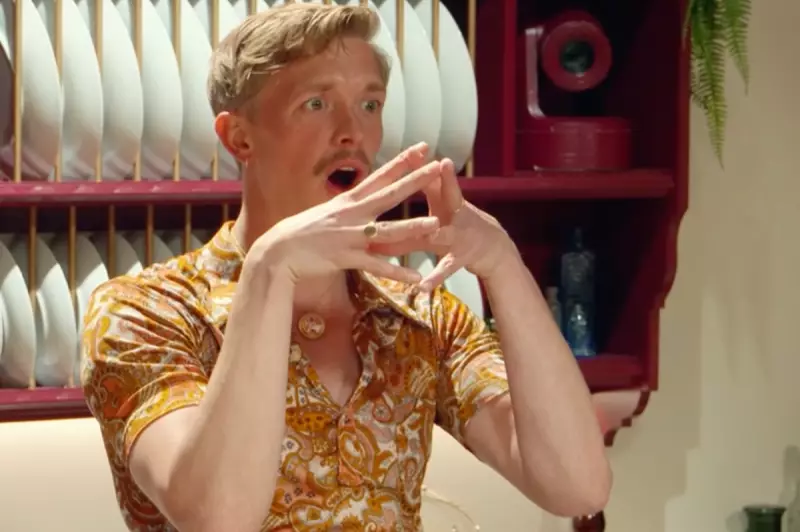
Stephen, by contrast, has emanated a sort of breezy contentment throughout the psychological pressure cooker. While other contestants have shown signs of strain—James vomiting from exhaustion on a Highland hill, barrister-turned-novelist Harriet issuing public apologies for her outbursts—Stephen has maintained an almost unnerving calm. His rosy-cheeked, worried expressions have launched a thousand memes, but these might represent the greatest misdirection of the entire series.
The Evolution of a Strategy
Track Stephen's journey through the competition reveals a carefully calibrated evolution. In early episodes, he played the tentative lieutenant, wide-eyed and nodding along. When Fiona was banished with Stephen's assistance, he delivered an Oscar-worthy crying performance. Then came the pivotal moment in the semi-final, where speaking to camera he admitted that despite promising Rachel loyalty, he'd be "stupid" not to plant seeds of doubt against her.
"I've got to put my big boy pants on and go with it," he declared, marking a clear strategic shift. He suggested to fellow contestant Jack that they should "consider Rachel," and at the Round Table accused her of using "a carbon copy" of Harriet's earlier takedown strategy. Yet when it truly mattered, he maintained loyalty to his fellow Traitor, demonstrating a protean ability to shapeshift depending on his audience.
The Psychology of Appearance
Stephen's wardrobe—those eye-catching jumpsuits and cardigans—has served as more than mere fashion statements. Each carefully chosen garment has functioned as psychological armour, reinforcing his image as harmless, fashionable, and slightly anxious. In this, he resembles a much less sinister version of Uriah Heep from Dickens' David Copperfield, accumulating power through performative weakness while insisting "I'm a very umble person."

While Rachel has drawn all the strategic fire, Stephen has played a quieter, more insidious game. Her competence sounds guilty; his confusion sounds Faithful. She lists achievements and raises suspicions; he expresses vulnerability and gains trust. The Traitors' critical error—eliminating Roxy, who trusted them both, instead of youngster Faraaz with his spot-on theory about Rachel—may have finally doomed her campaign, but it has left Stephen's position remarkably secure.
The Final Reckoning
As the series reaches its climax with just a handful of Faithfuls remaining—Faraaz, Jack, Jade, and possibly James—the £120,000 prize could still go to anyone. But the real contest has always been the psychological duel between the two Traitors themselves. Rachel has served as Stephen's heat shield, burning up on re-entry while he glided through relatively untouched by suspicion.
Tonight's finale will reveal whether Stephen's survival represents strategic genius or extraordinary fortune. Whatever the outcome, his performance has redefined what constitutes dangerous gameplay in psychological competitions. In a world where competence often draws fire, Stephen has demonstrated that genuine vulnerability, carefully wielded, can be the ultimate weapon. And regardless of who takes home the prize, viewers will undoubtedly be watching to see what sartorial statement he makes for the final episode.