Rachel Dolezal's Striking New Appearance Sparks Social Media Reaction
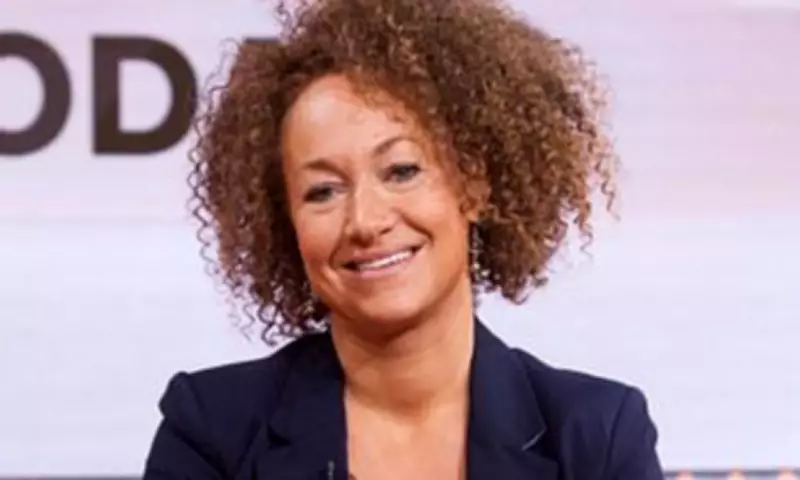
Former civil rights activist Rachel Dolezal, who now goes by the Nigerian name Nkechi Diallo and identifies as trans-black, has undergone a dramatic physical transformation that has left her virtually unrecognizable from her previous public persona. The 48-year-old, who gained notoriety in 2015 for passing herself off as a black woman despite being Caucasian, recently shared a new photo on social media platform X that showcases her glamorous makeover.
A Complete Visual Overhaul
In the Tuesday social media post, Dolezal displayed significant changes to her appearance that contrast sharply with how the public remembers her during the height of her controversy. Her lips appear noticeably fuller than before, and her signature permed hair now extends past her shoulders, abandoning the more afro-inspired styles she previously favored. The activist's wardrobe has similarly evolved, with the image showing her wearing ripped black skinny jeans and a stylish midriff sweater instead of the conservative blazers and blouses that characterized her earlier public appearances.
The photograph also featured Dolezal making a crude gesture by giving the middle finger to the camera, adding to the provocative nature of her new image. Social media responses to her transformed look were mixed, with one enthusiastic fan declaring 'She looks like Beyonce,' while another simply commented, 'You look great!'

Career Evolution and Current Pursuits
Following her exposure as a race faker in 2015, Dolezal faced significant professional challenges. The former NAACP chapter president and Eastern Washington University Africana studies instructor struggled to find employment after being dismissed from both positions when her white parents were publicly identified. She eventually secured work as an after-school instructor at Sunrise Drive Elementary School in Tucson, Arizona, but lost that position when her side career as an OnlyFans creator was discovered.
Dolezal has since embraced her OnlyFans modeling career while simultaneously training with the Sexology Institute to become a certified sex coach. During a recent episode of her podcast TradPro, she explained her career choices, stating: 'As an artist I would love for my fine art to pay all the bills, but it has not yet.' While acknowledging that OnlyFans isn't a 'forever job,' she emphasized the freedom it provides, particularly as a mother to her nine-year-old son who has autism.
'It allows me time with my nine-year-old, who has autism. It allows me more hands-on time with him,' Dolezal explained. 'It also allows for me to not have the threat of being fired because somebody doesn't like something.' She further described her approach to content creation: 'I push my boundaries on that platform, yes I do. I'm an artist, I'm creative. I like to please, so I aim to please and deliver content that my fans want.'
Background and Controversial Identity Claims
Dolezal spent more than a decade presenting herself as a black woman, during which time she rose to become a chapter president of the NAACP and taught Africana studies at Eastern Washington University. Her deception unraveled in 2015 when a Washington-based news reporter revealed that her parents, Ruthanne and Lawrence Dolezal, were both white. Despite the exposure, Dolezal has maintained that she identifies as 'transracial' or 'trans-black' and has argued that she did nothing wrong by not correcting assumptions about her racial identity.
Following the controversy, Dolezal returned to public attention through the 2018 Netflix documentary The Rachel Divide and published a memoir titled In Full Color: Finding My Place in a Black and White World. She currently hosts the TradPro podcast, which targets left-wing progressives interested in pursuing more traditional lifestyles. Additionally, Dolezal continues her work as an accomplished artist, selling paintings, drawings, and sculptures under her Nigerian name, Nkechi Diallo.
The dramatic transformation in Dolezal's appearance coincides with her evolving career path and ongoing efforts to redefine her public identity nearly a decade after the initial controversy that made her a household name.