
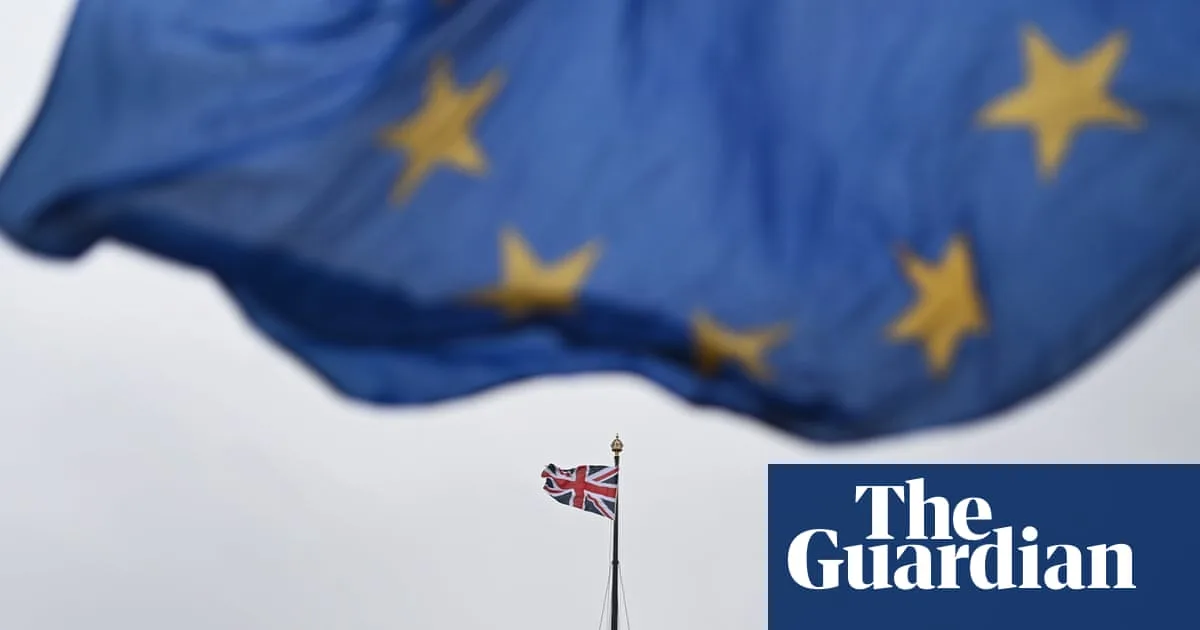
The European Union has confirmed that the United Kingdom must make a financial contribution to the EU budget in exchange for participation in the European single market for electricity, marking a potential flashpoint in the post-Brexit reset. Ireland's Europe minister, Thomas Byrne, stated that member states view such payments as politically realistic, saying: 'Ultimately there is a cost to a lot of that and there are discussions to be had in terms of the cost to Britain.'
The decision, taken by a large majority of EU member states last week, means the UK would have to pay into the EU budget on top of existing legacy costs. This comes as the two sides remain deadlocked over the EU's demand for an entry fee of up to €6bn (£5.3bn) for British companies to access the €150bn EU defence programme, Safe. Peter Ricketts, former diplomat and chair of the House of Lords European affairs committee, described a rumoured €6.5bn fee as 'so off the scale that it suggests some EU members don’t want the UK in the scheme'.
In more positive developments, Byrne expressed hope that a veterinary agreement to ease food and animal checks at the border could be struck during Ireland's EU Council presidency in the second half of 2026, calling it a 'gamechanger'. However, commission officials briefing EU ministers described the UK as a 'complicated and challenging counterpart', warning that 'nerves of steel and unity' would be needed in negotiations.
A UK government spokesperson said Britain was 'committed to a broad and constructive relationship with the EU' and would 'only agree deals that provide value to the UK and UK industry', adding that nothing had been agreed. Barry Andrews, an Irish delegate on the EU-UK parliamentary assembly, criticised the pace of progress since May's summit as 'terribly slow'.




