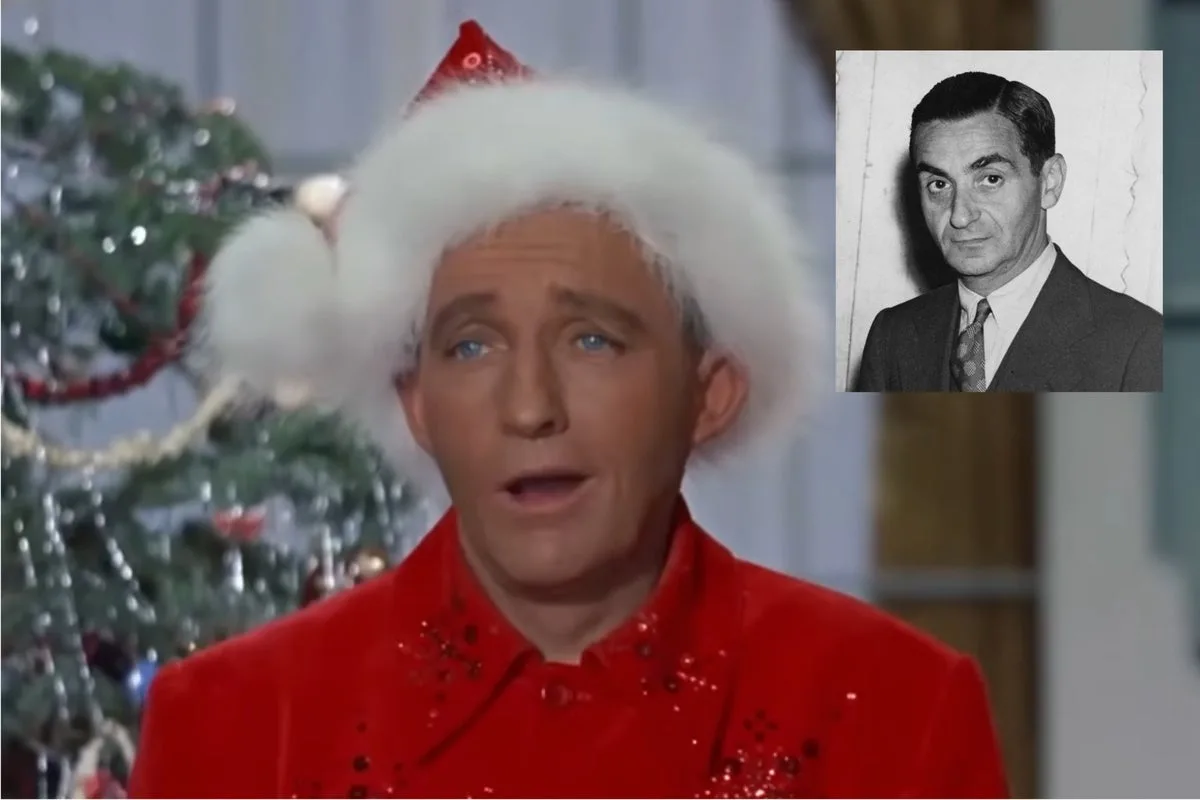
The Hidden Sorrow of 'White Christmas': War, Loss and a Jewish Composer's Legacy
The True, Sad Story Behind 'White Christmas'

For millions, the opening notes of "White Christmas" evoke cosy images of festive joy. Yet the true story behind the world's best-selling Christmas song is steeped in profound personal loss and became an unexpected anthem for soldiers during the Second World War.

A Song Born from Personal Tragedy

Composed by Irving Berlin for the 1942 film Holiday Inn, the song's wistful melody and nostalgic lyrics hide a deeply personal sorrow. Berlin, a Russian-born Jewish immigrant to America, did not celebrate Christmas himself. For him, the holiday was forever marked by the death of his infant son, Irving Berlin Jr., who died at just three weeks old on Christmas Day in 1928.

Each year, while other families gathered, Berlin would visit his son's grave, a private ritual of grief that informed the song's melancholic heart. The iconic tune, best known from Bing Crosby's beloved 1942 recording, first reached the public on a Kraft Company-sponsored radio show on Christmas Day 1941—a mere 18 days after the attack on Pearl Harbor.

The Soldiers' Anthem: Comfort for Troops Overseas

As young American troops deployed for World War II, "White Christmas" soared in popularity. Its secular, nostalgic longing for home resonated powerfully with servicemen far from their families. The Armed Forces Radio played it constantly as a song of hope and comfort.

Bing Crosby, who travelled extensively to perform for the troops, found it was his most requested number, despite his own reservations. "Heaven knows, I didn't come that far to make them sad," Crosby once said. "Several times I tried to cut it out of the show, but these guys just hollered for it."

His nephew, Howard Crosby, later recounted one particularly harrowing performance. In December 1944, Crosby performed an outdoor USO show in northern France with Bob Hope. "He had to stand there and sing 'White Christmas' with 100,000 G.I.'s in tears without breaking down himself," Howard said. Tragically, many of those soldiers were killed in the Battle of the Bulge just days later.

A Record-Breaking Legacy

The song's impact is etched into history. The original 1942 master recording wore out from overuse and had to be re-recorded in 1947. "White Christmas" went on to sell over 50 million copies worldwide, inspiring the 1954 film of the same name starring Crosby. In 2012, the Guinness Book of World Records certified it as the best-selling physical single of all time.

Today, a remastered version from 1942 is available, preserving the very recording that comforted a generation at war. The song remains a bittersweet classic—a holiday standard born not from celebration, but from a father's grief and a soldier's yearning for home, securing its place as the most poignant Christmas carol ever written.