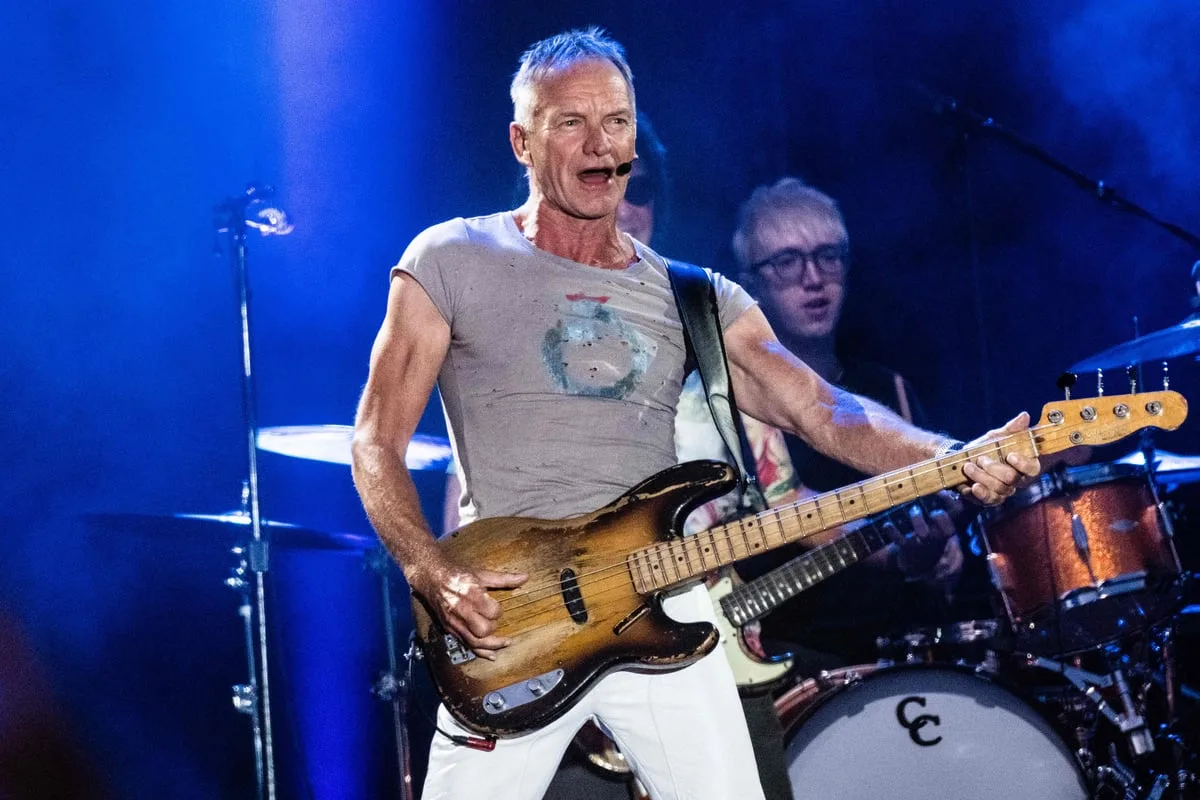
Sting has paid his former Police bandmates almost £650,000 amid a long-running dispute over royalty payments, newly released court documents have revealed. The 72-year-old singer made the payment to guitarist Andy Summers and drummer Stewart Copeland after they launched legal action against him last year, claiming they had been underpaid for decades.
According to paperwork filed at the High Court in London, Summers and Copeland received $870,000 — around £647,000 — from Sting and his publishing company. However, the musicians argue the payment does not fully settle the matter and say they are still owed more than $2 million (£1.5 million).
The dispute centres on royalties connected to some of The Police’s biggest hits, including Roxanne and Every Breath You Take. While Sting was the band’s principal songwriter and holds most of the writing credits, his former bandmates claim the trio agreed early on to share certain publishing income. They say an oral agreement was reached when the band formed in 1977, later formalised in written contracts, recognising that although Sting wrote the songs, Summers and Copeland often made crucial creative contributions. One frequently cited example is Summers’ instantly recognisable guitar riff on Every Breath You Take.

Under the arrangement, when one band member earned publishing income from a song they had written, a percentage — typically around 15 per cent — would be shared with the other two as an “arrangers’ fee”. Summers and Copeland allege some of those payments were withheld, prompting last year’s lawsuit. Neither Sting nor his former bandmates were present in court for the opening of a two-day preliminary hearing this week.
Lawyers for Summers and Copeland are now asking the court for permission to expand their claim, arguing that agreements signed in 1997 and 2016 entitle them to royalties from digital downloads and streaming. They say the contracts should be interpreted in line with how the music industry has changed, with streaming now replacing physical sales such as CDs and vinyl. Sting’s legal team disputes that interpretation, arguing that streaming on platforms such as Spotify counts as “public performance” rather than a sale. They also say the wording of the 2016 agreement limits royalty payments to income derived “from the manufacture of records”, excluding streaming and downloads.
The Police formed in London in 1977 and went on to become one of the UK’s most successful bands, scoring global hits including Message in a Bottle, Walking on the Moon and Every Little Thing She Does Is Magic. Their 1983 album Synchronicity featured Every Breath You Take, which topped the US charts and later became one of the most-played radio songs of all time. The band split in 1984 amid growing tensions but reunited briefly in 2007 for a hugely successful world tour. In 2022, Sting sold the rights to his songwriting catalogue — including songs written for The Police — to Universal Music Group in a deal reported to be worth around $200 million (£150 million).