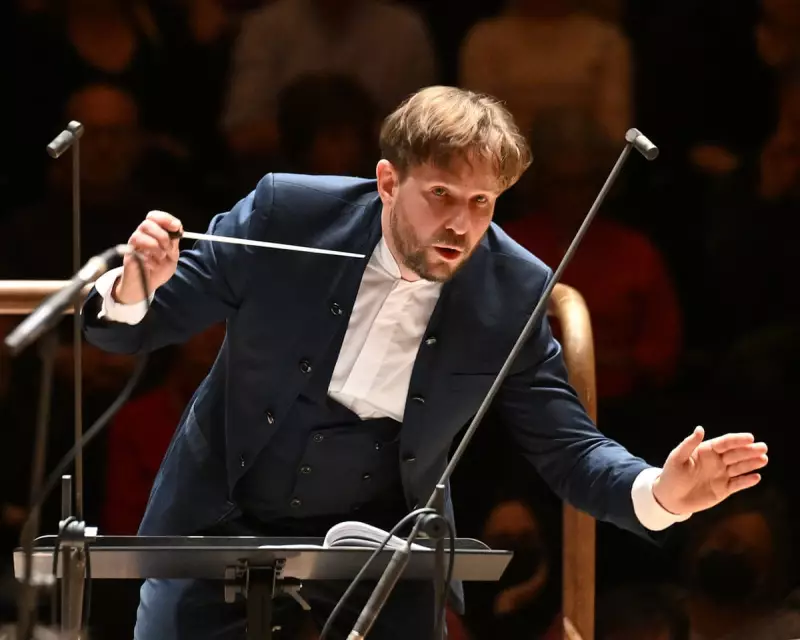
The BBC Symphony Orchestra's latest concert at the Barbican in London presented a programme of striking contrasts, culminating in the successful world premiere of a major new cello concerto. Conducted by Clemens Schuldt, the evening featured works by Tchaikovsky, Mel Bonis, and Richard Strauss, but was ultimately defined by the debut of Joseph Phibbs's concerto, written for soloist Guy Johnston.
A Cohesive Premiere Amidst Disparate Works
The centrepiece of the evening was the world premiere of Joseph Phibbs's cello concerto, a meticulously crafted work in five movements. Written for the acclaimed cellist Guy Johnston, the piece provided a much-needed sense of musical cohesion to an otherwise frenetic lineup. The concerto basked in a warm tonal language, showcasing a multihued orchestration with rich string writing and imaginative effects from the wind, brass, and percussion sections.
Johnston's performance was pensive and unshowy, his solo line emerging gracefully from gentle double bass pizzicatos and cushioned cellos. Conductor Clemens Schuldt demonstrated mindful control over the BBC Symphony Orchestra forces, neatly framing the soloist throughout. The work journeyed from a shimmering, light-filled Aubade to a mournful Elegy, featuring a long cello threnody over a pulsing orchestral heartbeat. An eerie and tense Nocturne gave way to a wistful Vocalise, bringing the attractive new concerto to a radiant conclusion.

Inconsistent Readings of Romantic Repertoire
The concert's first half proved less consistent. Tchaikovsky's prolix tone poem 'Hamlet' received a clipped and brittle reading from Schuldt. While undoubtedly exciting, the interpretation was notably low on warmth, briskly handling the work's stentorian ghost, Russian-accented Ophelia, and brusque military interventions.
In stark contrast, the short 'Ophélie' by late-Romantic composer Mel Bonis demonstrated that less can be more. This five-minute sketch of the iconic heroine, part of a series on famous women, was beautifully conceived with rippling harp, sweeping strings, and melancholy oboe depicting her drift to a watery grave. However, the performance was criticised for being overly loud, diminishing some of the piece's inherent delicacy.
A Frankenstein's Monster of a Finale
The concert concluded with an anonymously cobbled-together suite from Richard Strauss's 'Der Rosenkavalier'. Here, Schuldt seemed more in his element, delivering an idiomatic interpretation with nicely swung waltz sequences. Yet, a tendency to micromanage the music robbed it of some natural flow.
The suite itself was described as a 'Frankenstein's monster' of a score, lurching awkwardly from one excerpt to another. No amount of energetic arm-waving from the podium could paper over these structural cracks. Schuldt's persistent tendency to ramp up the volume added to a sense of misguided bluster, which was a shame given the otherwise excellent standard of orchestral playing throughout the evening.
Ultimately, the concert highlighted the challenges of programming disparate works without a strong curatorial thread. While the performances were committed, the evening's coherence relied heavily on the substantial new work at its heart. The premiere of Joseph Phibbs's cello concerto, performed with conviction by Guy Johnston and the BBCSO, provided a compelling and unifying focal point, promising a secure future for this attractive addition to the cello repertoire.