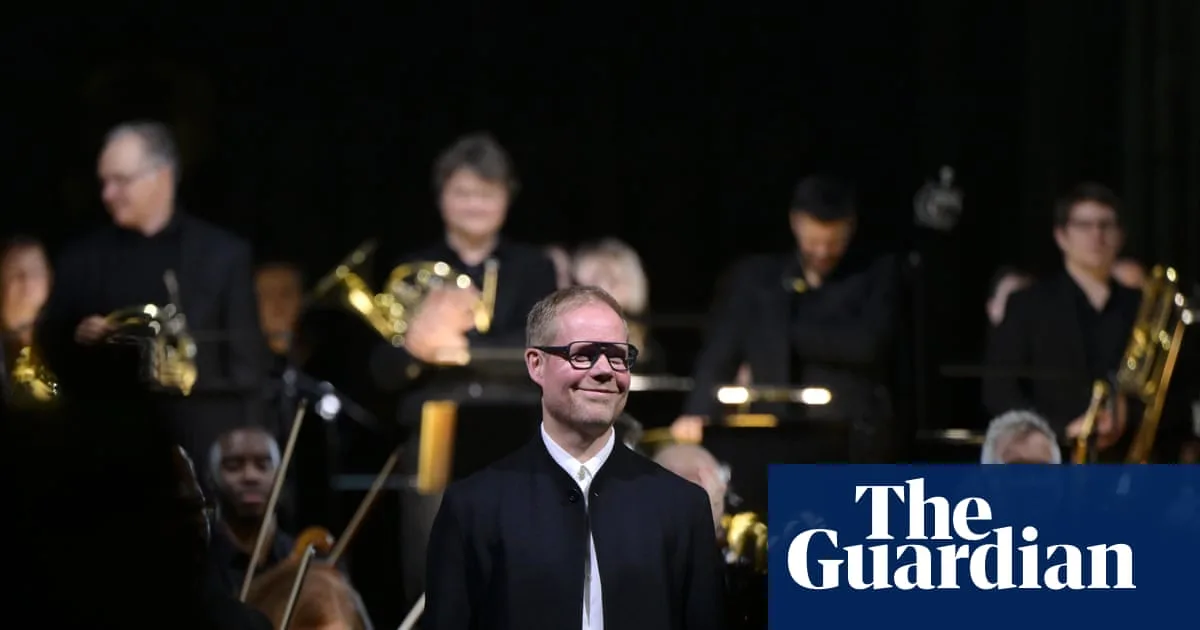
Max Richter Achieves First Oscar Nomination for Hamnet Score
The German-born British composer Max Richter has earned his first Oscar nomination this year, a significant milestone for his acclaimed work on the Shakespeare drama Hamnet. This nomination arrives during an exceptionally productive period for Richter, who will celebrate his 60th birthday shortly after the Oscars ceremony in Los Angeles.
A Landmark Year for the Prolific Composer
Richter's Oscar nomination for best original score caps a remarkable twelve months of achievements. In the previous year, his 2015 album Sleep surpassed two billion streams across all platforms, becoming the first classical record to reach this milestone. Additionally, Richter was awarded a CBE in the New Year Honours list, and his contributions to music will be honoured with the Berlinale Camera award at the upcoming Berlin film festival.
From Monday, a ballet inspired by the works of Virginia Woolf and scored by Richter will be livestreamed in cinemas across the United Kingdom, further showcasing his versatile talent. However, some critics have noted that his ascent may be tempered by the ubiquity of his piece On the Nature of Daylight, which features prominently in Hamnet and has been described by some as a cliché for emotional scenes in film.
From Bedford to Global Acclaim
Richter's journey to Oscar recognition was far from predictable. Born in Hamelin, Lower Saxony, and raised in Bedford, he discovered minimalist music at age twelve or thirteen through a local milkman who delivered records by Terry Riley, Philip Glass, and John Cage. This early exposure sparked an epiphany, leading Richter to blend classical training with influences from early electronica like Kraftwerk and punk bands such as Stiff Little Fingers.
His ability to traverse the divide between high and low music has defined his career. Before establishing himself as a composer, Richter collaborated with electronic group The Future Sound of London in the mid-1990s and contributed strings to Roni Size & Reprazent's 2000 album In the Møde. His debut album Memoryhouse in 2002 and its follow-up The Blue Notebooks in 2004 are now regarded as landmarks in genres like neo-classical and post-minimalism.
Collaborations and Critical Reception
Richter's profile has largely been built through collaborations, with his reliability and adaptability praised by peers. Kevin O'Hare, director of the Royal Ballet, highlighted Richter's punctuality and emotional precision, noting his music's pliability for sudden mood changes in ballet productions such as Woolf Works and MaddAddam.
In film, Richter became a sought-after composer after his synth-led score for Ari Folman's 2008 documentary Waltz with Bashir. On the Nature of Daylight, in particular, has been used in diverse genres, from fantasy romances to post-apocalyptic dramas, due to its emotional resonance. Despite its popularity, the piece has faced criticism for its perceived inoffensiveness and algorithmic efficiency in evoking emotions.
Beyond Wellness and Into Engagement
While Richter's music, including the sleep-inducing album Sleep, is often associated with wellness and relaxation, Sam Jackson, controller of BBC Radio 3 and the BBC Proms, argues it inspires deeper engagement. Richter's 2020 project Voices, created with partner Yulia Mahr, incorporates the Universal Declaration of Human Rights into music, demonstrating a commitment to meaningful themes that resonate with audiences.
As Richter awaits the Oscars ceremony, his nomination for Hamnet not only celebrates his compositional skill but also underscores his enduring influence in bridging classical and contemporary music landscapes.