Jay-Z's Bronx Return: A Test of Hip-Hop's Power Against Elite Hypocrisy
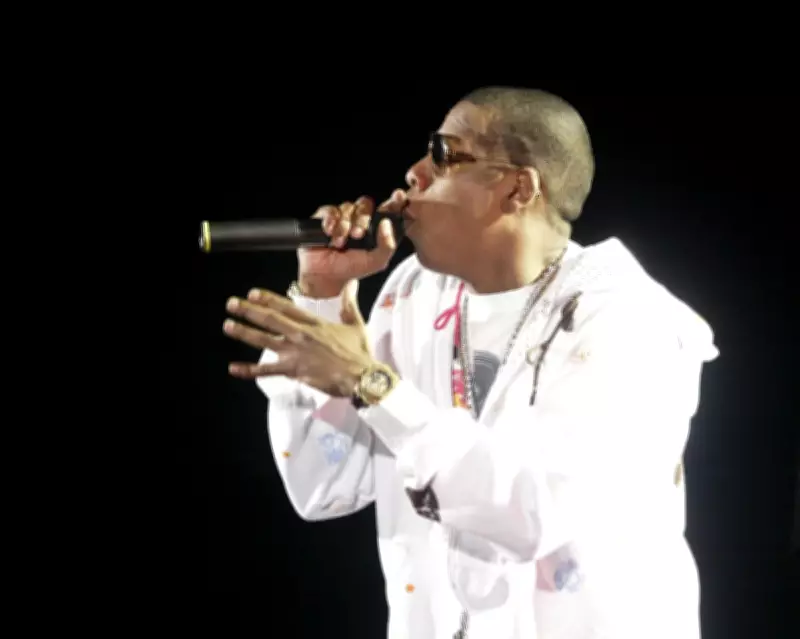
This summer, Jay-Z is set to perform in the Bronx, a homecoming that has sparked intense reflection on the role of hip-hop in contemporary society. For many, including those who grew up with his music, this event is more than a concert; it is a moment to gauge whether the artist will embrace the political consciousness that once defined his work or retreat into silence. The stakes are high, as recent revelations from the Jeffrey Epstein scandal have exposed deep-seated racist attitudes among the elite, challenging the very essence of cultural expression and justice.
The Staley Email: A Racist Lens on Black Culture
An email sent over a decade ago by Jes Staley, former CEO of Barclays, to Jeffrey Epstein has resurfaced, shedding light on the pernicious myths that some in power hold about Black Americans. In the message, Staley crudely suggests that poor Americans are pacified by Super Bowl ads featuring "hip blacks in hip cars with white women," implying that figures like Jay-Z have been "bought off" to prevent social unrest. This reductionist view is not only racist but intellectually shallow, ignoring the diverse motivations and struggles within Black communities.
Staley's hypocrisy is glaring. While he theorized about cultural pacification, he maintained a close friendship with Epstein, a convicted pedophile, flying on his plane and visiting his island. This duality underscores a broader issue: the elite often operate in a parallel universe of impunity, where accountability is reserved for the marginalized. Staley's email articulates an old racist strategy—using spectacle and consumption to stifle dissent, a tactic that has long been employed to maintain social control.

Hip-Hop as a Tool of Resistance, Not Pacification
Growing up in the Bronx, the birthplace of hip-hop in 1973, I witnessed firsthand how this music genre has never been about pacification. Instead, it served as raw journalism from the streets, documenting the harsh realities of poverty, violence, and systemic injustice. Tracks like Jay-Z's Moment of Clarity grapple with the costs of success, revealing the compromises required to navigate a rigged system. For many, including myself during a 12-year prison stint, hip-hop was a lifeline that inspired personal transformation and collective protest.
Inside prison, I met individuals serving decades for minor offenses, while figures like Staley faced no consequences for their complicity in far greater harms. This disparity highlights the urgent need for hip-hop to reclaim its roots as a force for accountability. Artists like Talib Kweli and Common have consistently used their platforms to challenge power, refusing to be silenced by commercial pressures. Their work reminds us that hip-hop was built to make injustice visible, not to distract from it.
The Drift in Culture and the Call to Action
Staley's email, while wrong in its assumptions, touches on a troubling trend: the co-optation of hip-hop's anger by the music industry, which often sells it back as mere aesthetic. This has led to a disconnect for younger generations, who may lose sight of the music's original purpose—to fuel social movements. In a time of political turmoil, with attacks on immigrants, civil rights, and Black history, artists must step up. Examples like YG and Nipsey Hussle's FDT or Eminem's blistering critique of Donald Trump show that music can still be a weapon against oppression.
Jay-Z, with his unprecedented influence, holds a unique responsibility. His journey from Marcy Projects to global stardom gives him social capital that could be spent on advocating for justice. However, as Martin Luther King Jr. taught, silence from those in power is complicity. Black excellence alone cannot save us; it must be coupled with collective struggle. Artists like JJ'88 and Richie Reseda are carrying this torch, ensuring that hip-hop remains grounded in activism.

Conclusion: A Moment of Reckoning
As Jay-Z returns to the Bronx, the world will be watching to see which version of the artist emerges. Will he embrace the political urgency of his earlier work, or will he remain silent? Staley's worldview—that culture is a lever to control the poor—must be challenged. Hip-hop has always had the power to bear witness, organize, and inspire change. It is time for the culture to remember its purpose and use that power once again, proving that art can indeed change reality.