The Uncharted Territory of Free Jazz
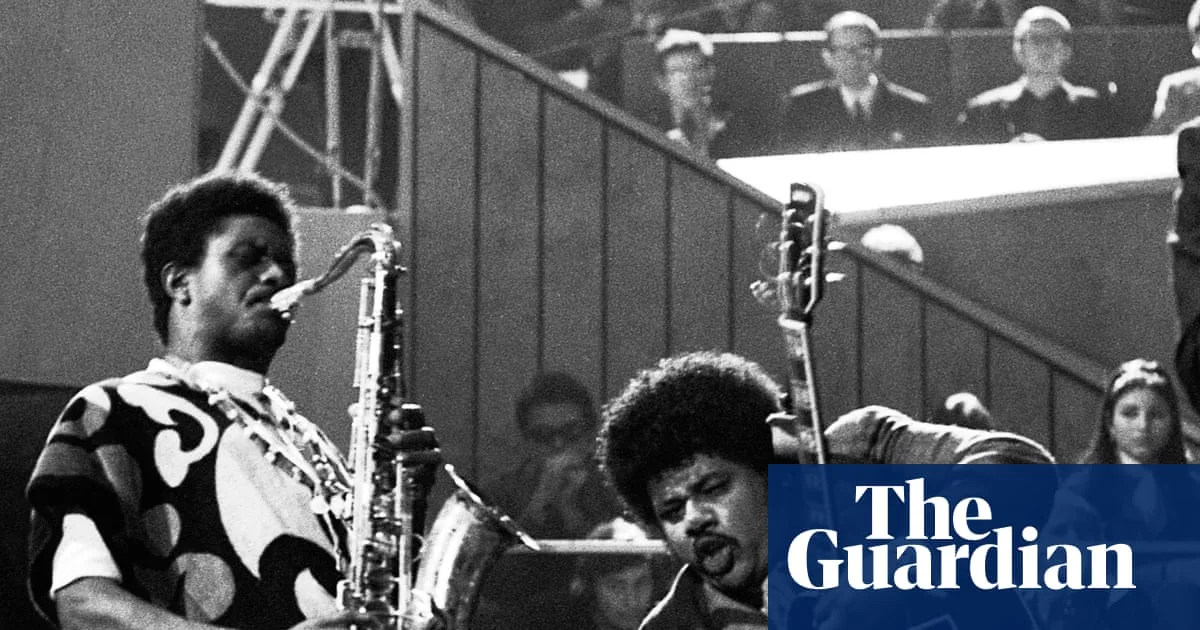
Free jazz stands as one of music's most challenging frontiers, a style unmoored from conventional rhythms and structures that has perplexed and fascinated listeners in equal measure for decades. Even for seasoned music critics familiar with everything from hideous noise to traditional jazz, this avant-garde form often remains a closed book. Yet a new guidebook from Sonic Youth's Thurston Moore aims to change that perception and open this revolutionary sound to a broader audience.
Thurston Moore's Free Jazz Journey
Moore's own journey into free jazz began in the 1980s when he asked writer Byron Coley for jazz tapes during Sonic Youth tours. Though he'd witnessed New York's avant-garde jazz loft scene in the late 1970s, Moore admits he "wasn't so clued in" at the time, preoccupied instead with punk and no wave movements. The tapes featuring Coltrane, Mingus, Dolphy, Sun Ra, and Monk gradually led him to free jazz, which he describes as "a music both liberated and yet wholly indebted to the learned techniques of its tradition."
This discovery transformed Moore into a lifelong advocate. Sonic Youth performed with legendary avant-garde ensemble the New York Art Quartet, while Moore released free jazz albums on his Ecstatic Peace! label. His latest project, Now Jazz Now: 100 Essential Free Jazz and Improvisation Recordings 1960-80, co-written with Coley and Swedish saxophonist Mats Gustafsson, represents his most ambitious effort to share this passion.
Breaking Down Barriers to Appreciation
The book deliberately counters what Moore calls "dry and academic writing" on the subject, instead embracing enthusiastic, accessible language. It features engaging commentary, including colourful descriptions that leave no doubt about the authors' convictions. The collection benefits from a foreword by Neneh Cherry, who grew up with many of these albums thanks to her stepfather, trumpeter Don Cherry, who worked with Ornette Coleman—the saxophonist who coined the term "free jazz" with his 1961 album of the same name.
Despite these efforts, free jazz maintains its forbidding reputation. Moore notes it was "critically derided" and often dismissed as noise. The commercial failure was stark—the book mentions Jimmy Guiffre's Free Fall (1963) as a "complete commercial failure" that earned band members just 35 cents each from a gig and led to a 10-year recording hiatus for Guiffre.
Joakim Haugland of Oslo-based label Smalltown Supersound acknowledges the genre's ongoing perception problem. A Sonic Youth fan who discovered free jazz through Moore's release of Arthur Doyle's Alabama Feeling, Haugland now releases free jazz alongside his label's more commercial dance music. "I almost always play free jazz in hiding, when I'm alone," he confesses, "because people think I'm mad to listen to it."
Where to Begin with Free Jazz
For newcomers, both Moore and Haugland offer entry points. Moore recommends:
- Machine Gun by the Peter Brötzmann Octet
- Afrodisiaca by John Tchicai and Cadentia Nova Danica
Haugland suggests:
- Joe McPhee's Tenor ("poetry; I feel like McPhee is pouring his whole soul through the saxophone")
- Silent Tongues by pianist Cecil Taylor
Machine Gun lives up to its formidable reputation as furious and completely unremitting, yet becomes comprehensible when contextualised within 1968's social upheavals and Germany's post-Nazi artistic ferment. Similarly, Cecil Taylor's complex piano work carries political weight as Black artists expressing freedom in a restrictive America.
Joe McPhee's Tenor, recorded alone in a Swiss farmhouse, proves particularly accessible, shifting between melancholy blues and piercing discordancy without ever feeling jarring. As Moore emphasises, exploration remains the point: "The records are the research, and the research is the spirit of so much of this music's essential vocabulary."
Now Jazz Now: 100 Essential Free Jazz and Improvisation Recordings 1960-80 publishes on 5 December through Ecstatic Peace Library, offering a revolutionary guide to one of music's most misunderstood genres.