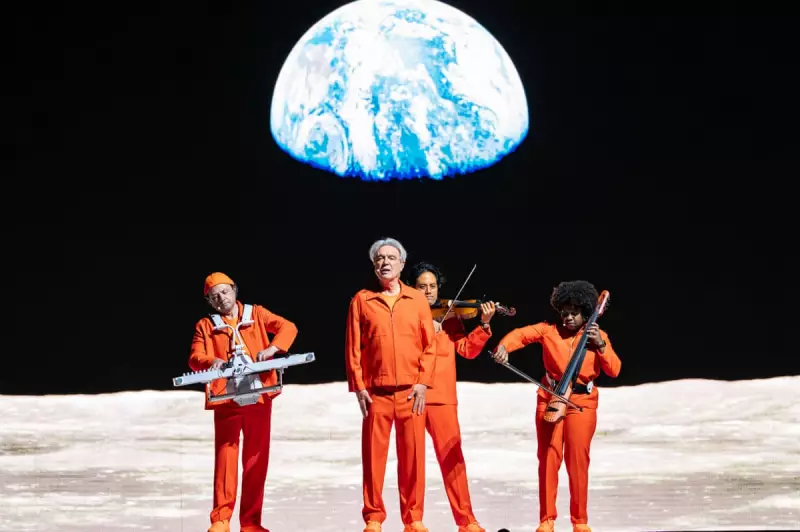
In a dazzling display of artistry and social commentary, the legendary David Byrne brought his uniquely theatrical live show to a rapt London audience. The performance, held on a crisp January evening, proved to be far more than a simple concert; it was a meticulously crafted piece of theatre, a philosophical inquiry set to rhythm, and a defiant celebration of collective joy.
A Theatrical Tapestry of Music and Movement
The stage was a masterclass in minimalist impact. Stripped of the usual rock concert clutter, it featured only Byrne and his band of supremely talented musicians, all in matching grey suits, moving in a flawlessly synchronised dance. Every step, every gesture, and every note was part of a grander choreographic vision. This wasn't just backing dancers; the entire ensemble, musicians included, were performers in a living, breathing artwork. The absence of visible cables or stands contributed to a sense of surreal, floating precision, where the human body and the instrument became one.
Byrne, now 73, commanded the space with an energy that defied his years. His iconic voice, both conversational and piercing, navigated a setlist that cleverly wove together classics from his Talking Heads era with standout tracks from his solo career and collaborations. The genius of the show lay in its pacing—a dynamic ebb and flow between pulsating, dance-inducing numbers and moments of quiet, spoken-word reflection.

Finding Hope in a Fractured World
The show's core, however, was its poignant thematic heart. Between songs, Byrne offered brief, insightful monologues that touched on neuroscience, social psychology, and the innate human need for connection. He pondered why singing and dancing together feels so good, suggesting it's a biological imperative for social cohesion. In an age often marked by division and digital isolation, this show felt like a powerful, physical rebuttal.
This was not blind optimism, but a hard-won hope. The choreography itself sometimes illustrated struggle—the difficulty of coordination, the beauty of falling into sync. Songs like "Everybody's Coming to My House" and a thrilling rendition of "Burning Down the House" became anthems of shared experience. The message was clear: our humanity is found not in solitary consumption, but in active, collective participation. The audience, inevitably, became part of this choreography, rising to their feet not out of obligation, but as a natural extension of the performance's infectious spirit.
A Lasting Impression of Joy and Insight
The culmination of the evening was a profound sense of catharsis. Byrne had managed to craft a show that was intellectually stimulating, visually stunning, and viscerally uplifting. It served as a reminder of live music's unparalleled power to create temporary communities and articulate complex emotions through rhythm and melody.
Ultimately, David Byrne's London performance transcended the typical concert review metrics. It was a superbly paced and choreographed meditation on what makes us human. He left the audience not just humming melodies, but contemplating the very architecture of social joy, all while having danced their way through the lesson. In a world that can feel increasingly fragmented, Byrne's theatrical manifesto for togetherness felt not just entertaining, but essential.