Bob Mould on Sugar's Reunion: 'When Cobain Died, I Pulled the Plug'
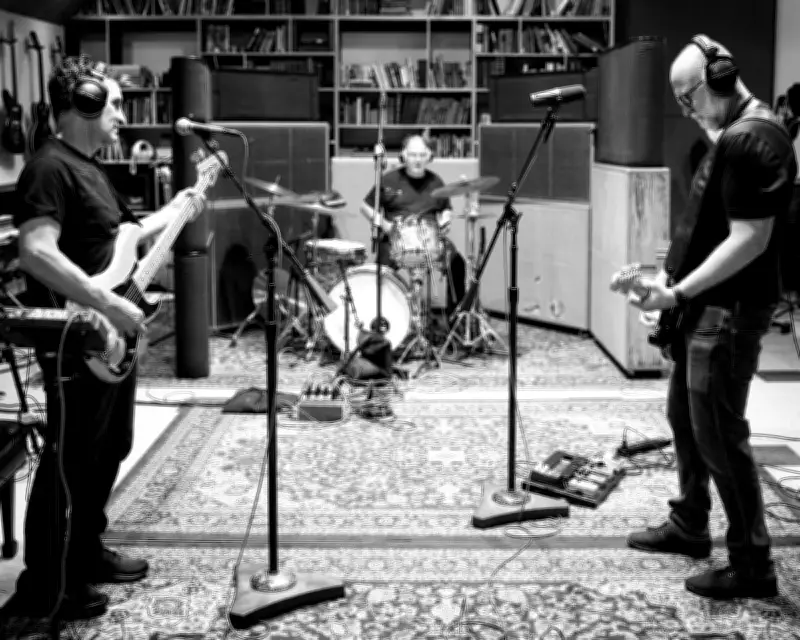
For the first time in over three decades, the iconic 90s power trio Sugar is reuniting for a tour across Europe and the United States. Frontman Bob Mould, alongside bassist David Barbe and drummer Malcolm Travis, is set to bring back the deafening sound that defined an era, but with a newfound appreciation for the journey.
The Deafening Sound of Sugar
The heart of Sugar has always been Bob Mould's guitar, described as a colossal, metallic force that could engulf audiences in a wall of sound. "It was incredible, being engulfed by that wall of sound," recalls bassist David Barbe from his office at the University of Georgia. "Bob was so loud, there were times on stage when I could see Malcolm drumming, but I couldn't actually hear him."
Drummer Malcolm Travis, speaking from his home in Cape Cod, Massachusetts, adds, "I didn't wear earplugs when I started playing with Bob. But soon afterwards, I did. It was just deafening." Despite the band members being 30 years older, Mould's guitar remains as fearsomely loud as ever, a testament to his enduring power as a musician.

Copper Blue and the Grunge Wave
Sugar's 1992 debut album, Copper Blue, masterfully blended thunderous noise with sculpted pop melodies, earning critical acclaim and commercial success that was unprecedented for an underground artist like Mould. The album emerged in the wake of Nirvana's paradigm-shifting breakthrough, which pulled alternative rock into the mainstream. While Mould's previous band, Hüsker Dü, had influenced Nirvana, he felt on the periphery of the grunge movement initially.
"I could feel this cultural groundswell coming, this great energy happening," Mould remembers, "but I was on the edge of everything, not at the centre." Adrift after Hüsker Dü's implosion and modest solo albums, he toured incessantly, testing new songs across Europe and the US. A deal with Creation Records and inspiration from My Bloody Valentine's Loveless helped shape what would become Sugar's signature sound.
Formation and Early Success
Mould recruited friends Travis and Barbe, initially for what he envisioned as a solo project. "Bob and I listened to his demos, drinking coffee and chain-smoking cigarettes," Travis recalls. "The songs were incredible." Barbe agrees, noting they crystallised the best of Mould's past work. The band was christened Sugar in a Waffle House in Athens, Georgia, and they relocated to Massachusetts to record Copper Blue.
The album's balance of sweetness and substance, from love songs to darker tracks like The Slim, inspired rave reviews. It won NME's 1992 album of the year award, a moment Barbe compares to "winning an Oscar." Constant touring led to Top 10 success in the UK and airplay on MTV and US radio, vindicating Mould's efforts.
Challenges and the Impact of Cobain's Death
Following up with the EP Beaster in 1993, which explored religious themes and reached No. 3 in the UK, Sugar faced personal and professional challenges. Mould's homosexuality became a media focus, with Spin magazine pressuring him to come out in 1994. "Why didn't I do it much sooner?" he reflects today. "I could have been of much greater use to my community." The experience highlighted the loss of innocence in the post-Nirvana era.
In March 1994, Sugar began recording their second album at Triclops Studio in Georgia, but the sessions were fraught. On April 8, news of Kurt Cobain's suicide delivered a devastating blow. "It was a good time to walk away for a bit," Mould says. "I pulled the plug, erased the tapes completely. There was nothing worth saving."
Dissolution and Long-Awaited Reunion
Months later, Sugar recorded File Under: Easy Listening, but it lacked the magic of their debut. By early 1995, with Barbe wanting to spend time with his children and Mould burnt out, the band dissolved. For the next three decades, Mould pursued a solo career, Barbe worked as a producer and teacher, and Travis became a session drummer.

Reunion talks were scuppered by bad timing until Travis, after a birthday message from Mould, realised "the window was rapidly closing." "If we want to do this, we better do it now," he urged. The reunited Sugar will tour from May to October, with two new tracks recorded for the occasion.
Looking Ahead
Mould is focused on enjoying the reunion in a way he couldn't during Sugar's initial run. "My only thought in the 90s was to just ensure this thing could keep going," he says. "This time, I'm just trying to enjoy it all." While he won't confirm future Sugar music, one thing is certain: the shows will be punishingly loud. Fans are advised to bring earplugs for this electrifying return.