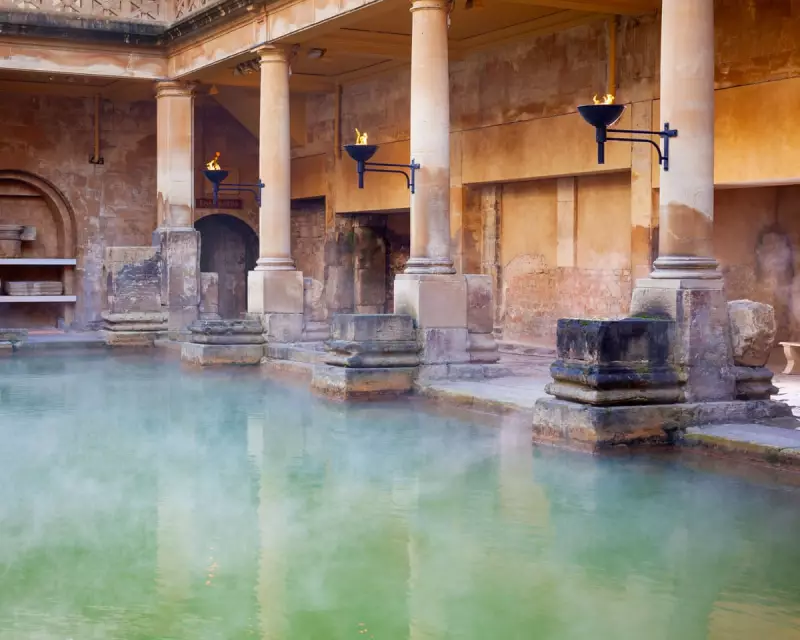
In the swinging 1960s, the ancient Roman Baths in Bath became an unlikely stage for a cultural revolution, where jazz music and youthful rebellion collided with centuries of history. This iconic site, once a serene relic of Britain's Roman past, suddenly found itself at the heart of a vibrant musical and social movement.
A Jazz Awakening in Ancient Waters
As post-war Britain embraced new sounds and ideas, the Baths became a magnet for jazz enthusiasts. The thermal waters, long associated with healing and relaxation, now echoed with the improvisational rhythms of saxophones and double basses. Local musicians and visiting artists alike were drawn to the unique acoustics and atmosphere of the historic venue.
The Clash of Cultures
This musical renaissance didn't come without controversy. Traditionalists were shocked to see the sacred Roman site transformed into a hotspot for counterculture. The juxtaposition of ancient architecture and modern jazz created a cultural tension that mirrored the wider societal changes sweeping across Britain.

Legacy of the Baths Jazz Scene
Today, the brief but influential jazz era of the Roman Baths remains a fascinating footnote in British musical history. The convergence of ancient and modern, establishment and rebellion, created a unique moment that continues to inspire artists and historians alike.
The story of how these thermal waters temporarily became Britain's most unexpected jazz venue serves as a reminder of how cultural spaces can be reinvented across generations.