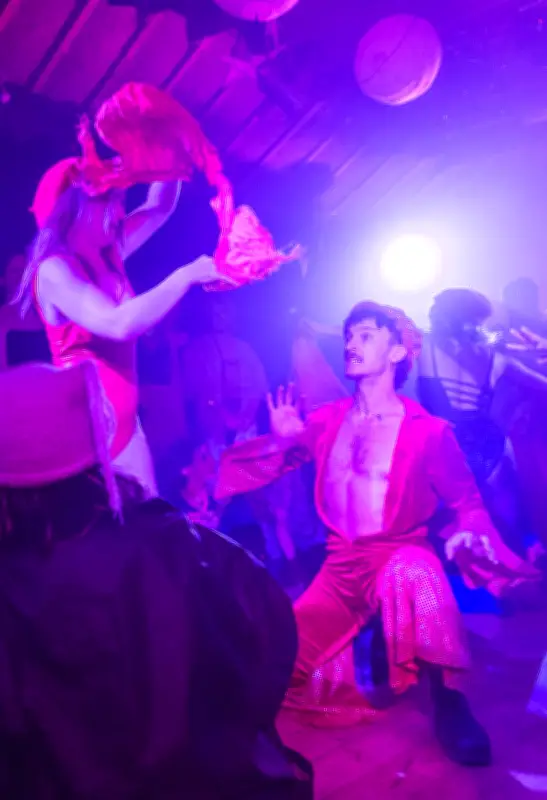
In July 2025, a festival called Loveshack took place in a Welsh barn with a 90s icons dress-up theme. The crowd of 60 friends included a Joanna Lumley lookalike chatting to an Andre Agassi impersonator, while a cop from the Beastie Boys' Sabotage video watched on. Possessions lay strewn about, but no one worried—everyone was having the best festival experience imaginable.
The Rise of Secret Festivals
Tiny events like Loveshack are becoming more common as festivalgoers tire of overpriced mainstream events with omnipresent branding. While big festivals like Glastonbury (with a fallow year in 2025) still sell out—Mighty Hoopla and Green Man sold out in a day—there is a sense that festivals have lost their independent spirit. Lineups feel samey, and onsite 'brand activations' make attendees feel like they're walking through a 3D advert. John Rostron of the Association of Independent Festivals notes: 'Not everyone wants to go to a festival and see a Dyson-activated tent.'
What Defines a Secret Festival?
Secret festivals are typically organised by a group of like-minded mates for a hedonistic weekend away. Locations range from campsites to rave-friendly farms or down-at-heel mansion houses, often at no-nonsense wedding venues that permit camping and nocturnal fun. Attendee numbers range from 50 to 200, usually friends or friends-of-friends of the organiser. These events are generally not ticketed nor open to the public—until they grow. Rostron points to Green Man, which started as a party to get mates together and now hosts 25,000, and Gemfest in Wiltshire, which began as a 21st birthday party for someone called Gemma and is now a sold-out 8,000-capacity festival.

The Magic of Community
Many secret festivals are run by people who came of age during the late-00s boutique festival wave (Bestival, Glade, Big Chill, Secret Garden Party), which encouraged dress-up and immersive oddness. Dulcie Horn of creative studio Chuffed says: 'The magic in those boutique festivals came from people pouring their blood, sweat and tears into the collective experience. They realised the thing that ultimately makes a festival really magical is the people.' Secret festivals take that community sense further.
Killer Wales: A Case Study
Swansea's Killer Wales attracts about 70 people annually, many meeting for the first time. Organiser Alex explains that the vibe is intentionally less about drug-fuelled hedonism: 'We provide a more positive and interactive way for people to meet.' Festivalgoers are split into groups with distinct dress-up themes to disrupt social cliques. Daytime games include hanging a willing participant from a washing line using pegs, or silly sumo wrestling on a nearby beach with Easter baskets on heads. 'A person loses when all the eggs fall out,' says Alex's partner Yas.
Pride of place is the annual talent show. Yas recalls: 'One year, someone did a very sexy burlesque with a baseball cap, just very sexily taking it off and on again. A mermaid sat brushing her hair while two people put increasingly bigger objects under her boobs. One person's skill was a really big smile.'
Come Bye: Gifting and Creativity
Secret festival Come Bye, held on a permaculture farm near Abergavenny for eight years, also has a talent show. Organiser Max Hagenbach says: 'The winner becomes the most famous person on the whole site. At a normal festival, you're just there to consume. Here, we give people an invitation to do something they've always wanted to do—to write a play or make an art sculpture. Someone did an immersive wake one year.'
Unlike Burning Man's tit-for-tat sharing, Come Bye encourages gifting without expectation. 'You just bring nice things and share them with whoever you come across,' Hagenbach says. 'You might bake some brownies and give them to the first 20 people you meet. People have gifted trinkets, poems, or just cracked open a watermelon and handed it round.'

Mansionface: Creative Outlet
At Mansionface, someone once built an escape room version of the board game Operation. 'When you made a mistake, the whole room filled with smoke,' organiser Tom Lee says. Lee notes that these festivals become outlets for creatives not in creative day jobs: 'None of us are exactly playing Fabric next week. So we always wanted it to be a creative space for our friends who make music as a hobby. Many people did their first DJ sets at Mansionface.'
Oddfolk: Pagan Rhythms and Anarcho-Syndicalism
Alex Podger runs Oddfolk in Cornwall for about 100 people annually, drawing parallels to pagan rituals. 'In the pagan calendar, there are usually four big events every year, like harvests, and four smaller events to check in with your community. I find that in the Oddfolk collective, it almost organically happens.' The events are coordinated via WhatsApp, not runes.
'From the start, Oddfolk hasn't been something you buy a ticket for,' Podger says. 'You have to participate and help.' In the first year, an Excel spreadsheet assigned people to teams like cooking or recycling (the Sisterhood of Left Waste). 'Doing it this way makes you an active participant, not just a consumer. If you see litter or notice the toilet roll has run out, you do something about it.' Organisers ask for a financial contribution, always under £100, covering sound equipment and food. 'It only works because 30% of the audience are involved in making the food at some point.'
Podger likens the structure to anarcho-syndicalism with a smattering of control. 'I'm terrified about fatigue. If we let everyone party until 8am on the first night, people won't eat when the food team has made lunch the next day, and nobody will be at the performance at 4pm that someone has spent time preparing. By the end, they're driving home for six hours with no sleep. So someone has to be responsible.'
Safeguarding and Practicalities
While informal, unticketed gatherings aren't subject to the same licensing and health and safety legislation as official festivals, safeguarding remains a concern. Alex of Killer Wales says: 'We all look after each other, but there have been times when I've had to spend the night with someone because—unconnected to the party—they might be having a difficult time.'
Many will miss Glastonbury this year, but as Dulcie Horn points out: 'The sheer size and amount of programming means I have constant Fomo at Glastonbury. Whereas at a tiny festival, I'm using less energy and have time for repeated interactions with people. I went to one small festival that just had a waterslide and some tunes in the sun all day. Incredible scenes.'
Advice for Organising Your Own Secret Festival
Hold your event on the same site as an existing festival
John Rostron advises: 'The site used for Nozstock is hired out to micro festivals. Farmers are often festivalgoers and community-minded, so are more up for having that conversation than you think.'
Don't be scared of Excel spreadsheets and tough decisions
Tom Lee from Mansionface says: 'You might be asking your mates to hand over a couple of hundred quid each. So it's important to get the budget right. Our biggest problems came when we thought we had the numbers locked and then people started dropping out. We had to have a strict policy of setting a date for guaranteeing returning their money from the budget surplus.'
Keep the crew happy when they're working
Yas from Killer Wales suggests: 'We try to do everything together, including meals, but there are times when we'll need everyone to help move things and tidy up. So we gamify things as much as possible—we even hand out stickers for tidying up. People go mad for stickers!'
Resolve conflicts quickly
Alex Podger of Oddfolk emphasises: 'Having a little structure and setting some principles and agreeing to them is still really important. Fundamentally agreeing to always operate with respect and to resolve conflict quickly goes a long way.'
Never forget the lessons of Fyre festival
Max Hagenbach from Come Bye warns: 'Get advice from anyone who has done this sort of thing before. If you're hiring in generators, marquees and sound systems, you need to know what to do if something goes wrong—or you're screwed!'