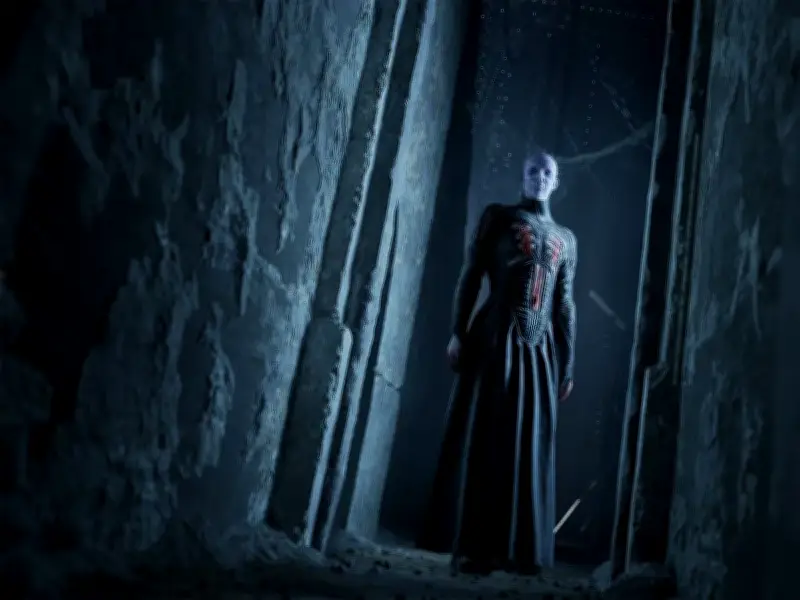
Hellraiser: Revival, the first proper video game adaptation of the 1987 cult classic, is a budget-stricken Resident Evil copycat with some of the worst boss fights ever played, overly basic stealth, and too many crafting, chase, and puzzle systems that spread the experience too thin. While it pays respect to the franchise's lore, it relies too much on shock value instead of true innovation, making it a survival horror hodgepodge for diehard fans only.
A Familiar Formula with Limited Budget
Playing through Hellraiser: Revival's eight-ish turbulent hours, the experience constantly recalls 2019's Terminator: Resistance. That game was similarly based on a monumental pop culture IP from the same decade of film, attempting to achieve a lot with very little on a limited budget to satisfy existing fans. Despite laughably bad facial animations, passable gunplay, and dated visuals, its story meant a lot to a long-time Terminator fan, filling in gaps and offering answers to long-held questions. It was a licensed tie-in that tried despite its blatant AA quality.
Although Hellraiser: Revival is hardly enjoyable, it is a game clearly intended for someone: presumably the world's biggest and most diehard Hellraiser fan. Outside of that specific case, it is difficult to determine what developer Saber Interactive was trying to achieve. If the goal was a budget-stricken Resident Evil copycat with some of the worst boss fights, overly basic stealth, and too many crafting, chase, and puzzle-solving systems, it succeeded. At least using a magic cube to burn enemies from afar proves somewhat fun.
Respect for the Lore, but Gameplay Falls Apart
Hellraiser: Revival does a solid job onboarding those unfamiliar with the franchise. Protagonist Aidan Lynch also starts off unaware of the Cenobites, the Genesis Configuration cube, or the gory and sadomasochistic events around him. As a completely original story set within this universe, discovering how these hellish sights fit together begins as a thrilling prospect. Aiden's journey to retrieve his girlfriend from Pinhead and his crew takes him literally to hell and back, and Revival pulls no punches in staying true to the franchise's X-rated material. Sex clubs, torture chambers, and lurid collectibles are just some of the sights Saber Interactive wants to show. The iconography is incredibly icky at first, but beyond the first two hours, one becomes desensitised to the countless cases of shock value.
Getting Doug Bradley back to reprise the role of Pinhead is the icing on top of a game that shows paramount respect for the IP. Sadly, when it comes time for Revival to behave like a game, it quickly falls apart. The rigid character animations, lackluster combat, and overstuffed mechanics could be forgiven were Revival doing anything truly new or original, similar to how the original 1987 Hellraiser was considered pioneering despite its divisive visuals and subject matter. Moving through this grotty world of demon-worshipping gimps and BDSM cults quickly descends into survival horror of the shlockiest kind.
Combat, Bosses, and the Genesis Configuration
Combat consists of awkward melee and floaty gunplay, with Aiden regularly scrounging for resources. There are a decent number of weapons, all distinct to fire but none particularly satisfying, even with mods or upgrades purchased from an in-game shop helmed by a mysterious stranger. This individual acts as the game's equivalent of Resident Evil 4's Merchant, and this is not the only time Revival mimics Capcom's series with less impressive results. It pulls from Resident Evil's stalker-type enemies, presented as mostly scripted and heavily linear events, so most intended tension is absent. The multiple hubs require searching a closer area for a puzzle piece to unlock the way to the featured boss, a la Resident Evil Village. One section also takes place in a rundown swamp. None of these systems are bad, but they feel tacked on to add flesh to the game's skeleton. The crafting system always keeps you on the backfoot with ammunition to an annoying degree.
The boss fights are some of the worst ever experienced in a modern game. Their designs are cool and demand an intimidating presence, but every fight involves scrounging for resources, peppering shots from the border of the arena, and skulking behind a pillar for defence. Almost every boss fight plays out this same way, except the final one, which despite its bold, extravagant design, does not feel in keeping with the Hellraiser world's more refined elements. You visit the Cenobites' domain numerous times, forced to navigate the iconic labyrinth via repetitive chase sequences. The chattering of a particular fan-favourite Cenobite's teeth is genuinely creepy, yet navigating the labyrinth feels all too much like you're on rails, aside from one extremely annoying stealth sequence towards the end.
The one bright spark in the gameplay is how the Genesis Configuration is used. Rather than just a literal puzzle box, you eventually gain the power to pick up sharp objects and throw them at enemies, set foes alight using surrounding fire sources, and rip large groups apart by summoning hell chains when its Suffering meter is fully charged. It offers a nice shakeup compared to the sub-standard stealth, melee, and ranged combat, yet it reaches the peak of its capabilities far too late in the day.
Hellraiser: Revival could be an unmitigated survival horror masterpiece to players with a devoted love for this gruesome franchise, much like Terminator: Resistance is to some. Even then, as a gameplay experience it fundamentally fails to bring anything new to the genre, instead ripping off mechanics and scenarios from other, better survival horror giants. Saber Interactive's attempt to do something different with a beloved horror IP by building an actual story and game around it rather than going the asymmetric multiplayer route is appreciated. That said, when taken as a whole, Hellraiser: Revival presents sights I wouldn't want to show my worst enemy. Rating: 2/5. Clive Barker's Hellraiser Revival is out today on PS5, PC, Xbox, and Nintendo Switch 2.