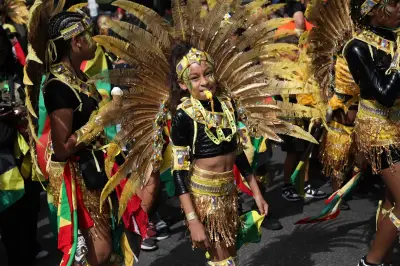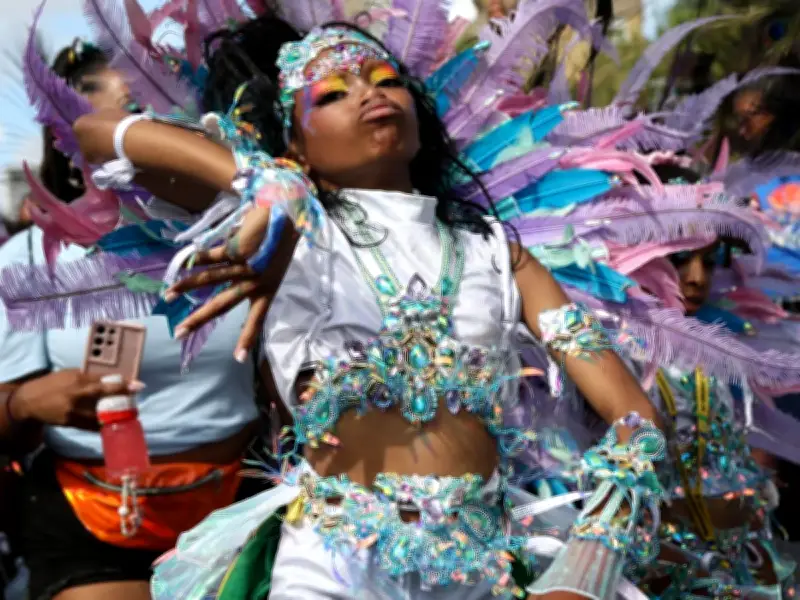
Notting Hill Carnival has once again brought the streets of west London to life, with millions of revellers turning out to celebrate Caribbean culture, music and community. This year's celebrations are particularly special as Carnival marks its 60th anniversary, six decades after the event first took to the streets of Notting Hill.
Revellers packed the streets on the carnival's family Sunday and it is expected thousands more will take to the streets today, Monday 31. From the colourful costumes, mas bands and the food stalls serving up Caribbean favourites, the annual celebrations transform the streets of Notting Hill into a huge party.
From adversity to celebration
Notting Hill Carnival's roots stretch back to a turbulent time for London's Caribbean community. In 1958, racial violence erupted across Notting Hill, where Black residents were attacked by white mobs amid rising tensions. The following year, Trinidadian-born journalist Claudia Jones organised a Caribbean carnival at St Pancras Town Hall, offering the community a space to celebrate its culture at a time when discrimination was widespread.

The event came months before Antiguan carpenter Kelso Cochrane was fatally stabbed in an unprovoked racist attack in the area. His murder remains unsolved, but his funeral drew more than 1,200 people from different backgrounds onto the streets.
The indoor carnival continued until 1964 before local activist Rhaune Laslett helped bring Caribbean culture outdoors. Her 1966 children's street fayre featured steel bands travelling along Portobello Road, with locals gathering to dance to the sound of pan. What started as a small community event would eventually become one of the world's biggest street festivals.
Crowds from 6am and two million attendees
Sunday's celebration kicked off at 6am with J'ouvert. J'ouvert comes from the French Creole phrase "jour ouvert", meaning "daybreak" or "opening of the day." It is Carnival but slightly messier, where Mas bands take to the streets throwing paint, chocolate, and coloured powder into the crowd. While J'ouvert's celebrations wrap up by 9am, it is later followed by adults Dutty Mass - a similar tradition where revellers are covered in paint, chocolate and powder.
When Carnival started in 1966, there were just 500 attendees. Now the annual event attracts a huge crowd, usually around two million people over the weekend, with thousands travelling from across the world to attend.
Community-owned and economically significant
CEO Matthew Phillip told the Mirror: "That's been going on for 60 years. Carnival's been built by many, many people over many years, and the fact that it is so organic, I believe, is why it's remained relevant to people. And I think and I hope that will continue. There's always evolution, there's changes within bands, there's new people coming forward and that's how it will be able to continue into the future."
London Mayor Sadiq Khan celebrated the anniversary, saying: "60 years after the first Carnival, its spirit is as strong as ever. We're backing organisers with £4.6m to strengthen safety measures, support more stewards and help visitors and residents enjoy the weekend with confidence."
The Mayor of London provided an additional £4.66 million for the 60th anniversary event to manage crowd safety, but the GLA reported last year that Carnival generates £400 million for the UK economy.
Police report "overwhelmingly positive" mood
Police made 169 arrests for the first day of Notting Hill Carnival, however the event was "overwhelmingly positive and celebratory," Scotland Yard have said. They also said responding to incidents would be expected at an event of this scale.
Commander Claire Smart, who is in charge of the policing operation, said: "We have been working closely with Notting Hill Carnival Ltd and other partners for many months ahead of this weekend's event. The organisers have stepped forward significantly across the event, including crowd management, and we have seen the positive progress today.
"While we have seen a significant number of arrests and interventions by officers, the result of that proactive approach is a welcome reduction in the levels of serious violence seen at the event in previous years."

Legends and the sound of Carnival
The streets of Notting Hill have seen music stars including Jay-Z, Busta Rhymes, Stormzy and Craig David over the years as they performed on the live stages. Live stages in Carnival were created by local promoter Wilf Walker, as he brought the first one to the event after he saw an opportunity to transform the area. He told the Mirror: "That very year in 1979, there was no real confrontation between us and the police - it truly felt like it made peace in a way." "I will always love Carnival. It's bigger than us, even today."
Long before Notting Hill Carnival became known for its huge sound systems and elaborate costumes, the streets of west London were filled with the distinctive sound of steelpans. The instrument was created in Trinidad and began making its mark in Britain in the 1950s when Trinidadian musicians helped introduce the instrument to British audiences. Later in the 1960s, Trinidadian musician Russel Henderson and his band were invited by local community activist Rhaune Laslett to play at her children's street event.